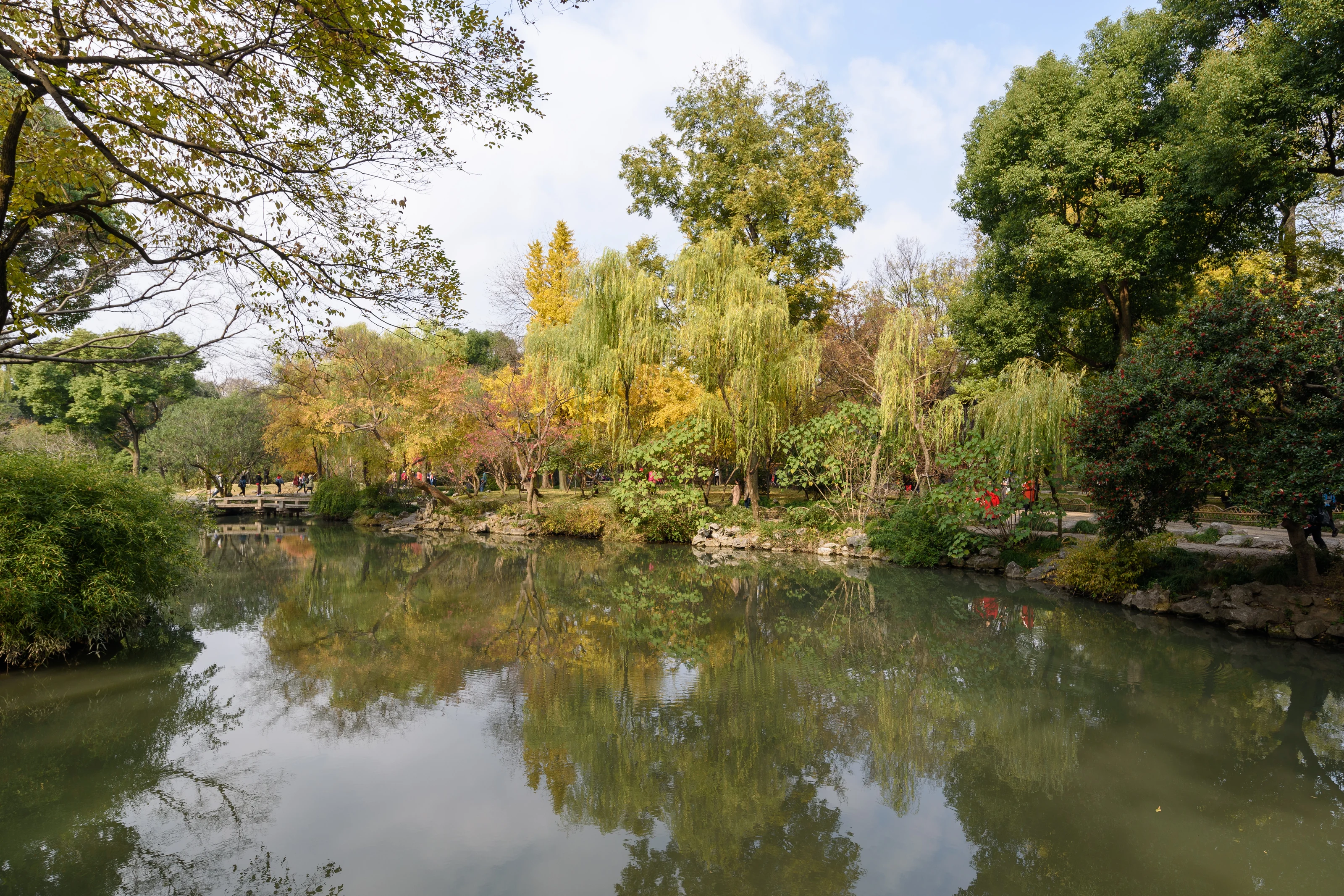
For a first Suzhou trip centered on gardens and canal walks, I’d start with April–May or October–November. Those are my planning choices for a day spent mostly outdoors, rather than a promise of dry weather. Summer deserves a closer look if lotus is your main interest; winter can suit a shorter visit focused on garden buildings and views.
For a date-specific hill outing, the Tiger Hill guide separates its seasonal ticket prices from its opening calendar.
The useful question is what would make the trip worthwhile if the weather or planting changed. A garden’s layout, a particular flower and a long canal walk place different demands on the same travel date.
Spring or autumn for a Suzhou garden-and-canal day?
I’d compare spring and autumn first, then choose between actual travel dates rather than declaring one whole season the winner. China’s weather service describes Suzhou’s summers as hot, humid and rainy, and its winters as cold. Spring and autumn give me a starting point between those seasonal extremes, with the forecast still deciding how much walking to plan.
For a spring trip, I’d choose the garden before choosing a flower. A blossom photograph can suggest a destination, but the current display needs a separate check with that garden. For an autumn trip, I’d apply the same rule to colored leaves: a named month doesn’t tell you what one tree will look like.
| What matters most | Dates I’d compare first | What I’d keep flexible |
|---|---|---|
| One garden plus a long canal walk | April–May or October–November | How far to walk after the garden |
| Lotus as the main subject | Summer, after checking the specific garden | The flowering stage and time outdoors |
| Walls, rooflines and pond views | Any season with a workable forecast | Outdoor breaks and the length of the visit |
| Silk collections rather than planting | An open exhibition day that fits the journey | Whether to add a canal walk |
These are editorial starting points, not a flowering calendar. The Suzhou destination collection helps separate the city’s garden, street and craft visits before you settle on dates.
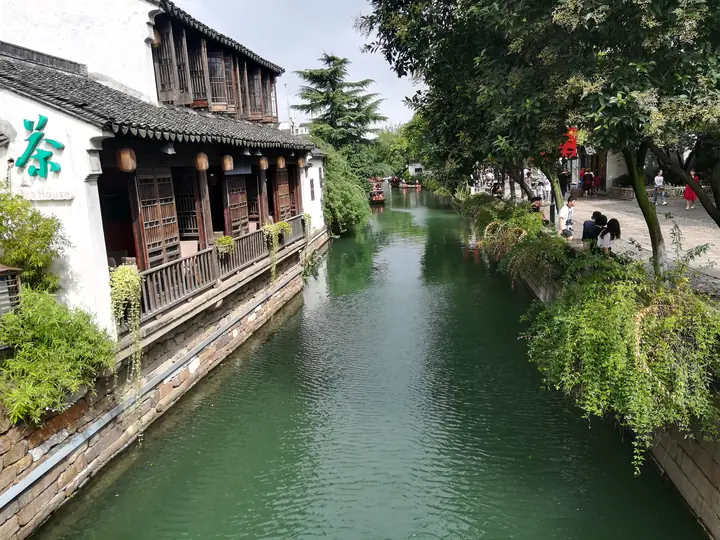
Photo credits
The left-hand sign reads Tea House.
Photo: Leiem / Wikimedia Commons / CC BY-SA 4.0. Resized and WebP compressed; adaptation under CC BY-SA 4.0.
Summer lotus and Suzhou’s rainy season
Lotus gives summer a reason of its own, alongside the weather trade-off. The Suzhou city government’s reporting documents summer lotus displays at the Humble Administrator’s Garden. That supports looking at summer for this interest; it doesn’t establish the display you’ll find on a future visit.
I’d check a recent update from the particular garden before making lotus the deciding factor. A flower pictured in a container and a pond covered in leaves are different viewing subjects. Ask which one is being described, and choose a second reason to enjoy the garden if few flowers are open.
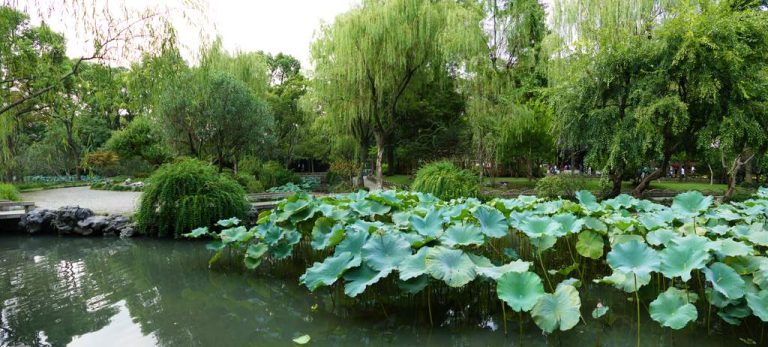
Photo credits

Early summer also brings a planning issue beyond a passing shower. China’s weather service describes a spell of rainy weather in June–July called meiyu (梅雨), or plum rain, with large differences between years. Treat that as a seasonal tendency; use the local forecast for the travel day.
For a hot or rainy day, my preference is one substantial garden visit followed by lunch and a shorter street walk. Carry rain protection and drinking water, and leave room to change the outdoor part. The one-day Suzhou plan explains how to give a garden and Pingjiang Road enough space without adding another compulsory attraction.
Winter Suzhou gardens: choose a view beyond flowers
Summer’s planting is only one way into a garden. In winter, I’d choose a visit for the relationship between a pond, its buildings and the openings that frame them, then dress for the day’s forecast. A shorter outdoor visit with a warm seated break suits that purpose better than a long route chosen from a summer photograph.
A window can include a piece of roof and a strip of water while hiding the path between them. An open view shows more of their setting. Comparing the two gives the visit a clear subject even when a seasonal flower isn’t present.
The Humble Administrator’s Garden guide develops that way of looking at water and framed views. I wouldn’t move a fixed-date trip solely to reproduce somebody else’s planting photograph; I’d first decide whether the garden itself interests me.
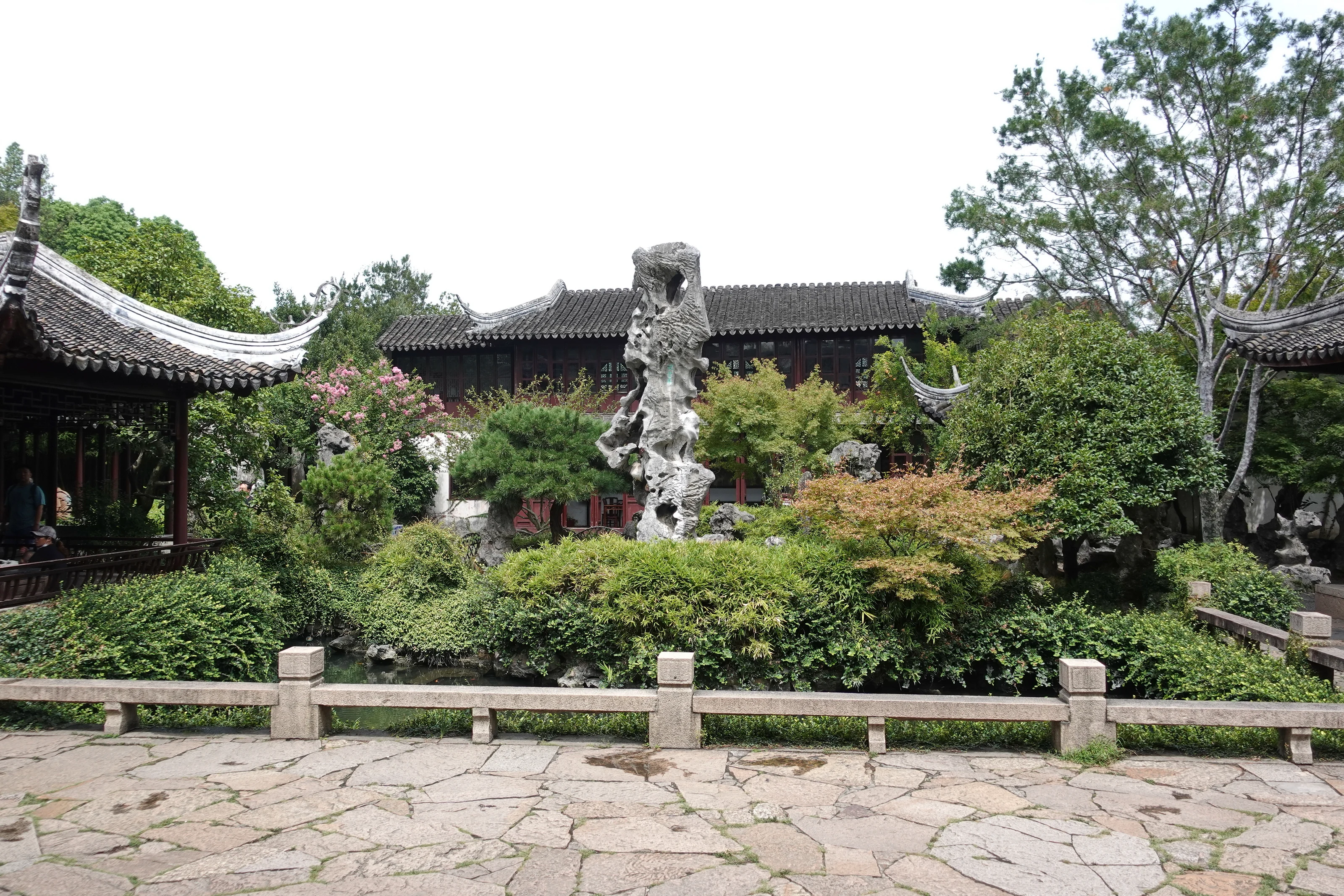
Photo credits

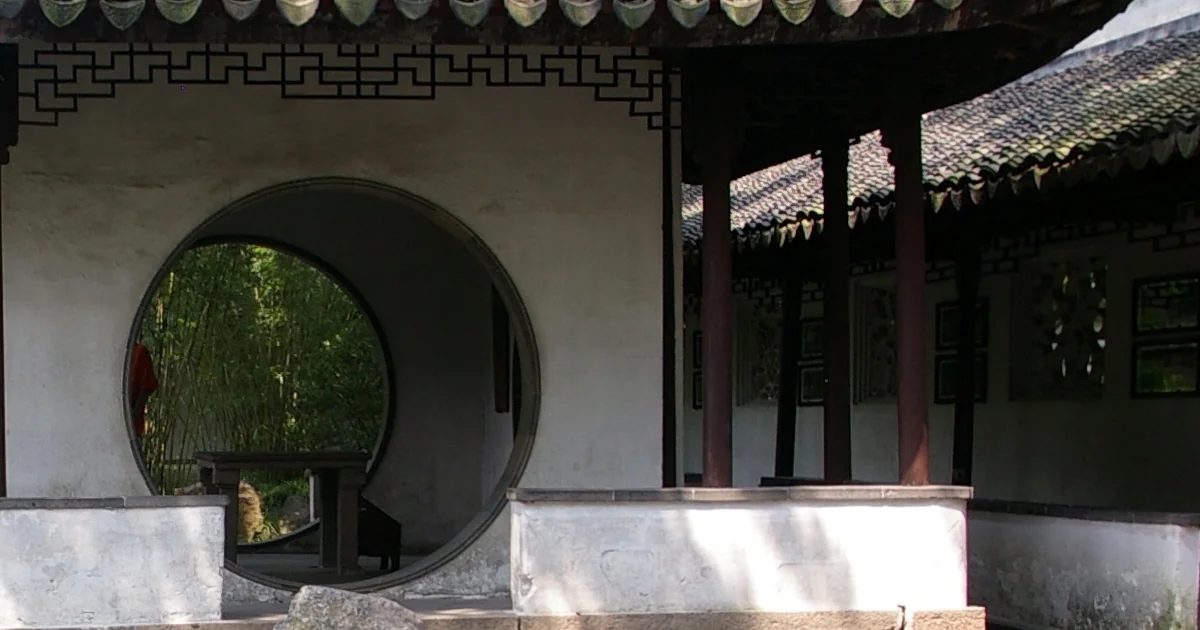
Photo credits

Fixed travel dates: shorten the Suzhou walk first
A garden visit with a clear purpose makes fixed dates easier to work with. I’d keep the stop that matters most and let the less important outdoor stretch expand or shrink around it. That leaves fewer bookings competing for the same afternoon.
For a canal-focused day, choose a stretch you can enjoy without completing an entire district. The Pingjiang Road walk follows the relationship between the canal, bridges and side lanes. You can use that subject on a short walk instead of treating every shop as a stop to finish.
An indoor alternative should also be somewhere you want to visit. The Suzhou Silk Museum guide focuses on silk-making and woven objects. Before assigning a rainy afternoon to the museum, check that it admits visitors on your chosen day; let that visit replace the longer canal walk.
I’d check holiday dates before committing to transport and accommodation, then compare actual availability and prices. A weekday label or a winter date alone doesn’t establish how busy the garden will be. If your dates overlap a holiday, protect the main reservation and keep the rest of the route modest.
Before booking Suzhou for a particular season
Once the route can bend around the weather, make a final check against the reason for choosing those dates. For flowers, look for a current update from the named garden. For a mostly outdoor day, check the local forecast and decide where a seated break fits. For a museum-focused trip, confirm the exhibition day rather than choosing by planting season.
My default remains a spring or autumn garden-and-canal trip. I’d choose summer deliberately for lotus and accept a shorter outdoor day; I’d choose winter for a garden’s built spaces and a slower visit. Pick the version whose main attraction still appeals when the scene differs from the photograph.
Featured image explanation: The Chinese name above the black door reads “Lingering Garden”; the small address plaque reads “338”.
Photo credits
Photo: Windmemories / Wikimedia Commons / CC BY-SA 4.0. Cropped to the entrance detail, resized and compressed. No retouching. Derivative under CC BY-SA 4.0.

Explore the Suzhou city guide →