Pingjiang Road is a canal-side street in Suzhou’s old city where the walk itself is free. The water, bridges and lanes are the reason to come; a boat ride or a seat in a teahouse is an optional extra. I would give the neighborhood a few unhurried hours, with a clear starting point and room for a stop that catches your interest.
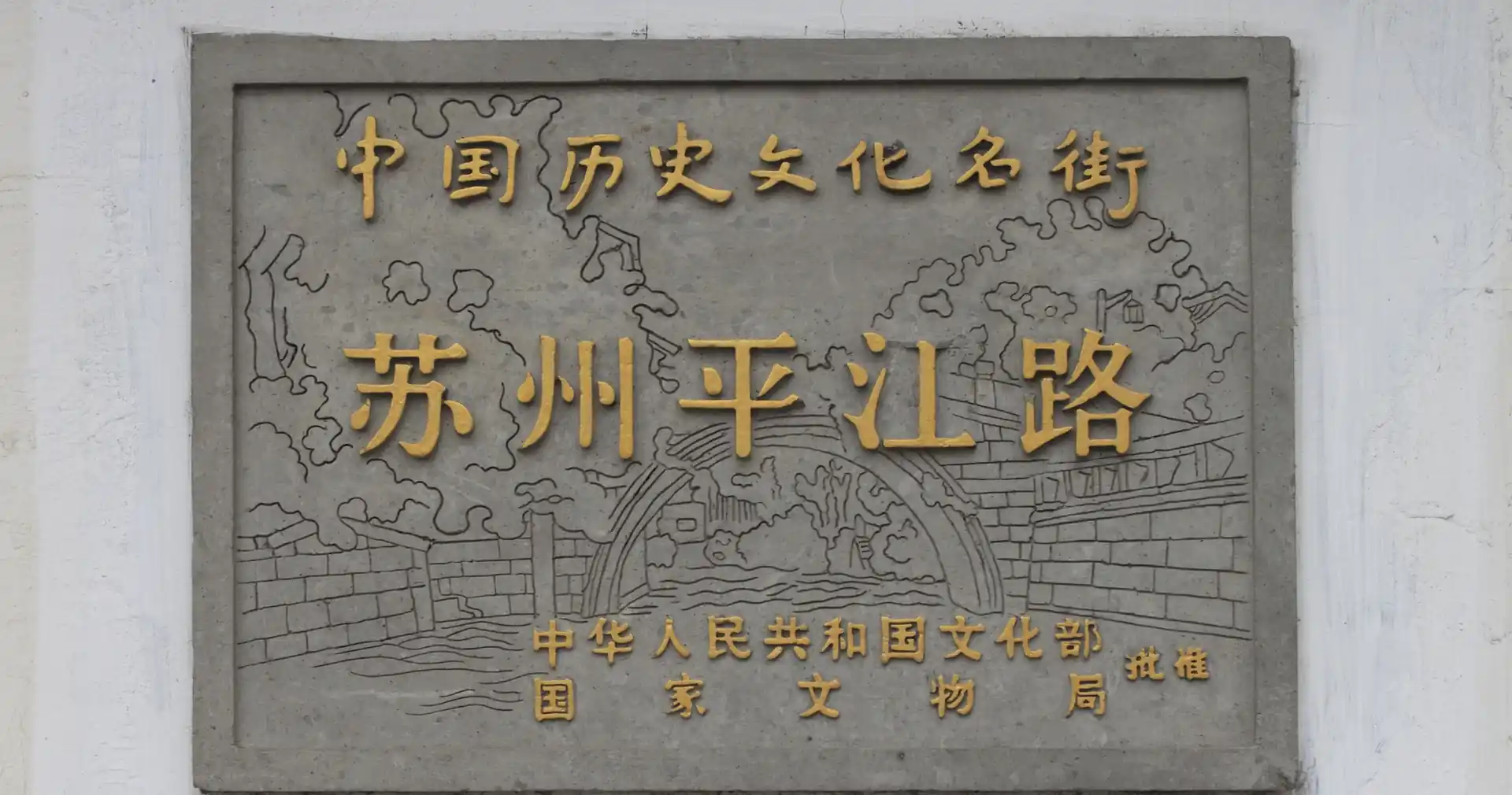
Featured image explanation: The cover plaque reads “China Historic and Cultural Street: Suzhou Pingjiang Road.” Its lower lines name China’s Ministry of Culture and State Administration of Cultural Heritage as the approving bodies.
The Chinese name is Pingjiang Lu (平江路). Put the street and your chosen arrival point in the same saved map list. The surrounding historic neighborhood is larger than the street, so a pin for the whole district may leave you some way from your intended start.
Choose a Pingjiang Road metro entrance that fits your walk
For a walk from the southern end, aim for Ganjiang East Road; for a shorter visit, arrive near the middle. You don’t need to cross the entire district before reaching the canal. China Bound’s Pingjiang Road transport guide, published in April 2026, lists these options:
| Station | Line and exit | Where to aim |
|---|---|---|
| Xiangmen (相门) | Line 1, Exit 3 | South entrance, near the Pingjiang Map Stele Pavilion |
| Lindunlu (临顿路) | Lines 1 or 6, Exit 5 | South entrance |
| Xuanqiaoxiang (悬桥巷) | Line 6, Exit 2 | Middle section |
Check the station’s local map when you arrive, since the final walk depends on the exit and the entrance you’ve saved. I’d choose the southern start for a first visit: the canal gives the walk a clear thread before any side-lane detours. Arriving in the middle suits a brief look or a return visit when there’s no need to cover the same ground again.
The Suzhou destination overview puts the canal district alongside the city’s other places to visit, which helps when choosing your arrival end.
For a taxi, use an entrance rather than a shop deep inside the lanes. The same guide suggests the south entrance on Ganjiang East Road or the north entrance on Baita East Road. A garden booking to the north may favor that end; otherwise, the southern entrance gives the walk a straightforward start.
Follow the canal toward Baita East Road
From the southern entrance, use the canal-side street as your main route toward Baita East Road. Treat those roads as anchors, rather than turning the outing into a hunt for every named bridge. The Suzhou government’s neighborhood description places Ganjiang Road along the district’s southern edge and Baita East Road along its northern edge.
What makes the walk interesting is the changing relationship between the path and the water. Notice where buildings meet the canal, where a bridge connects the banks, and where a lane opens away from the main street. A few such comparisons explain more about the neighborhood than a long list of shops.
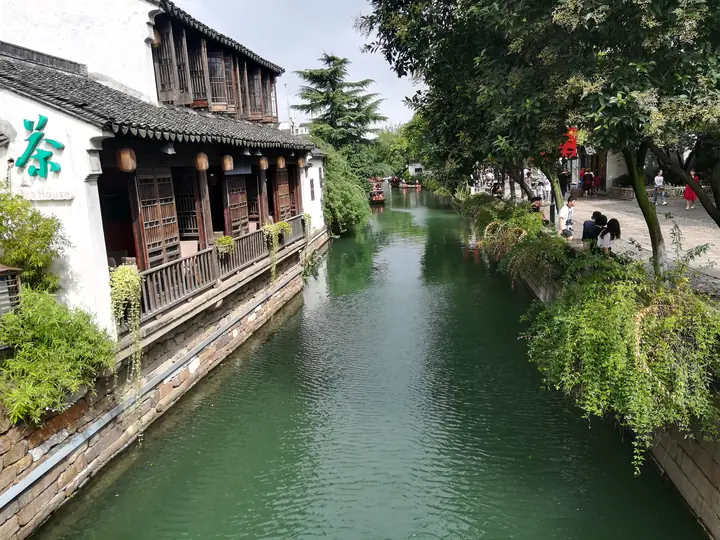
Photo credits
The left-hand sign reads Tea House.
Photo: Leiem / Wikimedia Commons / CC BY-SA 4.0. Resized and WebP compressed; no content added. Derivative under CC BY-SA 4.0.
Take a side lane when something specific draws you in, then return to the canal before choosing the next detour. I’d keep a museum, a garden or a booked performance as a separate destination on the map. That makes it easier to judge whether an inviting turn still fits the afternoon.
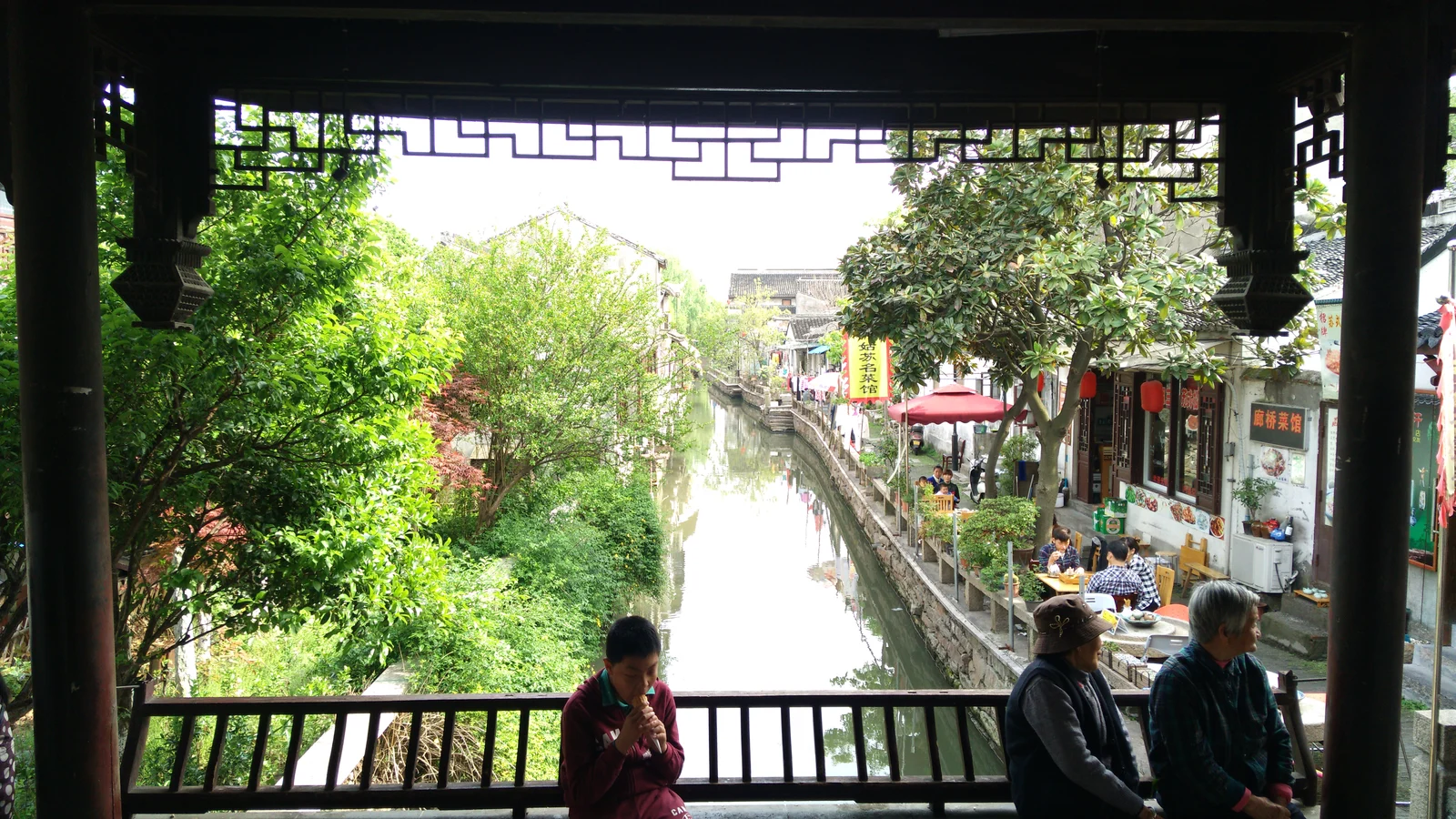
Photo credits

Keep the free street separate from paid experiences
The canal walk doesn’t require an admission ticket. Suzhou’s government lists the historic neighborhood as a free, open scenic area, accessible around the clock. Individual businesses and cultural venues have their own hours; an open street doesn’t mean that every door will be open when you arrive.
China Bound suggests allowing 2–3 hours for a relaxed visit. Use that as a planning guide rather than a walking-time promise: a stroll without stops and an afternoon with tea will fill very different amounts of time.
A boat ride changes the viewpoint, while walking lets you pause and explore the lanes. I would decide which experience matters more before joining a queue. At the boarding point, confirm the current fare, what route it covers and whether the quoted amount is per person or per boat. Don’t treat a price attached to a tour listing as an entrance fee for the street.
Make a tea or pingtan stop a deliberate choice
A seated stop gives the walk a different pace, especially if you’ve spent the morning in a garden. Choose a teahouse for the menu, seating and experience you actually want. Before ordering, establish what the listed price includes: tea, a performance, or a combination. A waterside table alone doesn’t tell you what’s being sold.
Pingtan (评弹) combines storytelling and ballad singing, as Suzhou’s government explains in its old-town introduction. If the sound interests you, ask about the performance language, duration and seating before paying. Listening for the music and following a spoken story are different expectations, particularly when you don’t speak the local language.
For an introduction to the art itself, the city lists the Suzhou Pingtan Museum at No. 3 Zhangjia Alley, off Pingjiang Road. Its published visitor information gives hours of 9 am–4:30 pm and a Monday closure. Confirm the day’s arrangements before making the museum the purpose of your trip; those hours don’t establish a performance timetable.
Give Pingjiang the flexible part of a garden day
If you’re combining the street with a nearby garden, keep the garden’s admission arrangements fixed and let the walk absorb the remaining time. The city places the Humble Administrator’s Garden to the north of Pingjiang Road. Its separate admission preparations are covered in the Humble Administrator’s Garden visitor guide; settle those before deciding where the canal walk belongs.
For the street itself, I’d favor morning if the priority is looking closely at the canal and lanes. China Bound recommends an early visit and avoiding weekends or public holidays for a quieter outing. Shops and evening atmosphere may matter more to another visitor, so there’s little reason to force everyone into the same arrival time.
Leave enough space for the part of Pingjiang that won’t fit neatly on a checklist: a bridge view, an interesting doorway, or a tea stop you decide is worth sitting down for.
Photo credits
Photo: User:Zhangzhugang / Wikimedia Commons / CC BY-SA 3.0. Cropped from [0, 200, 3804, 2202], resized and WebP compressed; no content added. Derivative under CC BY-SA 3.0.

Explore the Suzhou city guide →