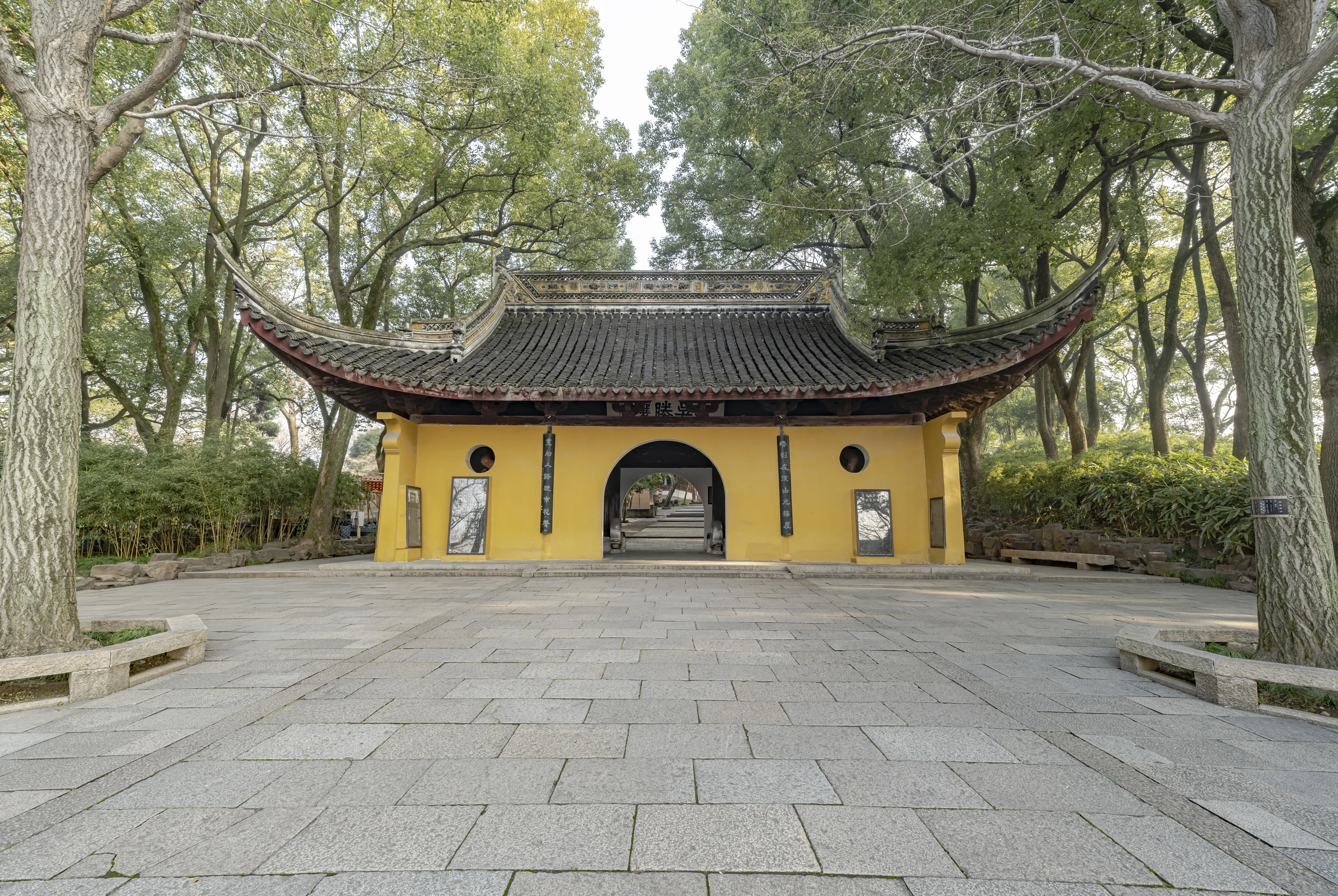
Tiger Hill in Suzhou is a wooded historic site known for its leaning brick pagoda and Sword Pool. I would choose it for a visit that combines old buildings, rock and water with a walk uphill. Leave a morning or afternoon free for the outing, including the journey, so the pagoda doesn’t become a hurried stop between other bookings.
The Chinese name is Huqiu (虎丘). Save that name with the scenic-area entrance on your map before setting out. The practical detail to watch is the calendar: ticket prices and opening hours change in different months.
Tiger Hill tickets: June has the lower listed price
Tiger Hill admission is seasonal, but the higher price doesn’t run through the whole summer. The Suzhou Gardens and Landscaping Bureau lists these standard prices:
| Visit month | Listed admission |
|---|---|
| April, May, July, August, September and October | CNY 70 |
| January, February, March, June, November and December | CNY 60 |
June belongs in the lower-price group. April belongs in the higher-price group even though the longer opening day, shown below, starts in May. Keep the price and hours as separate checks when planning your visit.
The officially listed online ticket channels are 苏州园林旅游 (Suzhou Gardens Tourism) and 君到苏州, both on WeChat. The tourism bureau’s notice also lists self-service machines and staffed windows at the scenic area’s ticket hall, with cash, card, WeChat and Alipay among the payment methods.
The notice doesn’t explain the foreign-passport fields in the online form or identify which overseas cards work. Those checkout options haven’t been tested for this guide. If an online form won’t accept your details, ask the staffed ticket window about the available purchase options and any document requirements before joining a machine queue.
If you’re still deciding what deserves that block of time, the Suzhou destination collection introduces the city’s garden, canal-street and craft interests.
Tiger Hill opening hours follow a different calendar
The opening schedule uses a different seasonal division from the ticket table. The bureau’s published daytime hours are below, in local Suzhou time:
| Months | Opening hours | Ticket checking ends |
|---|---|---|
| May–October | 7:30 a.m.–6 p.m. | 5:30 p.m. |
| November–April | 7:30 a.m.–5:30 p.m. | 5 p.m. |
The final column is the entry cutoff, not the time to arrive for a full visit. I would plan around the closing time, then leave room for the walk back to the exit. Arriving just before ticket checking ends gives you very little of the hill.
Check the bureau’s official opening-hours table for the published schedule and any relevant notice before traveling. Holiday or temporary evening arrangements need their own current confirmation; an old summer-night announcement doesn’t establish access on your date.
Take Metro Line 6 to Huqiu station
Once the visit fits the operating day, plan the journey to the named entrance. Metro Line 6 serves Huqiu station, which the Suzhou city government identifies as close to Tiger Hill Scenic Area. Follow the scenic-area signs after leaving the station, with your saved entrance as the map destination.
For a taxi or car-hailing trip, the published scenic-area address is 8 Huqiu Shanmennei, Gusu District (姑苏区虎丘山门内8号). Check the selected gate before confirming the ride. A destination pin somewhere on the hill won’t tell the driver where you intend to enter.
Keep the return journey separate from the sightseeing allowance, especially if you have a train booked. The Suzhou one-day itinerary builds a different day around the Humble Administrator’s Garden and Pingjiang Road. I would use Tiger Hill as a change to that plan, with fresh transfers, instead of squeezing it into the remaining gaps.
Read the buildings and stone landscape on the way to the pagoda
Getting to the hill is only the first part of the visit. Inside, give the entrance buildings, Sword Pool and pagoda different kinds of attention. A quick photograph of the tower leaves out much of the setting that makes the walk worthwhile.
Broken Beam Hall: pause at the second gate
The bureau identifies the second mountain gate as Broken Beam Hall, or Duanliang Dian (断梁殿). Notice the roofline and the passage through the building before continuing into the site. The hall gives the approach a built threshold: you pass through architecture before concentrating on the rocks, water and tower.
I wouldn’t rush past the hall simply because the pagoda is the more familiar image. A brief pause to look back through the gateway makes the entrance part of the visit, too.
Sword Pool: separate the visible landscape from its legend
Sword Pool, or Jianchi (剑池), is a place to look closely at the rock walls and the water held between them. The bureau places it beside the broad stone area called Thousand People Rock. Let the confined pool and the more open stone surface register as different spaces.
Local tradition connects the pool with swords buried for King Helü, a ruler of the ancient state of Wu. The bureau’s account presents that connection as a tradition. Read it as a story attached to the site, without treating the water or a split in the rock as proof of everything the story describes.
Yunyan Pagoda: look at the brickwork as well as the lean
Yunyan Temple Pagoda (云岩寺塔), also called Tiger Hill Pagoda, was completed in 961. The bureau describes a brick tower with seven stories and an octagonal plan. Those details give you something to notice beyond its tilted outline: the repeated levels, the corners and the way the brickwork forms the tower’s profile.
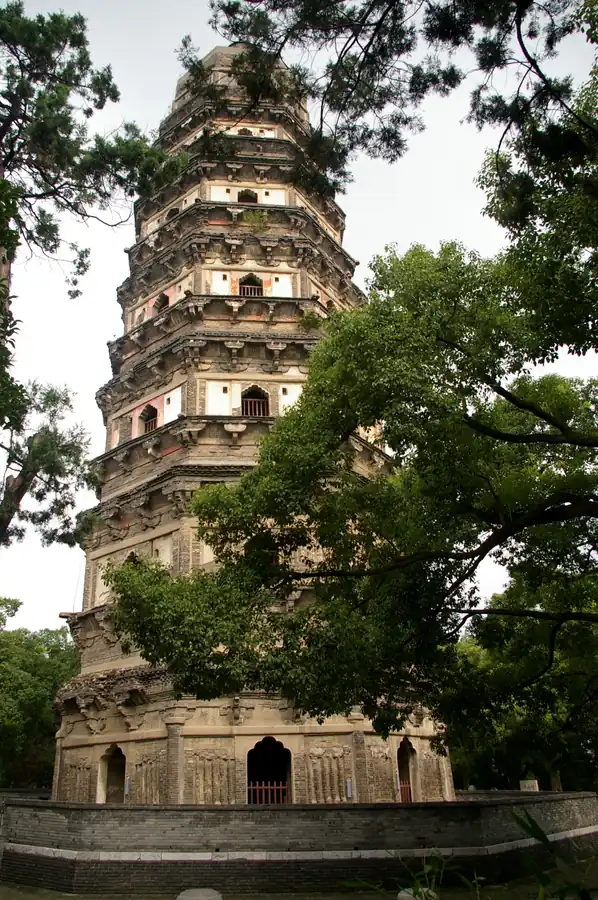
Photo credits

Treat an exterior view as the basis of the visit and follow the areas open on the day. Don’t build the outing around getting inside or climbing the pagoda. From permitted paths, compare a wider view that includes the hill with a closer look at the structure.
Choose the hill or a garden as the day’s main visit
The pagoda and stone landscape make Tiger Hill a distinct choice within Suzhou. For a first day with limited time, I would decide whether that hill walk or an enclosed garden matters more, then arrange the rest of the day around it. Adding a famous name also adds a journey and time on your feet.
The Humble Administrator’s Garden guide helps with the alternative centered on ponds, pavilions and changing views. If your dates are still flexible, the Suzhou season guide compares outdoor interests with the weather trade-offs.
Before leaving for Tiger Hill, save the entrance and your return destination, check that day’s opening notice, and choose how you’ll buy admission. Those decisions leave you free to spend the visit looking at the hall, pool and pagoda.
Photo credits
Photo: Henrysz / Wikimedia Commons / CC BY-SA 4.0. Cropped, resized and compressed. Derivative under CC BY-SA 4.0.

Explore the Suzhou city guide →