Suzhou Silk Museum is a free museum about silk production and textile culture at 2001 Renmin Road in Suzhou’s old city. Its displays connect raising silkworms with weaving and finished cloth, making it a useful choice when you want to understand the craft behind the material. Plan for the museum’s admission hours and reservation requirement before adding it to a garden day.
Free admission still needs a reservation check
The Suzhou Tourist Information Center lists general admission as free and says a reservation is required. Its official Suzhou Silk Museum information page links to the booking service. Start there rather than paying for a tour merely because a search result uses the word “tickets.” A paid guided visit is a separate purchase from the museum’s general admission.
The museum’s published main opening schedule is Tuesday through Sunday, 9 am–5 pm, with last admission at 4 pm. Mondays are closed except national public holidays. All times are local to Suzhou. A special holiday notice can change the normal pattern, so check the date you intend to visit rather than treating a Monday exception as a permanent opening rule.
Check the reservation’s date, visitor information and entry instructions before traveling. The current booking form hasn’t been checked with a foreign passport for this guide; its document options and any walk-in arrangement need confirmation from the museum. If the booking page doesn’t explain your situation, ask the museum through the contact number on the official tourism page: +86-512-67535943.
Free admission also leaves the timing decision with you. Arriving close to last entry limits the visit even though the building remains open later. I’d arrive with time to read the displays instead of using the closing hour as an arrival target.
Find the Renmin Road museum before choosing transport
Use the full destination, Suzhou Silk Museum (苏州丝绸博物馆), at 2001 Renmin Road, Gusu District (姑苏区人民路2001号). The museum is near Beisi Pagoda, also called Beisita. Save the museum entrance separately from the pagoda when checking your journey on a current map.
Suzhou Museum is a different institution, and the China National Silk Museum is in Hangzhou. Neither name is a substitute for the Renmin Road address. The same caution applies to silk factory visits: a production tour with a shop can be interesting, but it doesn’t establish admission arrangements for this museum.
For a taxi or ride-hail, show the Chinese museum name and address together. For public transport, save your actual starting point and the Renmin Road entrance as the journey’s two ends. A route calculated from a generic “Suzhou” location can hide an extra journey across the city.
The Suzhou destination collection puts this textile stop alongside the city’s gardens and canal streets. Choose the cultural interest first, then work out the connections between the places you keep.
Follow the thread from silkworm displays to the loom
Once at the museum, start with how the material is produced. Sericulture means raising silkworms for silk. The city’s museum profile describes displays of mulberry cultivation and silkworm rearing alongside weaving equipment and textiles. Those subjects give a newcomer a way to connect a soft finished fabric with the work that came before it.
At each stage, ask a small question: what is the material here, and what changes before the next stage? A cocoon, prepared thread and woven cloth aren’t interchangeable objects. Reading the labels between them helps explain the process without requiring a technical vocabulary before arrival.
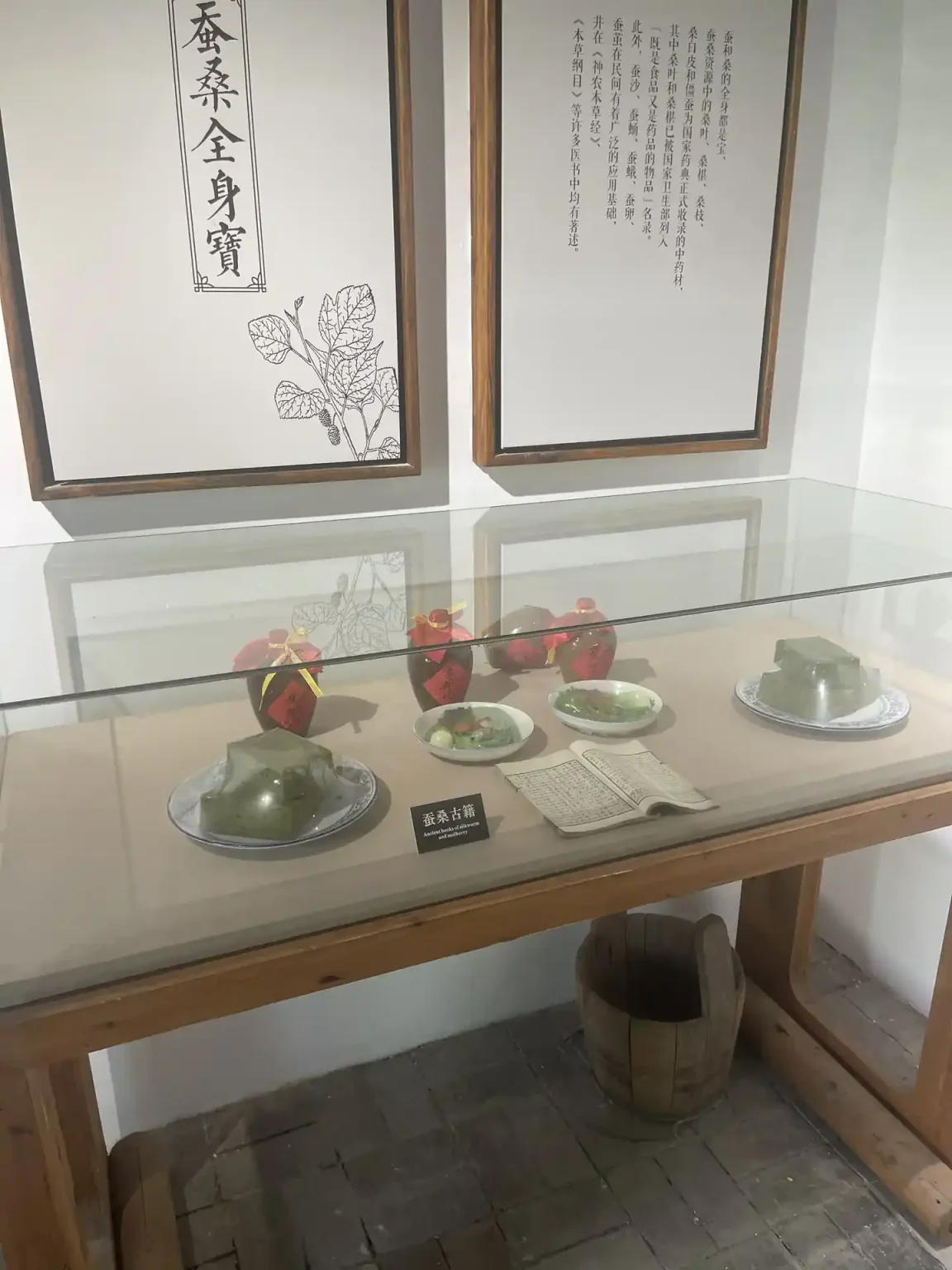
Photo credits
The case label reads Ancient books of silkworm and mulberry. The wall panels discuss historical medicinal uses; the photograph does not substantiate those uses.
Photo: 章彦博 / Wikimedia Commons / CC BY-SA 4.0. Applied the source EXIF orientation, resized, and encoded as WebP; the official image tool then resized to 1440×1920 and re-encoded at quality 45. Derivative under CC BY-SA 4.0.
A loom rewards a closer look. Follow the stretched threads with your eyes, then find where fabric appears within the frame. The useful comparison is between the equipment and the finished textile, rather than between the size of different machines. Don’t touch a mechanism or assume an exhibit is available for visitors to operate.
The museum’s official descriptions mention traditional weaving demonstrations, but they don’t establish a performance for every visitor’s arrival. If seeing a weaver at work is your main reason for coming, ask about the current schedule in advance. An idle loom still explains equipment; watching someone use it answers a different question about movement and pace.
Read the labels before naming a silk technique
The equipment leads naturally to the textiles it can help you understand. The museum’s documented subjects include silk history, dyeing, imperial weaving and later clothing, as well as modern uses of silk. Compare the material and pattern of a labeled piece with another nearby, rather than trying to remember every display title.
Songjin (宋锦), or Song brocade, and zhangduan (漳缎), a patterned velvet, are weaving traditions connected with the museum’s preservation work. Find the technique on the label before attaching its name to a textile. A rich pattern by itself doesn’t tell a visitor which method produced it.
Look at a repeated shape, the edges of the pattern and the way the surface catches light. Then return to the label to see what it identifies. That back-and-forth is more useful than treating every silk object as the same craft. It also leaves room to enjoy an unfamiliar piece without guessing its age or production method.
The museum can sharpen questions for a later purchase, but it can’t authenticate a scarf in another shop. If you buy silk afterward, ask about that item’s fiber content, construction and care. Keep the seller’s description of the product separate from what a historical display taught you about a named tradition.
Give the silk museum its own place in the Suzhou day
A textile museum adds indoor exhibits to a day otherwise spent looking at outdoor spaces. The pond and framed views in the Humble Administrator’s Garden ask you to notice how a landscape changes as you move. The museum asks for a different kind of attention: reading labels and comparing objects with tools.
If you’ve already planned the garden-and-Pingjiang one-day itinerary, replace part of the afternoon when adding the museum. Keep room for the transfer and the visit itself. Simply attaching another stop to the original plan leaves less time for both.
A shorter stretch of the Pingjiang Road canal walk can remain an option afterward if admission and return travel fit. Decide that after choosing the museum’s arrival time. On a tighter day, I’d keep the textile visit and a meal rather than rush through the galleries to preserve a longer shopping walk.
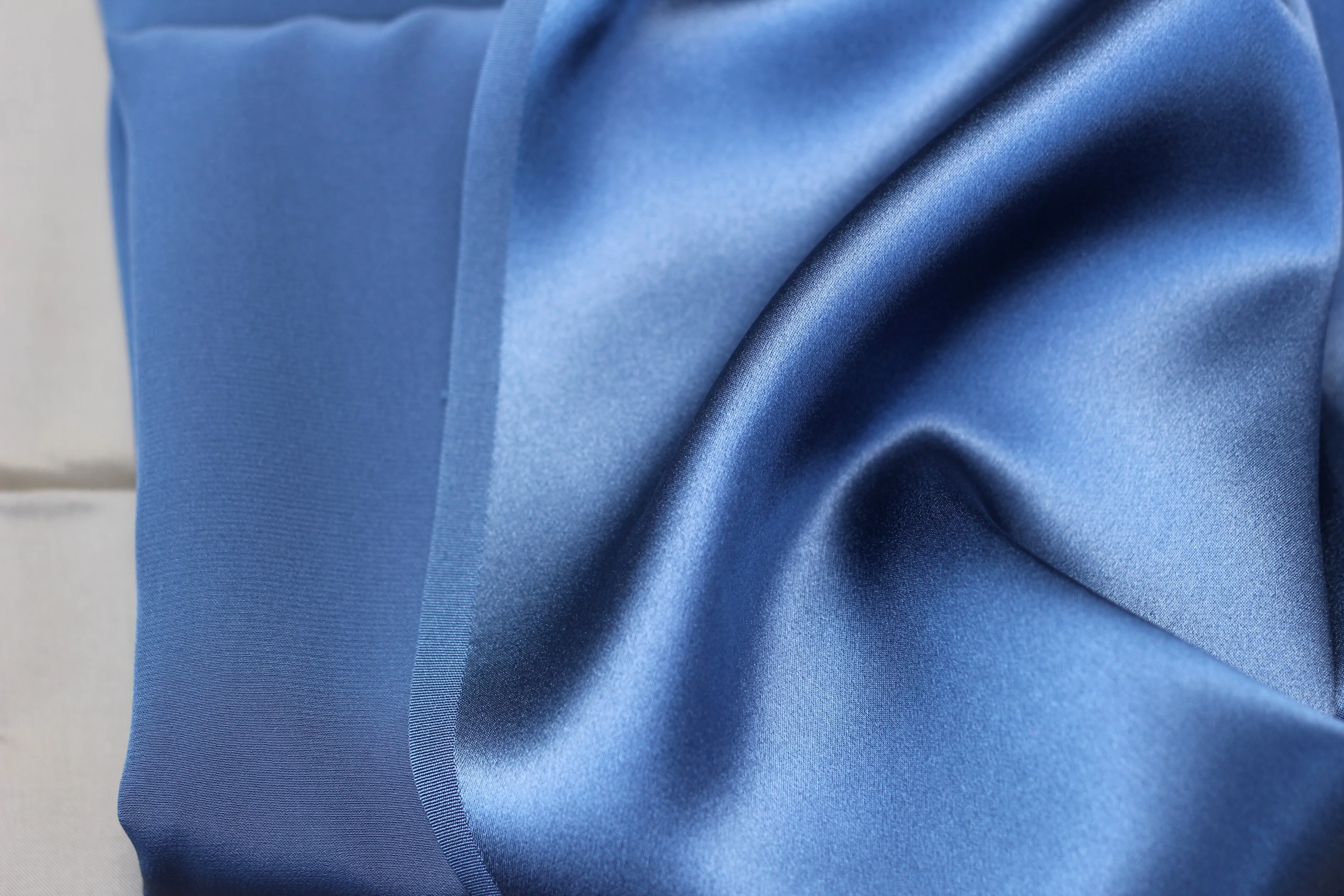
Featured image explanation: The blue silk fabric is a theme photograph, not an object in the museum’s collection.
Photo credits
Photo: Enby / Wikimedia Commons / CC BY-SA 4.0. Center-cropped from 3456×2304 to 3456×1819, resized, and encoded as WebP; the official image tool then resized to 1400×737 and re-encoded at quality 80. Derivative under CC BY-SA 4.0.

Explore the Suzhou city guide →