For I. M. Pei’s Suzhou Museum building, choose the main museum on Dongbei Street. The visit brings together white walls, dark roof lines and water with collections about Suzhou’s archaeology, crafts, painting and calligraphy. Give the building and the objects separate attention: the courtyard photographs explain the setting, while the galleries explain what people made and valued here.
Find the Dongbei Street museum, not the West Museum
The main museum’s address is 204 Dongbei Street, Gusu District (姑苏区东北街204号). Save it with the Chinese name 苏州博物馆本馆. The West Museum is a separate destination at 399 Changjiang Road in Suzhou New District; a map result containing only “Suzhou Museum” needs a closer check before you choose transport or admission.
Suzhou Silk Museum is another institution, at 2001 Renmin Road. If looms and textile production are your main interest, the Suzhou Silk Museum guide explains that visit. Its entry arrangements don’t establish anything about the Dongbei Street museum.
I would settle the building first, then decide how it fits the trip. The Suzhou destination collection gives the wider choice of gardens, streets and cultural visits. Here, the focus stays on Pei’s building and the museum’s documented collection themes.
Read I. M. Pei’s building through walls, roofs and water
With the right museum identified, the building itself deserves a pause before the gallery labels. The main building designed by I. M. Pei opened in 2006. Pei, the architect behind this modern museum, is the reason the Dongbei Street site matters to visitors interested in architecture.
The courtyard photo below gives a useful starting point. Dark edges divide white walls into clear shapes, and angled roofs lead the eye toward the higher central section. Water repeats those outlines beneath the buildings. Notice how much of the scene comes from the space between the structures, rather than from decoration on a single facade.
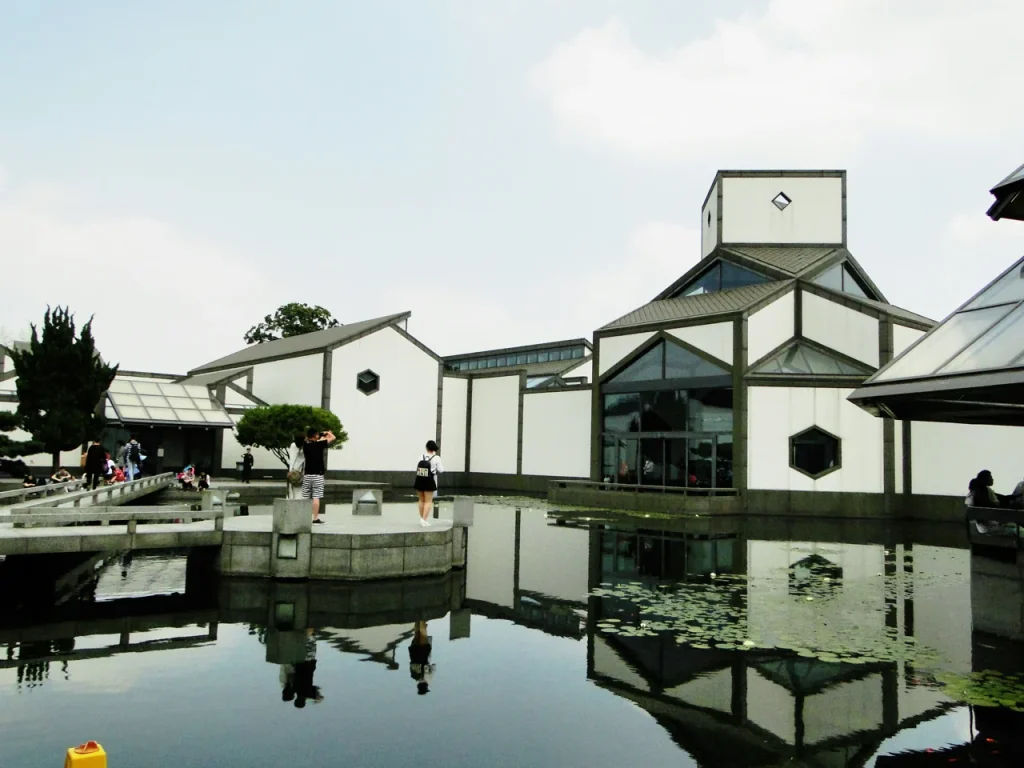
Photo credits
That image shows an interior courtyard setting, not the street entrance. Use the saved museum address to get to the site; use the photograph to recognize a relationship between buildings and water once the accessible visitor route brings it into view.
For a comparison with an older garden landscape, the Humble Administrator’s Garden guide describes ponds, pavilions and framed views. Keep that as a separate visit with its own admission arrangements, rather than assuming the museum visit includes the garden.
Look through the museum’s geometric windows
The broad courtyard view becomes more intimate at a window. In the photo below, a hexagonal opening encloses a tree, a white wall and another window beyond. The dark interior makes the bright scene outside especially distinct. The opening selects a small composition from a larger space.
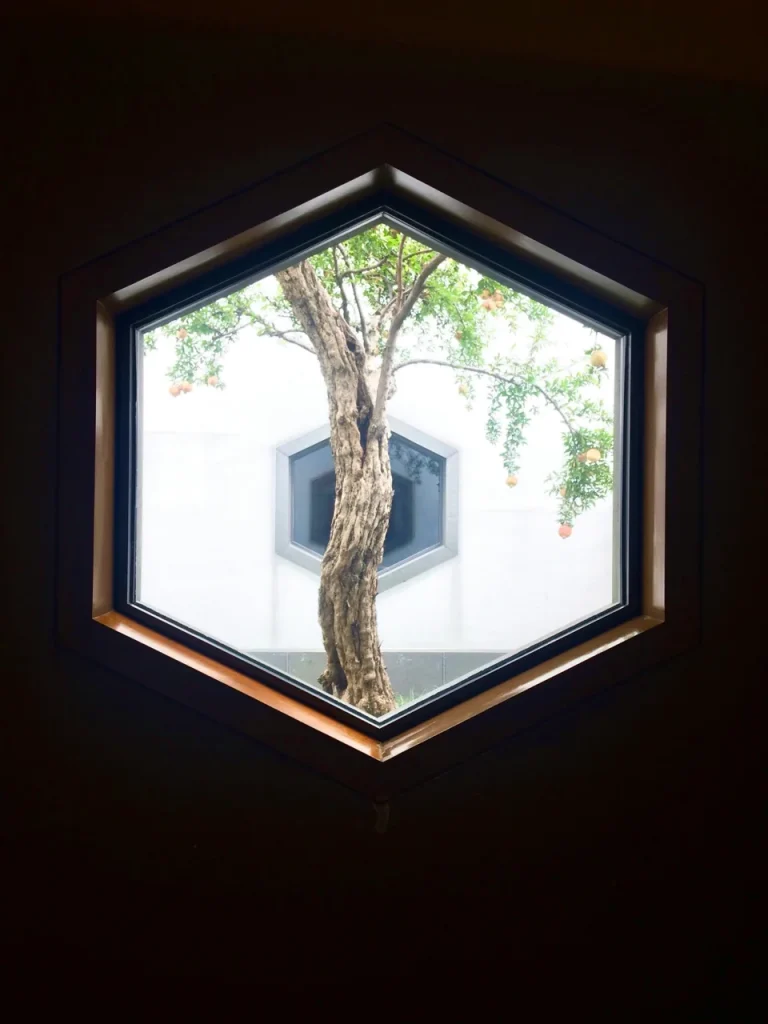
Photo credits
The near frame, tree trunk and distant opening give you distinct layers to notice. Let your eyes move between them before taking a photograph. That is a way of reading the view, rather than a prescribed walking circuit: the museum’s open passages and signs determine where visitors can go.
Choose among the museum’s documented collection themes
The framed views can hold your attention, but leave room for the objects. The museum’s official brochure describes four permanent-collection series. Use those themes to choose what interests you; this historical collection overview doesn’t confirm today’s rooms, rotations or individual objects on display. “Wu” in the titles refers to the Suzhou region and its cultural history.
| Brochure title | What the series covers | A useful question for the labels |
|---|---|---|
| Wu Treasures (吴地遗珍) | Archaeological finds from the Suzhou area | Where was the object found, and what does the label establish about its use? |
| Wu Pagoda Relics (吴塔国宝) | Buddhist objects found in Tiger Hill’s Yunyan Temple Pagoda and Ruiguang Pagoda | How does the object’s discovery location help explain its religious setting? |
| Wu Arts and Crafts (吴中风雅) | Ming and Qing crafts, including furniture, jade, writing utensils and silk clothing | Which material and purpose does the label identify? |
| Wu Paintings and Calligraphy (吴门书画) | Works associated with Suzhou’s Wu school of painters and calligraphers, shown in changing thematic selections | What does the label say about the artist, subject and period? |
I would pick the theme that raises a question you actually want answered, then spend time with the labels there. A few understood objects can give the building a stronger connection to the city than a fast pass through every display case. A silk garment in a wider craft collection, for example, invites a different visit from a museum devoted to textile production.
Paintings and calligraphy need particular flexibility because the brochure describes changing selections. If a named work is your reason for coming, ask the museum whether it is currently on view before making the trip depend on it.
Confirm admission before building a day around the museum
Those interests give the visit a purpose; the next task is to establish whether the chosen date works. Start with the Suzhou Museum official website and select information for the Dongbei Street main museum. Check its current opening notice, admission or reservation requirements, accepted identity documents and any rooms you especially want to see.
Current hours, charges, passport booking options and the day’s accessible areas haven’t been verified for this guide. An old opening schedule or an image of an empty courtyard cannot settle those questions. If the official information doesn’t explain your document type or preferred gallery, contact the museum before committing to the visit.
The existing one-day Suzhou itinerary centers on a garden and Pingjiang Road. Adding this museum means revising that plan and allowing for the transfer, rather than squeezing the galleries into an unexplained gap. Once admission is confirmed, decide what the museum replaces. For the rest of a China trip, the China Culture Way destination collection provides the broader planning context.
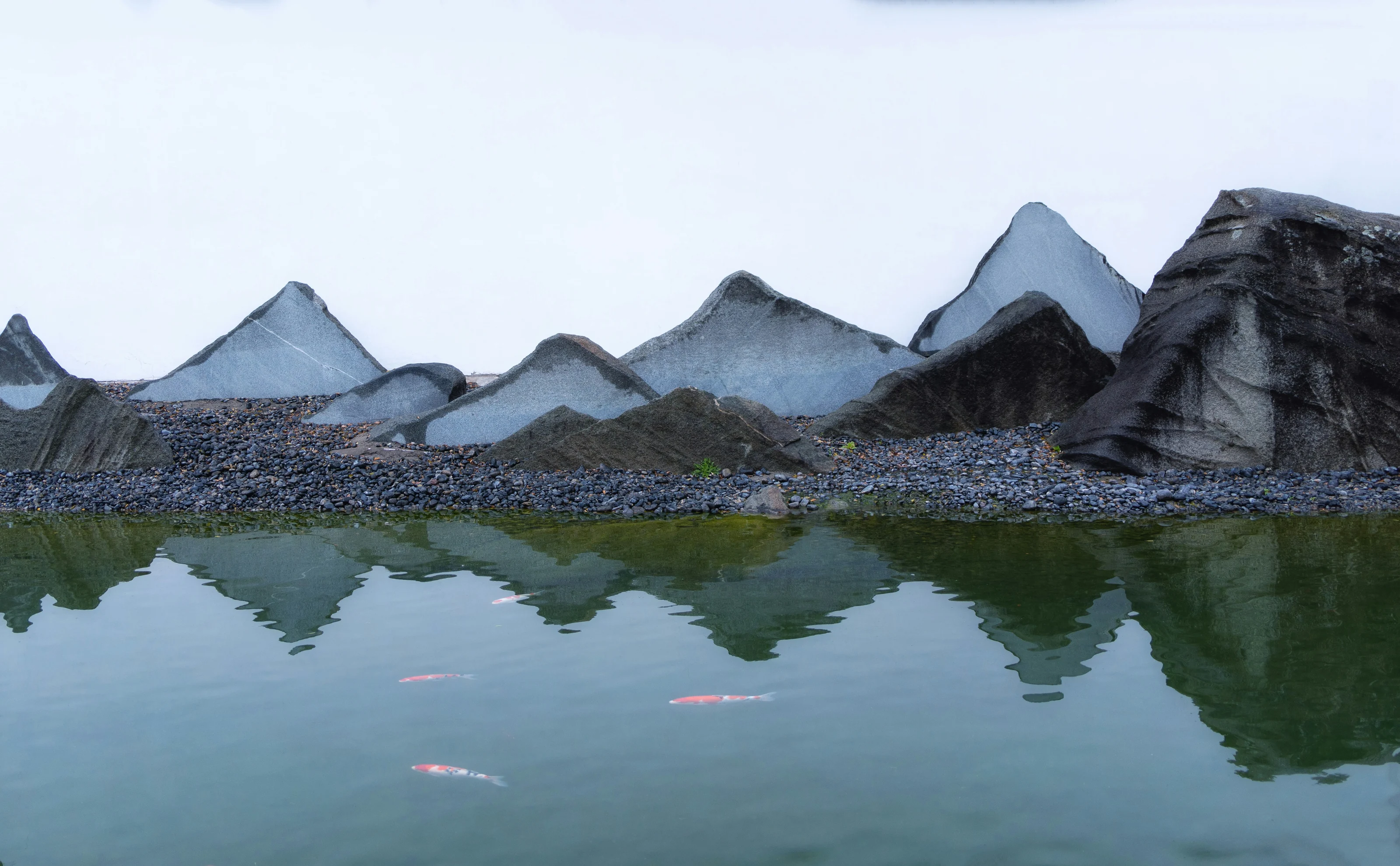
Featured image explanation: Angular stone slabs and their reflections form the museum pond scene; the image does not show the Dongbei Street entrance.
Photo credits
Photo: Jon Geng / Unsplash / Unsplash License. Cropped vertically to 1.9:1, resized and compressed to WebP.
Explore the Suzhou city guide →