At Panmen Gate in Suzhou, a waterway enters the fortified wall beside the land route. That pairing gives the visit its subject: how a city admitted movement by boat and on foot while defending its entrances. The enclosed space between the land gates adds another part of the answer. Wumen Bridge and Ruiguang Pagoda are separate landmarks within the wider scenic area.
Follow the water passage through the defenses
Look at the mouth of the channel. In the photograph, water narrows toward a dark arch beneath the battlements, while a roofed gate tower stands farther back, so you can see the water passage and the building above it together. The opening belongs to a fortified wall.
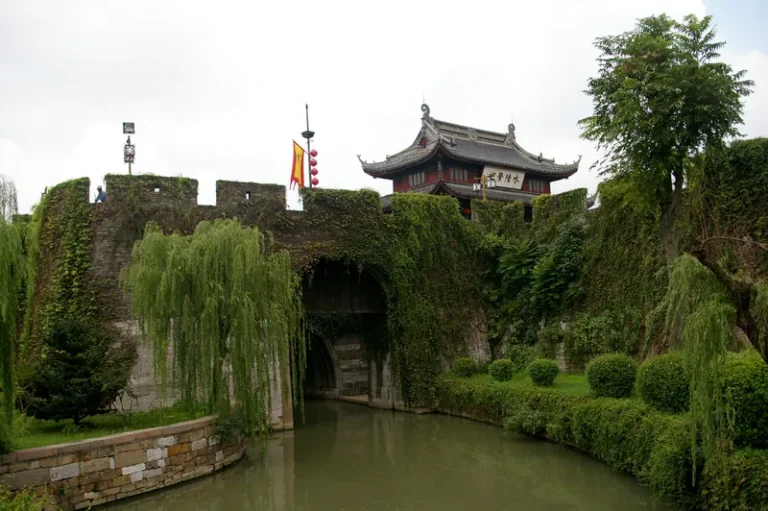
Photo credits
The plaque 水陸縈蟠 means Water and land winding together; a lamp partly obscures its leftmost character.
Photo: Jakub Hałun / Wikimedia Commons / CC BY-SA 4.0. Full original framing retained, resized from 3008 x 2000 to 800 x 532 and compressed as WebP; no retouching or text added. Derivative under CC BY-SA 4.0.
Suzhou’s municipal government describes two land gates and two water gates, with the land and water entrances side by side. The photograph shows an approach to the water passage; the full arrangement comes from that architectural description. I find the distinction useful because a single arch can become the whole memory of a place whose interest lies in connected passages.
For a broader choice of outings, the Suzhou destination guide introduces garden, canal-street and silk interests. Panmen adds a city-defense subject to those choices, with the relationship between wall and water taking the lead.
The land gates enclose a defensive barbican
The paired land gates explain how the wall did more than mark an entrance. Between them lies a barbican, an enclosed defensive space. The city’s account describes this area as a trap where attackers who entered could be struck from above. A passage through the outer gate therefore brought an attacker into another controlled space before the inner entrance.
The enclosure deserves a pause. I’d look at where someone would stand after passing the outer gate, then trace the surrounding walls with my eye to see how they hemmed that person in. The space between the gates makes the defensive purpose easier to grasp than the decorated tower overhead.
The contrast with Tiger Hill’s pagoda and stone landscape is substantial. Tiger Hill’s guide follows a hill visit through buildings, Sword Pool and the leaning pagoda. At Panmen, the paired entrances and enclosure supply the architectural thread. Choose according to which subject interests you, then account for the journey separately.
Panmen’s gate body and tower have different ages
The tower above those defenses belongs to a later chapter than the gate body below. The municipal government’s Panmen account identifies the present gate structure as a Yuan-dynasty rebuilding, later renovated during the Ming and Qing dynasties. It records the gate tower’s reconstruction in 1986 after the earlier tower was destroyed in war.
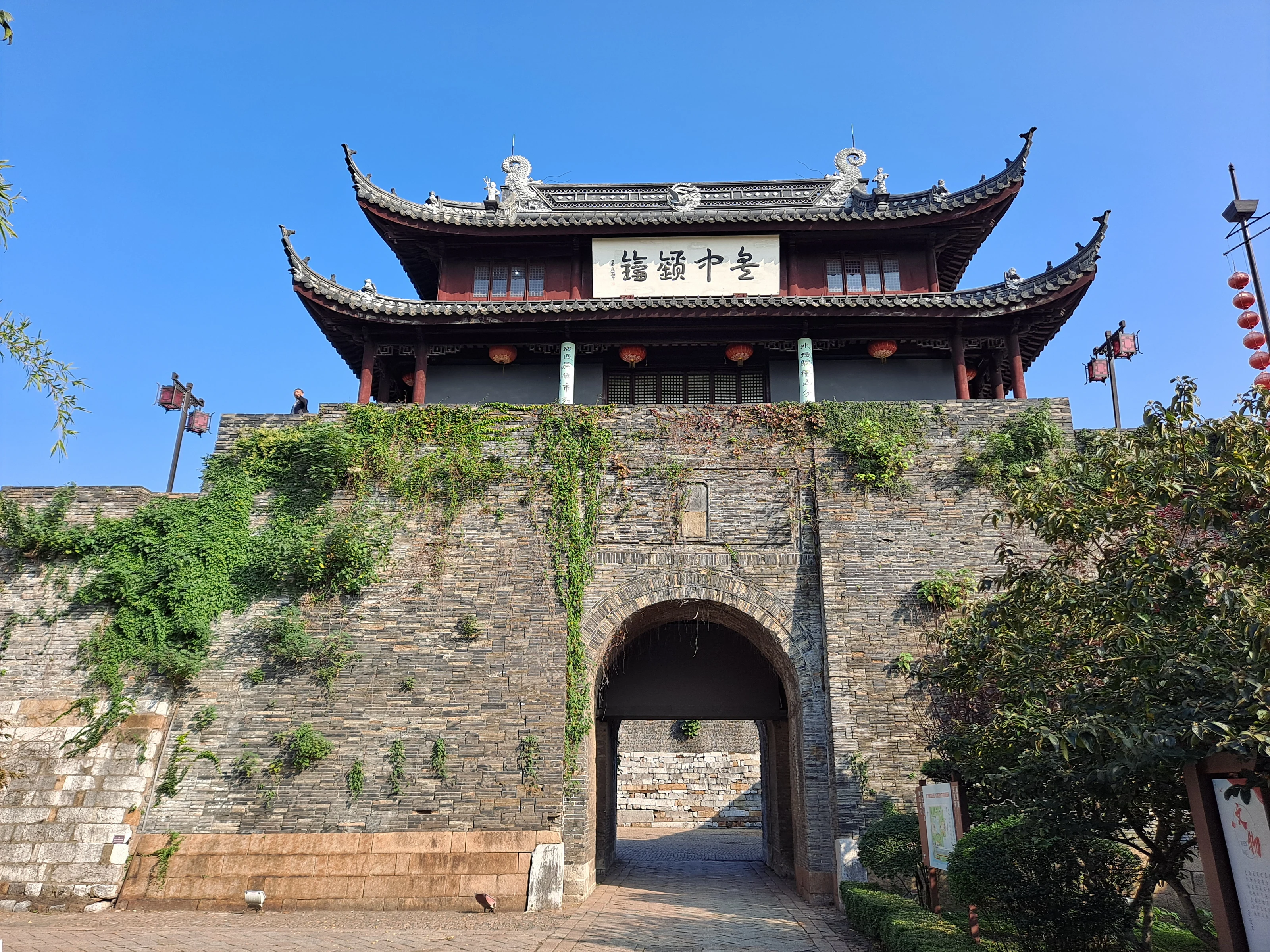
That distinction changes how I read the land-gate photograph used for this guide’s preview. The ivy-covered wall, arch and roofed tower appear together, but their shared view doesn’t give every component the same date. Panmen has a long history of rebuilding and repair; the visible tower shouldn’t be treated as an untouched survivor from Suzhou’s ancient beginnings.
Featured image explanation: The preview shows the land gateway beneath a two-tier gate tower. Its main plaque reads “Key to the Wu region” (吳中鎖鑰), referring to the gate’s strategic position. Small vertical inscriptions are not fully legible in this image, so no full transcription is offered.
Keep Wumen Bridge and Ruiguang Pagoda distinct
The gate tower is part of Panmen’s defenses; Ruiguang Pagoda is another building. The city identifies Panmen Gate, Wumen Bridge and Ruiguang Pagoda as the scenic area’s three attractions. Keep those names separate when saving photographs or checking a visitor map: a view of the gate tower doesn’t show the pagoda.
Wumen Bridge crosses the water, while the water gateway carries a passage through the fortified wall. The scenic area’s bridge description records Qing-dynasty renovation of the existing bridge. Those are different structures with different histories, even though both belong to the same waterside setting.
I’d use the attraction names to orient a visit, then spend the closest attention on the paired entrances. The photographs here illustrate the gates. A detailed study of the bridge or pagoda would need views of those buildings themselves.
Give the fortified passages a place in your Suzhou day
Those separate landmarks help define what to ask before going. Current ticket prices, hours, night visits, passport booking and tower entry have not been verified for this guide. Confirm admission for your date and the permitted areas in the gate complex and Ruiguang Pagoda. Ask which parts are open. Save Panmen (盘门) with the confirmed visitor entrance when arranging transport.
For a later canal-street outing, the Pingjiang Road walking guide explains the street, side lanes and optional tea stops. Its canal setting offers another subject after the fortifications. Check the transfer from Panmen when deciding whether the combination fits the time available.
The Suzhou weather and season guide weighs outdoor walking against weather and planting interests. For Panmen, the passages and defensive enclosure give a reason to visit beyond seasonal foliage. Let the forecast determine how much more outdoor time to add, and use China Culture Way’s city introductions when choosing the next destination beyond Suzhou.
Photo credits
Photo: 钉钉 / Wikimedia Commons / CC BY-SA 4.0. Cropped from (0,200) to (4000,2307), resized to 1200 x 632 and compressed as WebP; no retouching or text added. Derivative under CC BY-SA 4.0.

Explore the Suzhou city guide →