The China National Tea Museum in Hangzhou offers a choice between Chinese tea history at Shuangfeng and a wider view of tea around the world at Longjing. For an introduction to Chinese tea and West Lake Longjing, I’d start with Shuangfeng, while Longjing would be my choice when world tea culture and a hillside garden are stronger reasons for going. The campus name matters when saving your destination: both belong to the same museum.
Choose Shuangfeng for Chinese tea history and West Lake Longjing
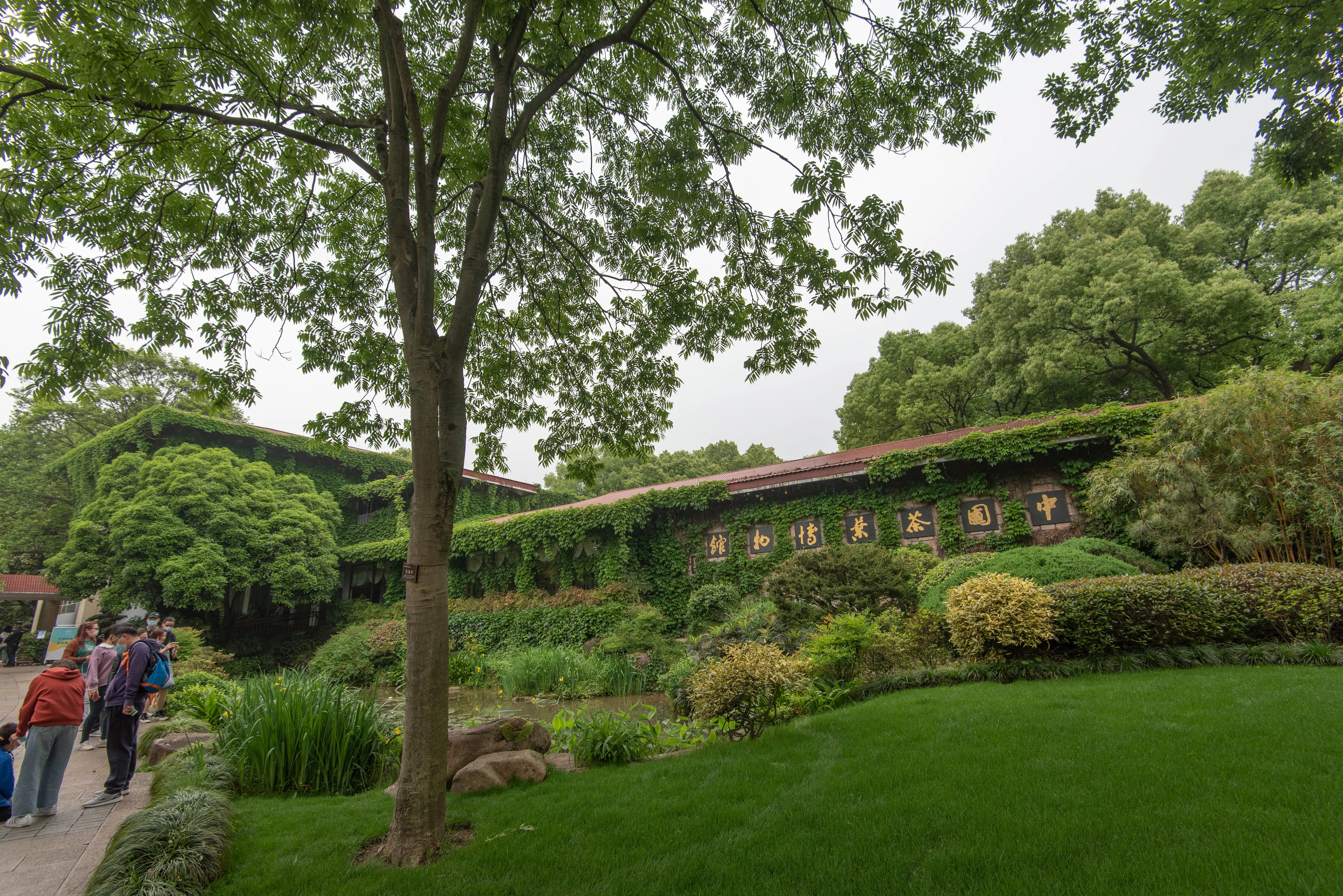
Shuangfeng (双峰馆区), at 88 Longjing Road (龙井路88号), brings the broad Chinese tea story together with an exhibition about the local tea. The museum’s visitor guide lists Chinese tea culture, West Lake Longjing tea and donated tea utensils among this campus’s permanent exhibitions. Those subjects give a first visit a useful progression from tea in Chinese life to a particular place and the objects used to prepare it.
West Lake Longjing is the local tea name to recognize here, and an exhibition devoted to it makes Shuangfeng a sensible choice if you’ve been seeing “Longjing” on village signs or tea packets and want cultural context before arranging a tea-country outing. I’d keep that exhibition as the anchor rather than treating every tea-related display as something to finish.
The donated tea-utensil exhibition adds a different way to look. Its official description discusses purple-clay teaware through changes in shape, material and decoration. A pot can therefore be read as a designed object, alongside the account of drinking tea. That gives someone who enjoys museums more to follow than a list of tea names.
The setting belongs to the visit too: the official guide describes bridges, water, shaded trees and winding paths at Shuangfeng. For the surrounding city, the Hangzhou destination guide introduces the lake, temples and tea landscape. Choose where the museum fits among those interests before adding another stop.
Choose Longjing for world tea and a hillside setting
Longjing (龙井馆区), at 268 Wengjiashan (翁家山268号), shifts the emphasis toward tea beyond China. The museum lists a world tea culture exhibition here, following tea’s spread and the drinking cultures of different places. A separate exhibition, Tea and the World, addresses traditional Chinese tea-making practices and associated customs. These are English descriptions of the listed themes; on-site titles may be presented differently.
Longjing’s landscape is part of that choice. The campus is built into a hillside beside Longjing Village, surrounded by tea gardens. The official guide identifies a tea altar at the top with views toward the tea hills and West Lake. If the outdoor setting matters as much as the displays, this is the campus to investigate. Anyone who needs to limit slopes or steps should confirm the actual visitor route before relying on a general description of the grounds.
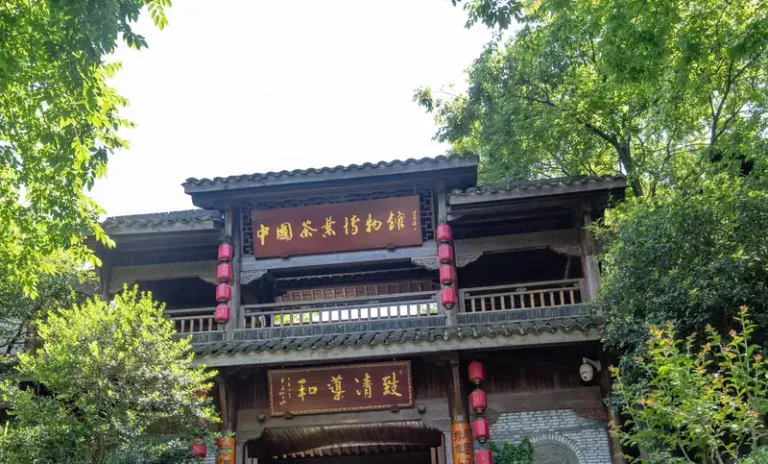
Photo credits
The top plaque names the museum; the other inscriptions refer to clarity and harmony. Photographed in May 2022.
Photo: Siyuwj / Wikimedia Commons / CC BY-SA 4.0. Cropped to (800,0,5600,2900), resized to 800 x 483 and compressed as WebP; no retouching or added text. Derivative under CC BY-SA 4.0.
The village is a separate reason to come to this area. The Longjing Village guide covers its imperial tea site, village walk and arranging a tea stop. Use that page when the landscape outside the museum is the main interest; use the campus’s exhibition themes when the museum is the reason for the journey.
Separate tea exhibitions from a booked tea experience
Exhibition themes can help you choose a campus, while a tasting or workshop needs its own confirmation. A display about tea-making does not establish which demonstrations or participant sessions will run on your date. Before making an activity central to the visit, ask the museum which campus hosts it, the language used, whether places must be booked and what it costs.
For picking, processing or a hosted tasting in tea country, the Longjing tea-experience guide explains what to ask about the activity and its inclusions. That’s a different decision from choosing a permanent exhibition. A clear reply about the session matters more than a photograph of a tea field.
If the uncertainty is how to behave when tea is offered, the guide to accepting and sharing tea covers the guest’s role. You can enjoy a tea-history exhibition without first learning a formal tea service.
Photo credits

Confirm the campus before fixing the museum day
The museum’s official visitor guide currently gives 09:00–16:30, with Tuesday closure except on public holidays. That timetable appears on its guide to the museum’s two campuses. Confirm your chosen campus and any temporary exhibition closures for the date you intend to visit; the page does not state a last-entry time.
Current reservation requirements, admission charges and the entry procedure for foreign-passport visitors have not been verified for this guide. Ask about those together, including whether an activity has separate booking or payment. If using a passport, confirm the accepted booking method and what document to bring. An older account of free entry or walk-in access is not enough to settle the present arrangement.
For a short stay, I’d choose the campus whose exhibitions answer the question that brought you here, then leave room for its grounds. The Hangzhou one-day plan helps weigh tea-country time against the lake and a temple visit. Save the selected campus’s Chinese name and address with its confirmed entry instructions before setting out.
Written by Alex Chen, founder and editor of China Culture Way.
Featured image explanation: The low museum building sits behind shrubs and a lawn at Shuangfeng in this May 2022 photograph. The Chinese plaques name the China National Tea Museum; small signatures and plant labels are not visitor instructions.
Photo credits
Photo: Siyuwj / Wikimedia Commons / CC BY-SA 4.0. Cropped to (1100,700,6016,3289), resized to 1200 x 632 and compressed as WebP; no retouching or added text. Derivative under CC BY-SA 4.0.

Explore the Hangzhou city guide →