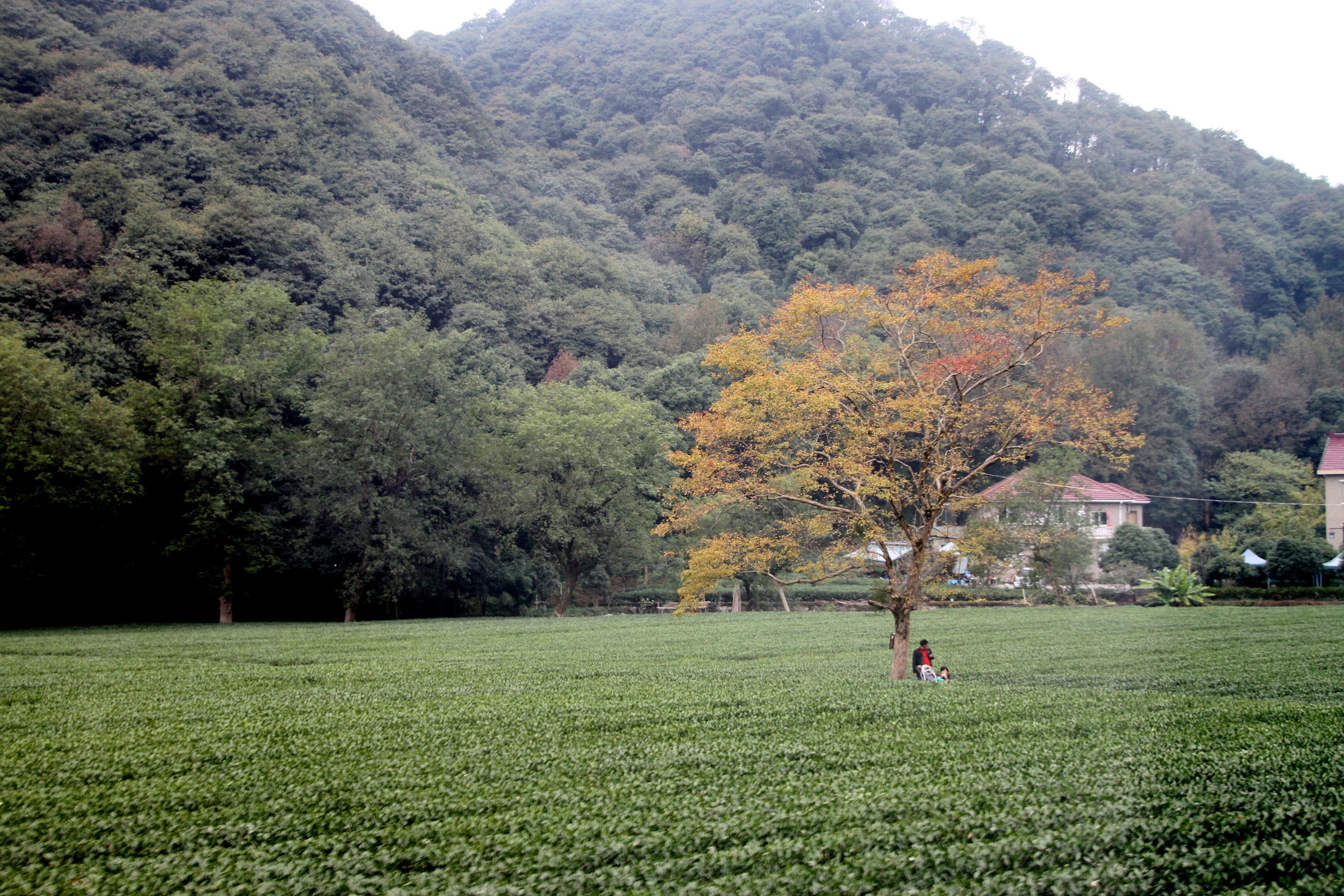
Base a Longjing Village tour on a village walk, Shifeng’s imperial tea site and a tea stop with an agreed price, going independently for the scenery or arranging a guide for help asking about the tea. Picking leaves or watching tea being made needs a separately confirmed activity; neither follows automatically from arriving in the village.
Find Longjing Village and the right tea-museum campus
Save Longjing Village (龙井村) as the destination, rather than searching only for “Longjing tea.” The latter names a tea and can turn up shops as well as places to visit. Hangzhou’s official introduction places the Longjing Imperial Tea Garden at Lion Peak Hill, also called Shifengshan, in the village. That’s a concrete landmark to compare with a proposed meeting point.
The China National Tea Museum has two campuses, Shuangfeng and Longjing. Hangzhou’s museum introduction places the Longjing campus near the village. A booking that says “Tea Museum” therefore needs one more question: which campus? Save the actual venue name before agreeing on transport.
For the wider setting, the Hangzhou destination page brings the lake, temples and tea gardens together. Keep the village as the focus of this outing rather than adding every tea-related pin on the map.
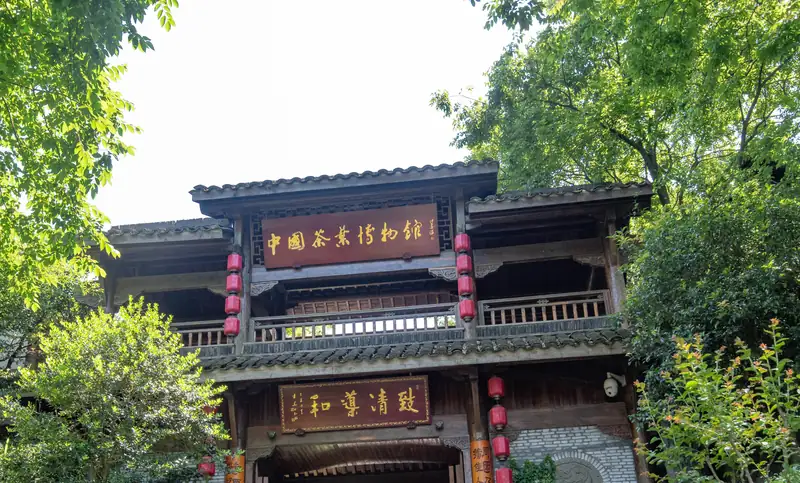
Photo credits
The other inscriptions refer to clarity and harmony.
Photo: Siyuwj / Wikimedia Commons / CC BY-SA 4.0. Cropped, resized and compressed; adaptation under CC BY-SA 4.0.
Reach Longjing with a destination name you can recognize
With the destination fixed, compare bus and taxi options from the hotel or lakeside spot where you’ll set out. Hangzhou Bus’s 2026 notices identify the 27/27B services with 茶博龙井总站(龙井村), a destination name containing the characters for Longjing Village. Use that name as a search clue, then check the current route, boarding stop and return service for your date.
The operator’s published notice describes a temporary race-day diversion. It helps identify the destination; its detour isn’t an everyday route to copy. Check the return against the train you have booked, using the day’s actual service information.
For a taxi or booked transfer, show the saved village pin or the host’s meeting point, and agree where to meet again if the return is included, rather than leaving the drop-off to a vague “tea area” description.
Give the village walk a focus at Shifeng’s imperial tea site
At the village, the imperial tea site gives the walk something specific to look for. Hangzhou’s introduction identifies eighteen ancient tea trees and the old Longjing, or Dragon Well. The same account presents Emperor Qianlong’s designation of the trees for imperial use as a legend. Treat the story as part of the place’s cultural setting.
Look at how the tea plots sit beside the village and rise toward the wooded hills. Follow visitor paths and signs, and ask the person responsible before entering planted rows. A view of a working field can be part of the visit without turning that field into a picking activity.
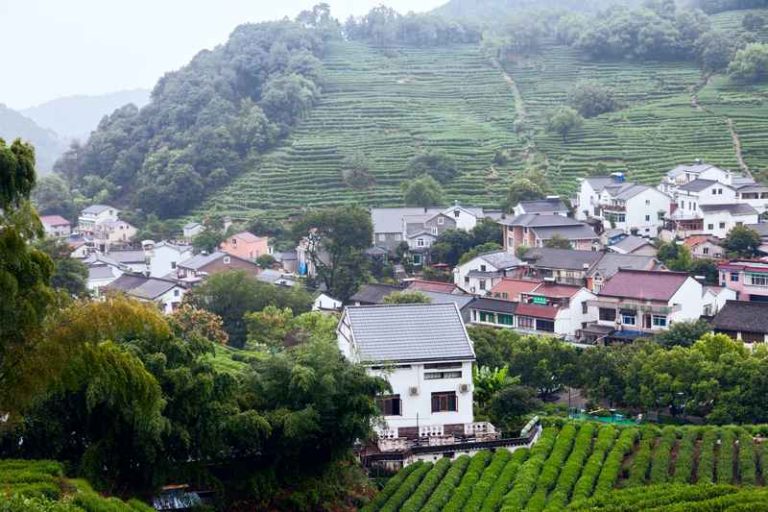
Photo credits

The imperial story also gives you a useful question at a tea stop: where were the leaves in this cup grown? A historic tree, a village name and a packet’s origin claim tell you different things. The story alone doesn’t connect a retail tea to those trees.
Compare Longjing tea stops by what the price includes
After the walk, a seated tasting can give the landscape a second point of interest. Before the tea is poured, ask which tea will be served and whether the charge is per person, per table or tied to buying a packet. Ask for the total in CNY, including any required purchase, so the price has a clear meaning.
For a guided village visit, compare the same details across offers:
- The exact meeting place and whether transport is included.
- The language used for the explanation and questions.
- Whether the tea stop is included, and what it serves.
- Whether picking or processing is a confirmed activity on your date.
- The price for your party and the conditions if an activity changes.
I’d pay for a guide when conversation is the main reason for coming. For a quiet walk and a cup, I’d start with the independent option and agree on the tea stop locally. Those are different priorities, so a longer list of inclusions doesn’t necessarily make a package more useful.
If hands-on work is the priority, the Longjing plantation-visit guide goes further into picking, processing demonstrations and tasting. Settle that activity before treating a village tour as its substitute.
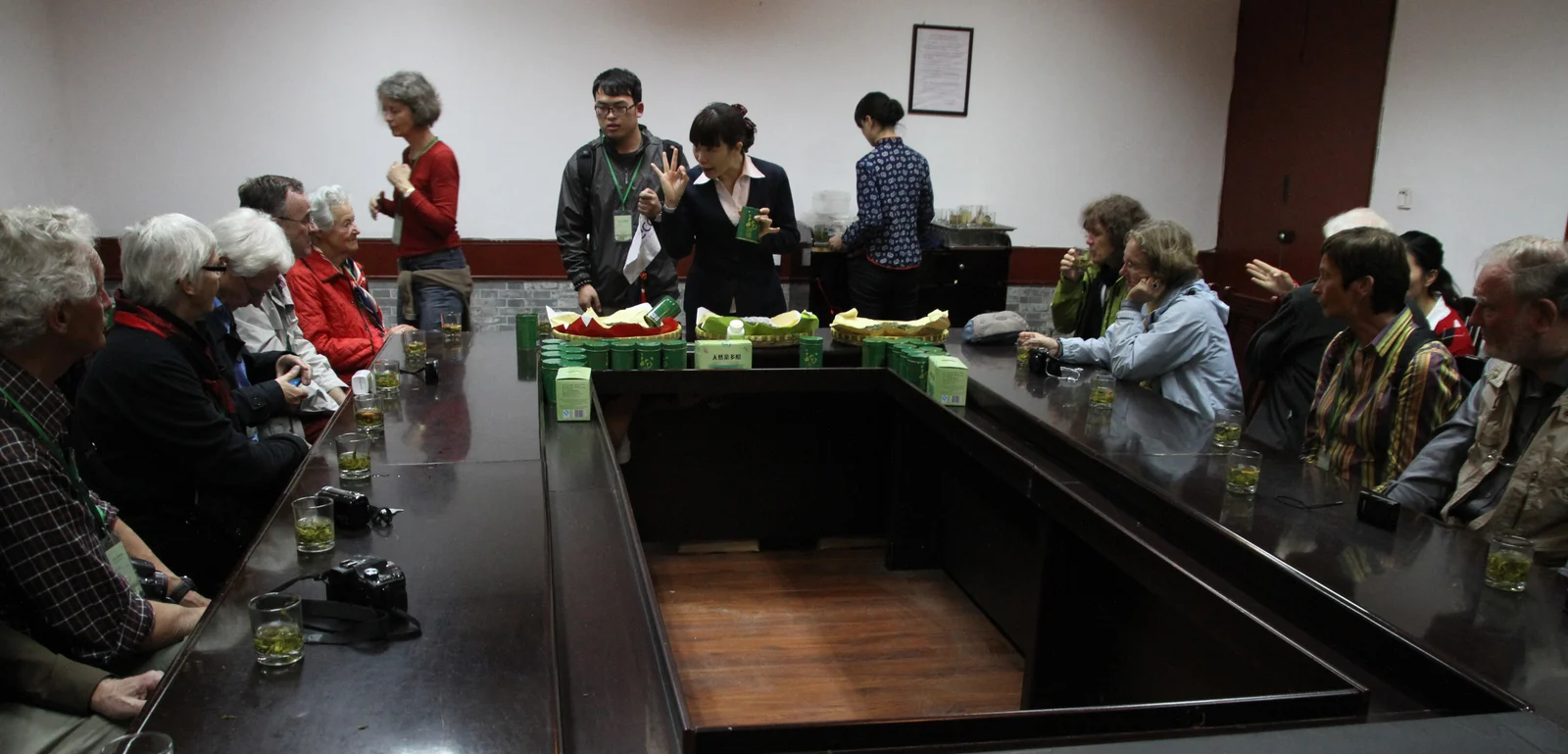
Photo credits

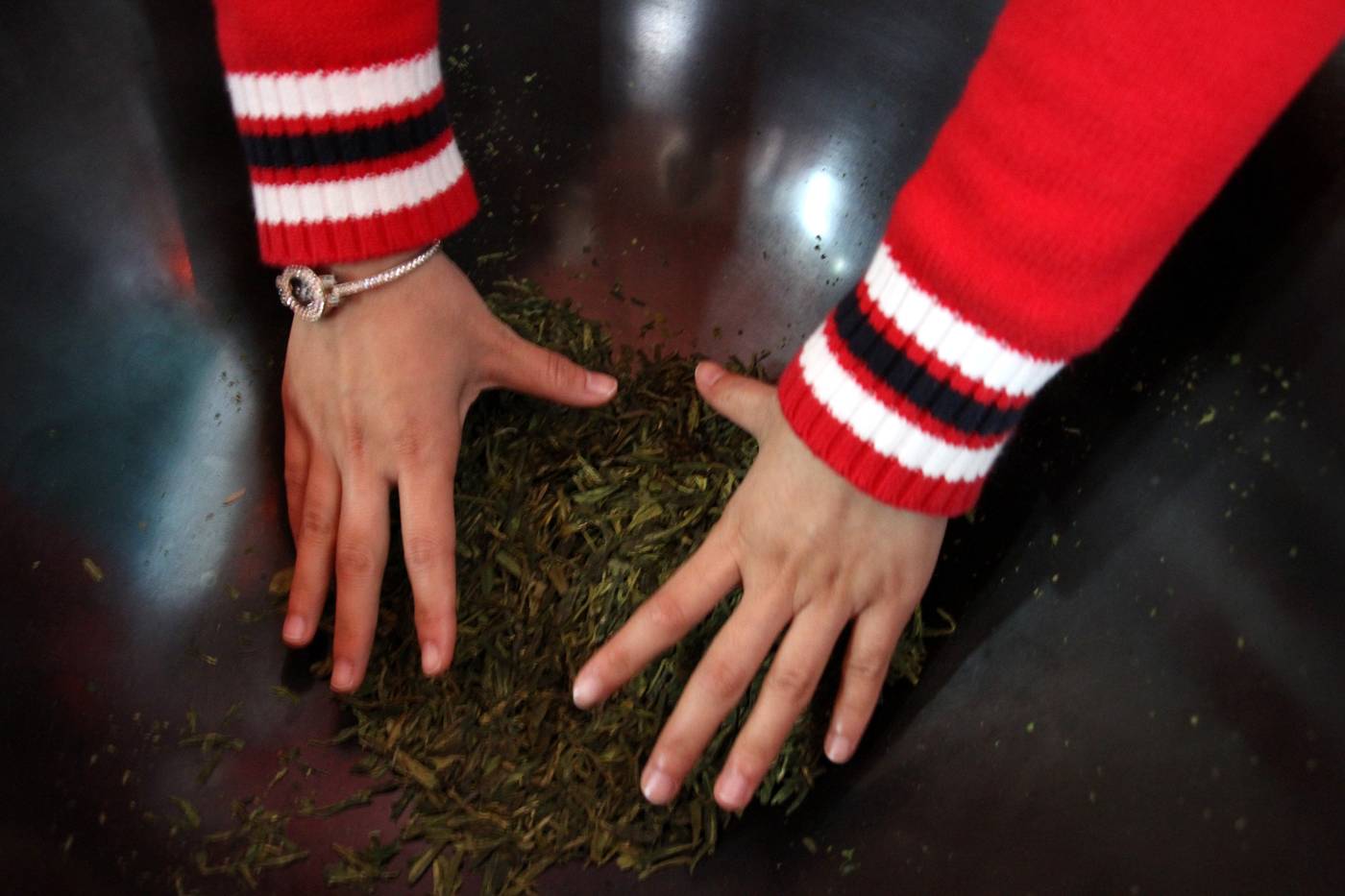
Photo credits

Choose spring for Longjing’s harvest and check the actual session
A confirmed farm activity makes the season more important. Hangzhou’s April 2025 report showed harvesting in Longjing Village’s high-altitude tea gardens. Spring is therefore a useful period to investigate for a harvest-focused visit, but that report doesn’t establish the picking dates or visitor access for another year.
Ask the host what will actually be happening on your day. Outside a confirmed harvest session, build the visit around the village, the imperial tea site and a tea stop. There is no need to make a basket of picked leaves the test of whether the afternoon worked.
The tea museum can add an indoor part if its opening arrangements fit. Check the chosen campus’s current hours, admission arrangements and activity schedule before relying on it, especially when rain is the reason for changing plans. An exhibition visit and a booked workshop also need different amounts of planning.
Allow a tea-focused afternoon before adding another Hangzhou stop
For the village walk, imperial tea site and a seated tea stop, I’d budget two to three hours on site, plus both journeys. That’s an editorial allowance, not a timed walking route; a booked activity should use the host’s stated duration instead.
The Hangzhou one-day plan makes tea-country time an alternative to a temple-focused branch. Keep that choice if the day is already tight. When Lingyin is the priority, settle its entry arrangements using the temple reservation guide before judging how much time remains.
Before leaving the lake or your hotel, have the village pin, the tea stop’s agreed terms and a workable return plan saved. Those are enough to turn a vague “Longjing tour” into an afternoon you can actually arrange.
Written by Alex Chen, founder and editor of China Culture Way.
Featured image explanation: The Chinese shop signs include 茶庄, meaning “tea house.”
Photo credits
Photo: Niklas Dougherty / Wikimedia Commons / CC BY-SA 4.0. Cropped, resized and compressed. Derivative under CC BY-SA 4.0.

Explore the Hangzhou city guide →