A Longjing tea plantation visit is worth booking for the activity it actually provides: picking leaves with a host, watching tea being processed, or learning about the finished tea through a tasting. A photograph of green hills won’t tell you which is included. The useful detail is what your party will do on the date you’re considering.
Match the Longjing tea activity to the reason for going
For time among the tea bushes, look for a hosted picking session. For an interest in how leaves become tea, look for a processing demonstration or a confirmed opportunity to watch production. For questions about the cup, a tasting with someone who can explain the samples may be the better fit.
Those choices don’t require the same visit. A field walk can supply the landscape without a lesson, while a tasting can give you plenty to discuss without entering a planted row. Buying a longer package makes sense when its extra activities matter to you.
Hangzhou’s tourism pages identify Meijiawu (梅家坞) and Longwu (龙坞) as places to investigate for tea experiences. These are destination leads, rather than a list of hosts accepting bookings today. An offer needs an exact venue and contact person before it becomes a workable plan.
The imperial tea site, village paths and Chinese transport destination names are collected in the Longjing Village guide. Here the question is what a booked tea activity adds to that walk.
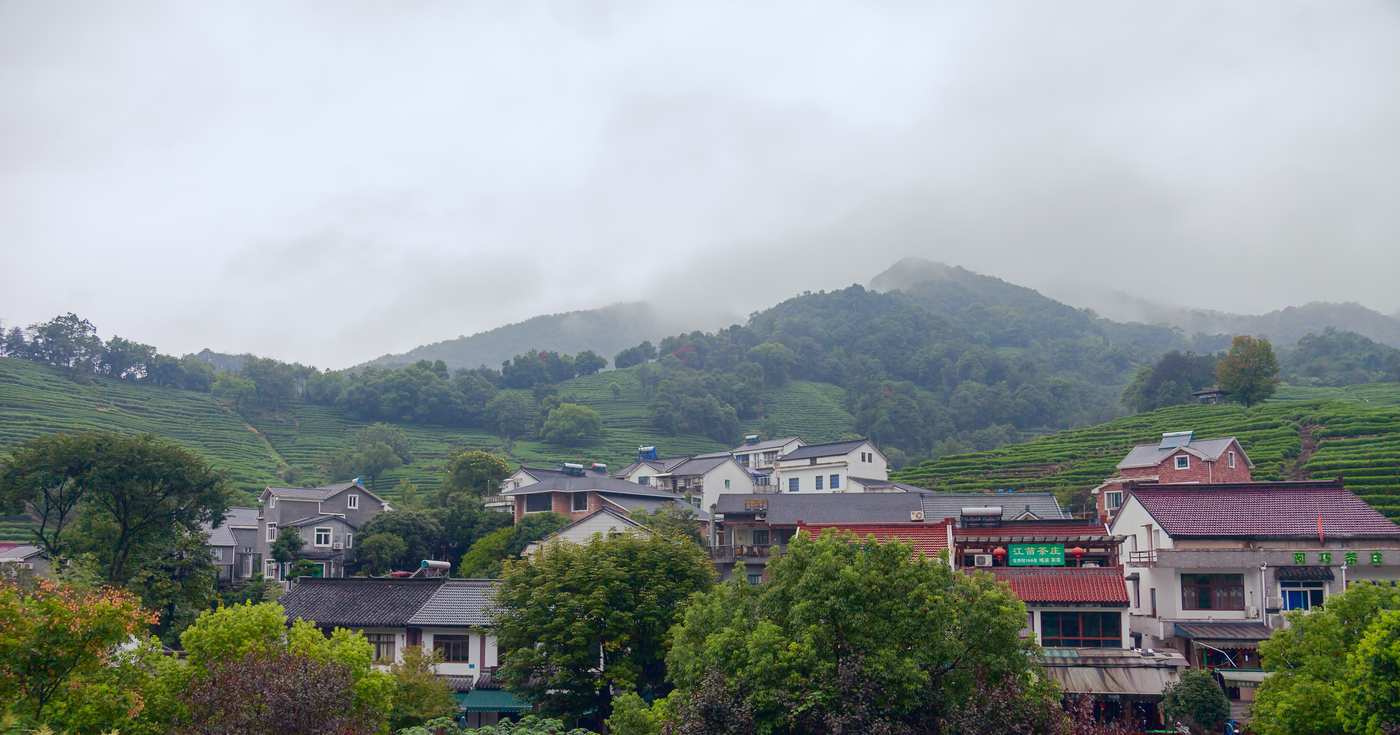
Photo credits

Tea picking depends on the host’s field and harvest
Picking adds participation, so the important confirmation is permission to enter a particular field and work with someone responsible for it. A view across tea rows doesn’t establish that visitors can pick there. A useful offer describes the guided activity as well as showing the landscape.
Spring is a sensible starting point for investigating a harvest visit. Hangzhou’s city portal reported that the first batch of West Lake Longjing tea in Wengjiashan was harvested on March 17, 2026. That is a report about that year’s crop, rather than a fixed start date for every tea field or a visitor-session calendar. Read it as a seasonal harvest report when discussing dates with a host.
The host’s answer should explain what happens to the leaves afterward. Keeping a small basket of fresh leaves, watching them being processed and taking home finished tea are different inclusions. A picking session needs a clear answer about which of those, if any, belongs to the price.
Weather and farm work belong in the same conversation. I’d want to know whether a change means a rescheduled visit, a different activity or a cancellation before committing the afternoon to picking.
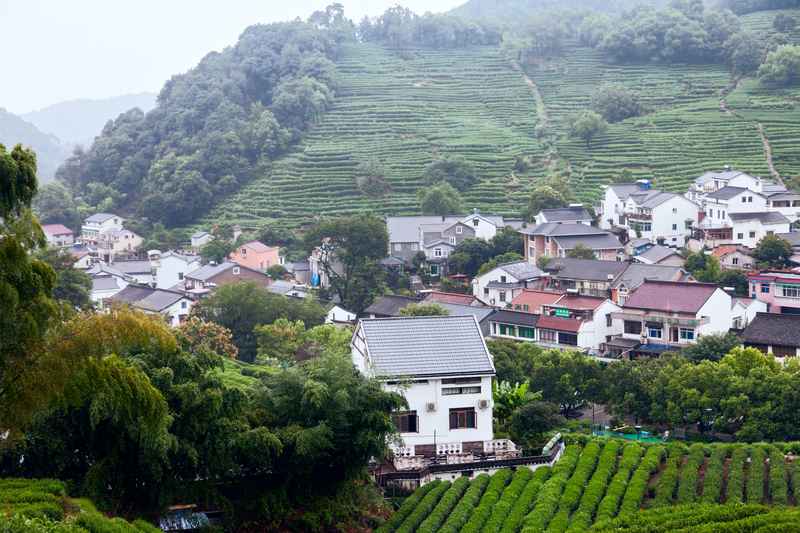
Photo credits

A Longjing processing demonstration needs something to follow
With processing as the main interest, the distinction is between a session arranged to explain the work and a visit timed around work already happening. A demonstration can suit questions and a clear view. A working session may show a narrower part of production, depending on what the host confirms.
An explanation becomes easier to follow when the host connects the leaf in front of you with the finished tea. Fresh leaves and finished dry leaves, or a sample before and after the demonstrated stage, give the conversation a concrete subject. That’s the kind of explanation I’d look for in a description, rather than a promise of a photo beside equipment.
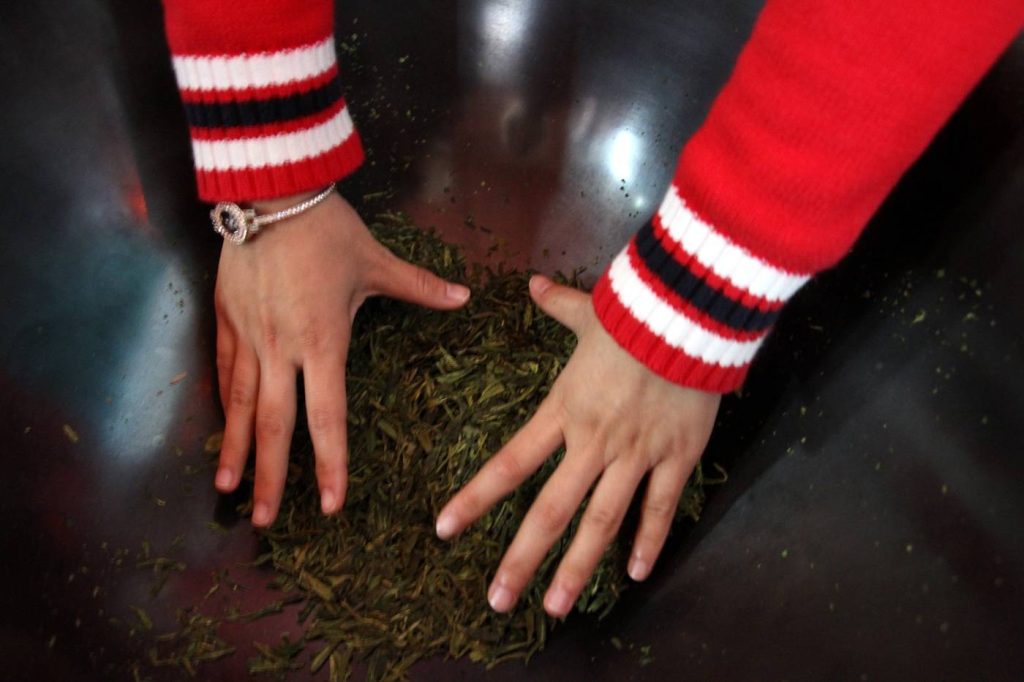
Photo credits

“Hands-on” also needs detail. Watching, handling a sample and using equipment under instruction are separate activities. The booking should identify the participant’s role; this guide doesn’t provide a tea-making procedure to try during a visit.
A Longjing tasting should identify the tea in the cup
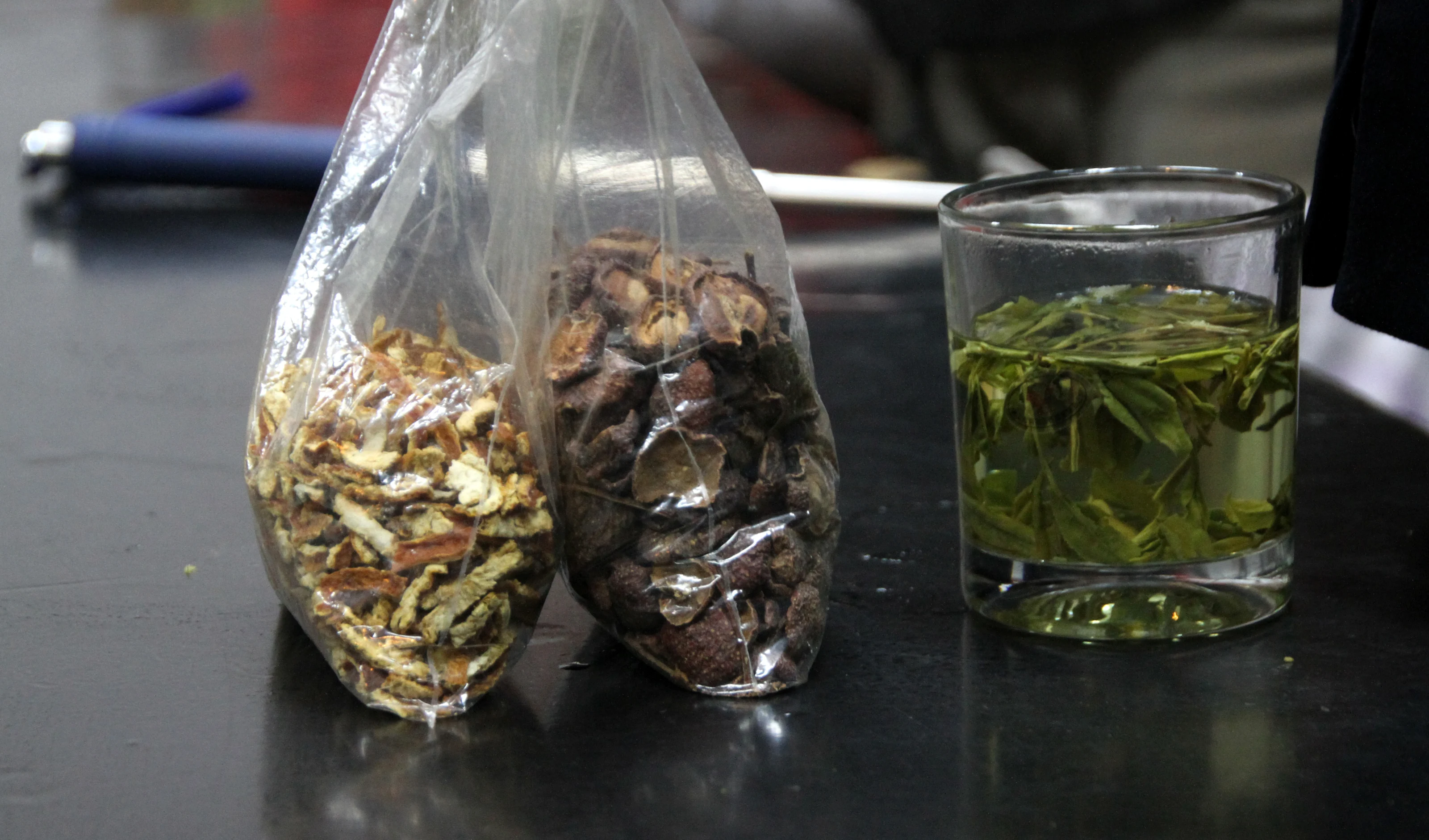
A tasting can bring the field and processing discussion together, provided the tea being served has a clear identity. The useful information is the tea’s name, stated origin and harvest, followed by an explanation of what the host wants you to notice in it.
For a comparison tasting, a named difference gives the samples a purpose. The host might offer teas from different harvests or explain a processing difference. The description should say what is being compared, rather than leaving you to assume that a higher price means a particular origin or grade.
A seat beside a tea field is a pleasant setting, but it doesn’t establish where a sample was grown. The cup and any tea offered for sale also need to be identified separately if they’re different products.
The tasting charge deserves the same clarity. A per-person session, a shared pot and a required packet purchase lead to different totals. A written quote can show the charge for your party and whether buying tea afterward is optional, without relying on an advertised starting price.
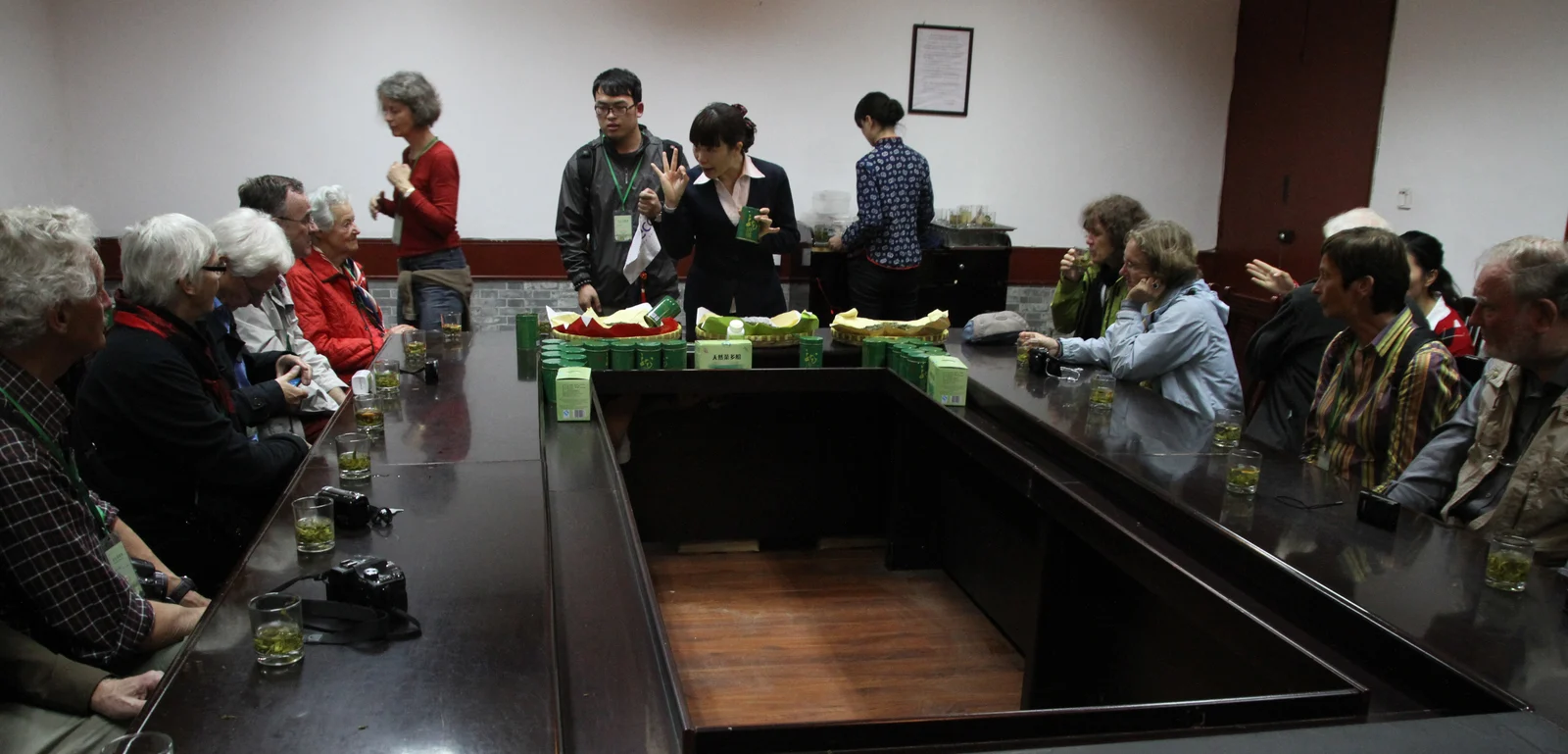
Photo credits

Get a written outline before fixing the tea-country day
Once an activity looks promising, a short message can turn its description into something you can compare. Here’s an editorial enquiry template to adapt, rather than a booking form for a particular operator:
We’d like to visit on [date] with [party size]. Our main interest is [picking / processing / tasting]. What will we take part in that day, and in which language? Please send the exact meeting place, the session length, the total price for our party and what’s included. Is buying tea optional? If the planned activity can’t happen, what alternative or cancellation terms apply?
Transport belongs in that reply. A hotel pickup, a meeting at a village and a meeting at a particular farm are different starting points, and where a transfer is offered, its pickup and return arrangements should be part of the quote.
Tea country and a temple visit occupy separate branches in the Hangzhou one-day itinerary. A confirmed session can set the order of that day; an unconfirmed picking idea shouldn’t force a rushed lake visit.
For a broader seasonal choice, the Hangzhou timing guide compares tea interests with lotus and autumn scenery. The Hangzhou destination overview places those choices alongside the city’s other visits.
Compare replies by the activity you care about most. A clearly described tasting may be a better use of the afternoon than a picking package whose field access, explanation and final price are still vague.
Written by Alex Chen, founder and editor of China Culture Way.
Photo credits
Photo: Gerd Eichmann / Wikimedia Commons / CC BY-SA 4.0. Cropped to a landscape frame, resized and JPEG compressed; no content added. Derivative under CC BY-SA 4.0.

Explore the Hangzhou city guide →