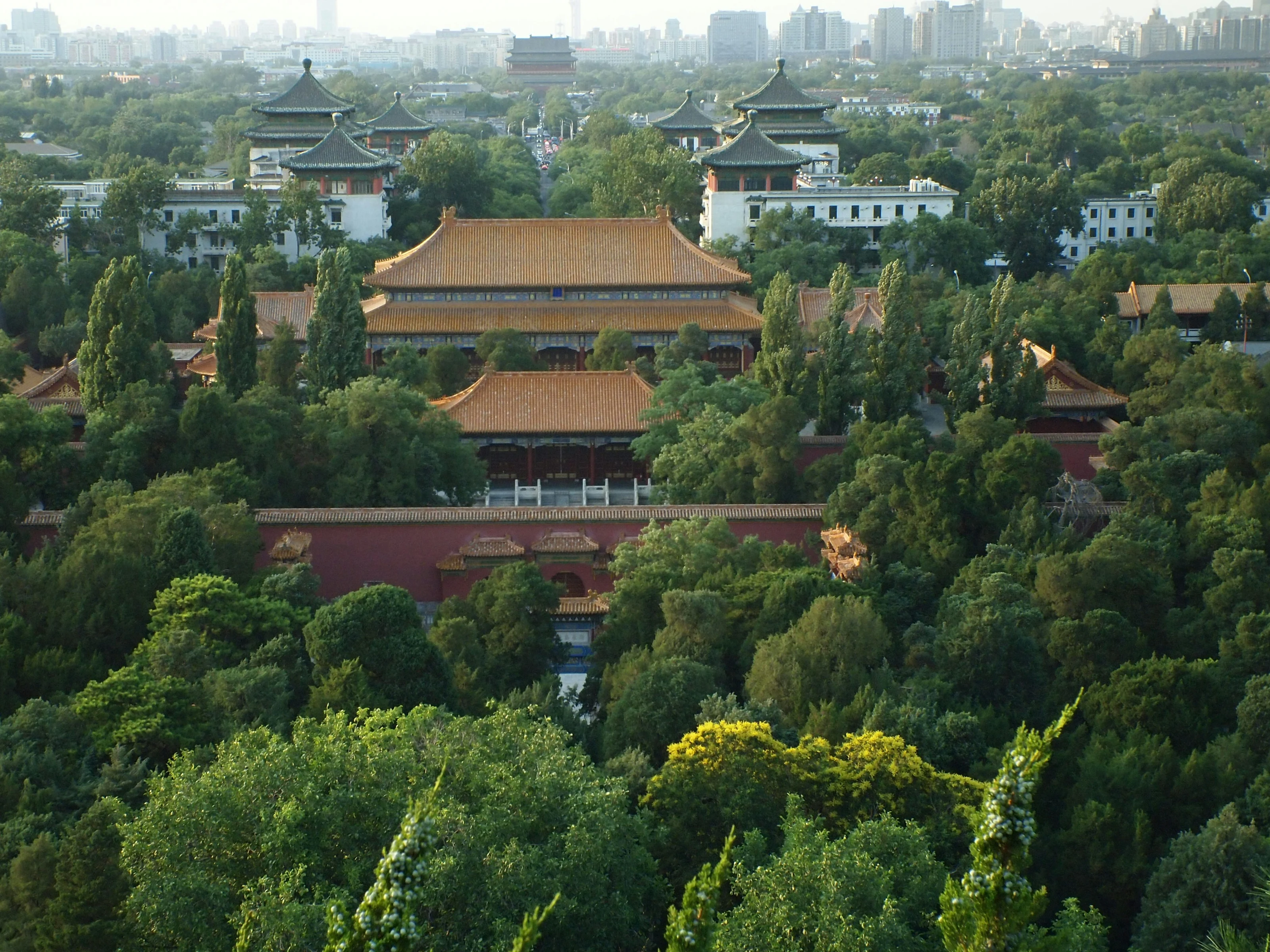
For one day in Beijing, follow the Forbidden City south to north, with Jingshan Park as an optional finish. Without a palace reservation, take the Drum Tower–Shichahai hutong route instead. Your admission time decides which version fits; the routes and afternoon cuts below show what to keep.
Choose a Beijing day around your palace reservation
A confirmed Forbidden City reservation gives the day its first fixed point. Check the date and session before arranging anything around it. The Palace Museum normally closes on Mondays, except statutory holidays, and sells no same-day tickets. If palace admission is essential, settle that before building the rest of your day.
| What you have | Route to use | What to leave out |
|---|---|---|
| Morning palace admission | Meridian Gate → palace → Shenwu Gate → optional Jingshan | A second major ticketed attraction |
| Afternoon palace admission | A quiet morning near your accommodation, then the palace | A morning outing that could delay entry |
| No palace ticket, or a preference for neighborhoods | Drum Tower → Yandai Xiejie → Yinding Bridge → Shichahai | Palace queues and any assumption of walk-up admission |
Use the Forbidden City reservations guide for booking preparation, then confirm your order through the Palace Museum’s official booking site. Bring the original identification used for the booking. I’d keep the reservation confirmation and the entrance name together on my phone: finding the right gate matters as much as having the ticket.
The Great Wall is another choice for your main outing. If that’s the reason for your Beijing stop, use the day for it and resolve getting to Mutianyu, including the return, before adding evening plans. For a wider comparison of Beijing’s other sights, start with the city guide.
A palace day from Meridian Gate to Jingshan
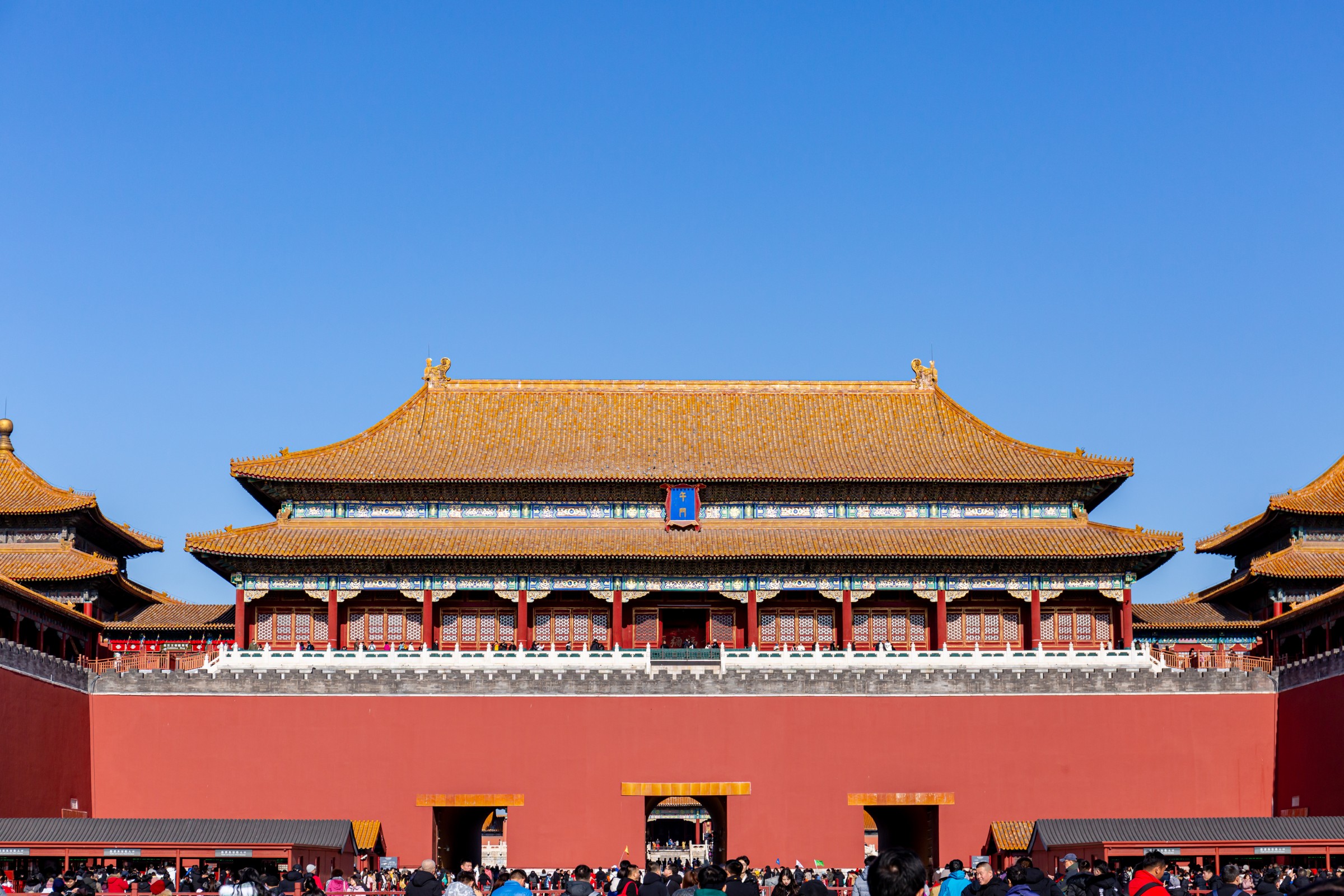
With palace admission secured, build the route around two different gates. Enter at Meridian Gate, or Wumen (午门), on the south side. Leave through Shenwu Gate (神武门) on the north side for Jingshan. The north gate is an exit; putting it into a map as your arrival point sends you to the wrong end.
Save both gates before leaving your accommodation. Plan the journey to the southern entrance, allowing separately for the approach and admission checks. A generic Forbidden City map pin is less useful here because the museum operates a south-to-north visiting route. Follow the current approach instructions in your booking and on-site signs.
Inside, use the main south-to-north route as your starting plan and choose side visits from the museum’s current visitor map. The broad courts and halls make the scale of the imperial palace visible; exhibitions ask for slower, closer attention. Read about palace spaces and museum displays if you’re deciding which part deserves more of your visit.
I’d budget the palace generously and let the hill depend on what remains. The allowances below are my suggested way to divide the day, with admission checks included in the palace block. They start after arrival at the relevant entrance, so add the journey from your accommodation separately; actual lines and walking pace will change the time used.
| Part of the day | Suggested allowance | Decision to make |
|---|---|---|
| Palace visit, including entry checks | Roughly 3–4 hours | Choose your side visits before following every tempting doorway |
| Food and a seated break after leaving | About an hour | Eat before deciding whether to climb |
| Jingshan, if admission and energy allow | Around an hour | Keep the hill optional, especially with a fixed departure |
Shenwu Gate faces Jingshan Park across the street. After leaving the palace, use the signed pedestrian crossing and check the park’s separate admission arrangements. If you choose Donghua Gate, the eastern exit, you’ll finish on a different side of the complex and need to change the next leg. Keep that choice deliberate.
Jingshan adds a view back over the palace roofs from above. The climb to Wanchun Pavilion is the reason I’d include it: the arrangement of roofs becomes easier to understand from the hill. Check the park’s current entry rules for your travel document in advance; a palace ticket doesn’t include entry to Jingshan.
Finish after the hill, or after the palace if the climb feels like too much. A meal nearby can close the day without another timed attraction. The full hutong walk below is a separate day’s alternative; keeping it optional after the palace protects the time you’ve already reserved.

A hutong day from the Drum Tower to Shichahai
Without a palace booking, the Drum Tower–Shichahai walk gives the day a clear beginning and a lakeside finish. Start outside the Drum and Bell Towers, then head south toward Yandai Xiejie (烟袋斜街), the shopping lane leading toward Yinding Bridge (银锭桥). Cross the bridge and continue along a public stretch of the Shichahai lakefront.
Save those four places in that order on your map. The sequence keeps the outing connected: towers first, the narrower lane next, then the bridge and water. I’d give the walk most of a relaxed day, with lunch between the lane and the lakeside wandering. There’s room to stop without treating every doorway as another attraction.
A hutong (胡同) is a lane in Beijing’s older neighborhoods. Along the way, look at the difference between a busy shopping frontage and the quieter lanes beside it. Keep to public paths and leave private thresholds clear; an open residential gate is someone’s entrance. Ask before photographing a person at close range.
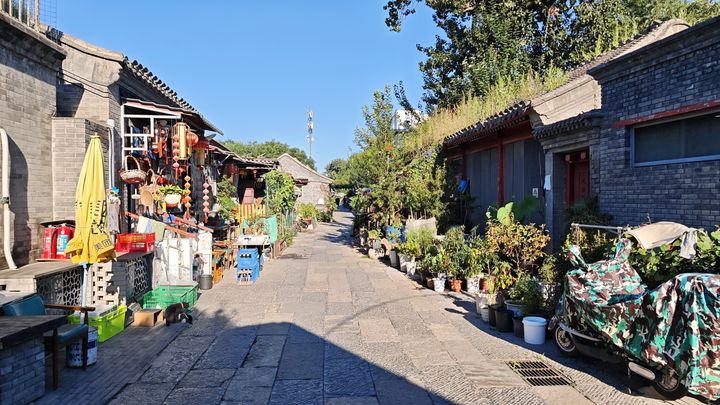
A Beijing hutong with shop displays and potted plants; the photograph shows the street setting, not a verified stop on this route.
The route works as an outdoor walk, with the towers viewed from outside. Going inside a tower or visiting a mansion is a separate decision with its own admission arrangements. Choose one such visit only after checking its current opening and ticket rules, and give it time by shortening the wandering around the lake.
At Yinding Bridge, decide how much farther to walk along Shichahai. You can make the bridge your last landmark, stop for a meal, or continue beside the water and retrace your way when ready to leave. Pick a return meeting point on your map before exploring side lanes, particularly if your group might split up.
This is the northern lakeside option among Beijing hutong walks. I’d stay with this area for the day rather than transfer across town for a second neighborhood. A slower lunch and a few side lanes give the streets more attention than a second list of stops would.
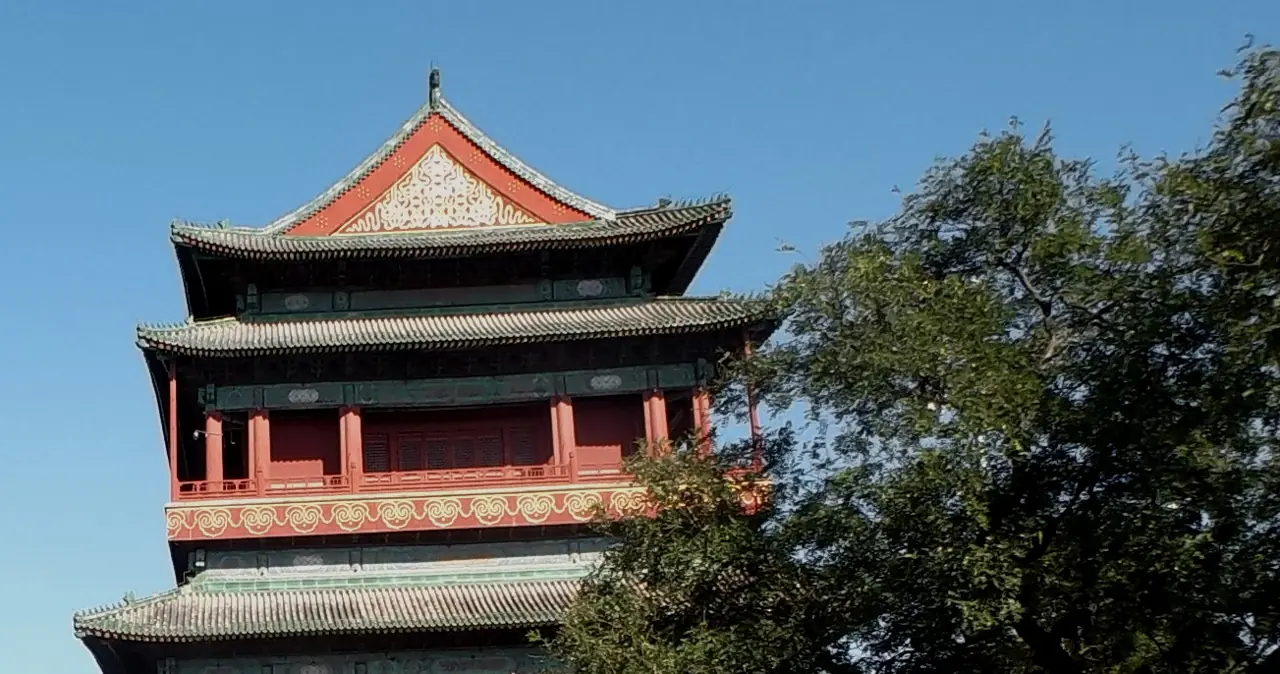
Photo credits

Only an afternoon in Beijing: shorten the route
An afternoon arrival calls for cutting a named part of the route. With a valid afternoon palace reservation, keep the palace and decide about Jingshan after you come out. Without a reservation, start at Yandai Xiejie, continue to Yinding Bridge and finish by Shichahai, leaving the tower area for another visit.
For the palace, work back from the admission deadline as well as the closing time. The published seasonal schedule lists last entry at 4 p.m. from April through October and 3:30 p.m. from November through March. Closing is at 5 p.m. and 4:30 p.m. respectively, all Beijing time. Your reservation session and any temporary notice also apply.
Arriving shortly before last entry leaves little museum time. If your travel plans make that likely, use the shorter hutong route and keep the palace for a date with usable visiting time. Adding Jingshan to an already compressed palace afternoon would take time from the visit that needed advance booking.
With an evening train or flight, choose your return point before starting the walk. Check the journey from that point to your actual station or airport terminal, then add baggage collection and the check-in or security time your operator requires. A departure from Beijing South station and one from an airport terminal need different plans.
Set an alarm for leaving the sightseeing area. When it rings, end at the bridge, the lakeside meeting point or the palace exit you’ve planned around. Dinner can move closer to your accommodation or departure point; that is an easier part of the day to change than the journey home.
Explore the Beijing city guide →