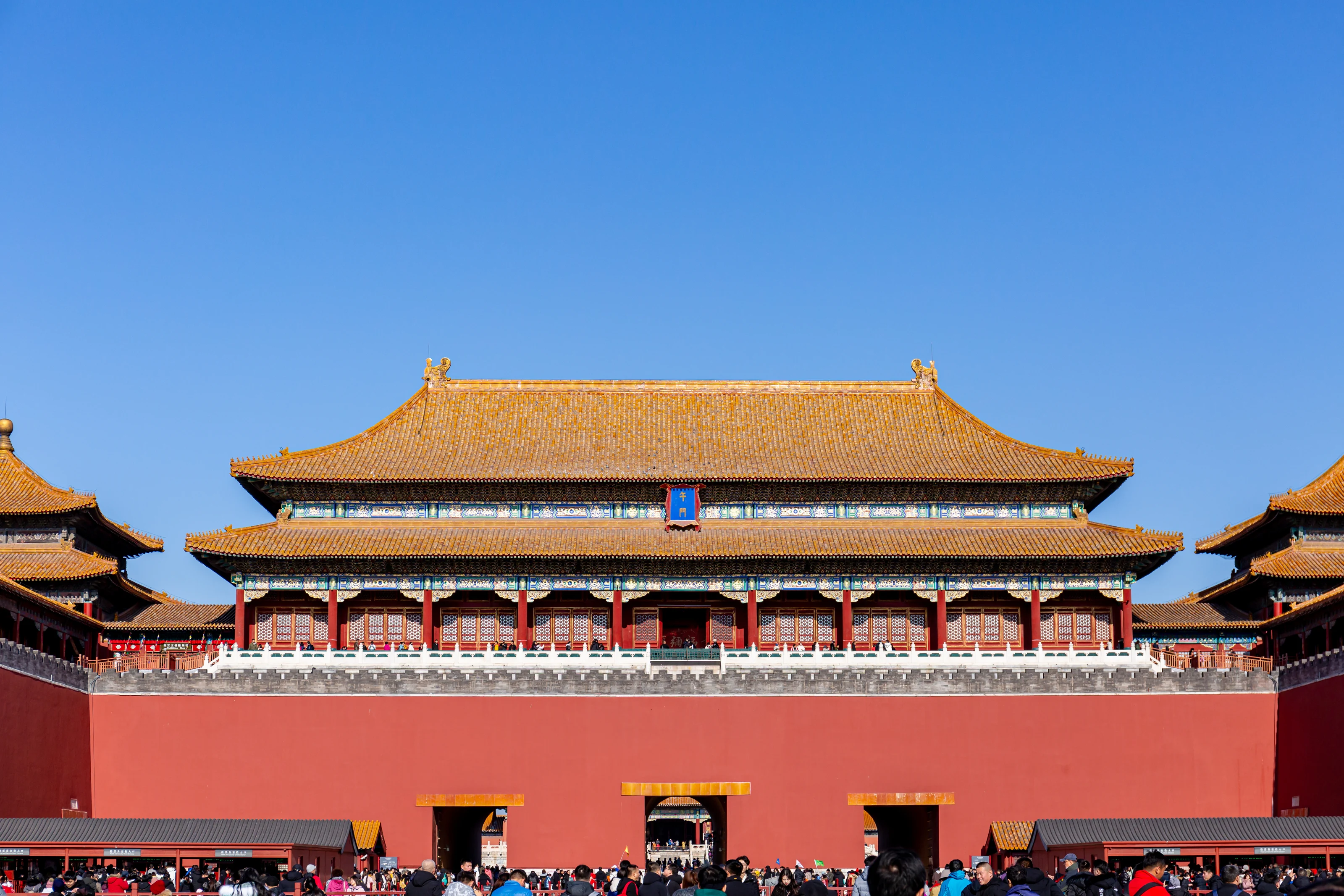
The Forbidden City is the former imperial palace complex in central Beijing, where Ming and Qing emperors lived and held court, and it now houses the Palace Museum and its collections. The palace buildings and the museum collections give you different things to look at: spaces built for imperial rule, and objects preserved or exhibited within them.
A palace for government and imperial life
The palace began as a place to govern and live. UNESCO dates its construction to 1406–1420, under the Ming emperor Zhu Di, also known as the Yongle Emperor. The Qing dynasty later used the same palace. The Palace Museum records that it served as the residence and court of 24 emperors.
The layout helps explain those overlapping roles. In the southern Outer Court, the main halls provided settings for court audiences and major ceremonies. The northern Inner Court included imperial residences, but also places for administration and religious rituals. Calling the Inner Court simply the emperor’s private home leaves out part of its work.
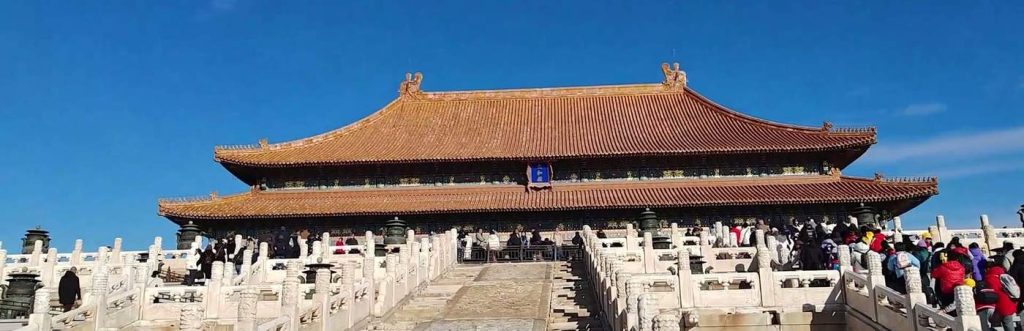
Gates, courtyards and halls form a sequence along a central axis. A hall’s broad terrace and the open space in front of it shape the approach to the building. In the photograph below, the steps and pale balustrades lift the hall above the courtyard; the setting gives the building much of its presence.
The palace belongs within a wider city visit. Our Beijing destination page introduces the city’s imperial landmarks, hutong lanes and Great Wall trips.
Why the palace was called “Forbidden”
The palace’s role as an imperial residence also explains its name. Access was restricted: ordinary people couldn’t enter as they would a public street or square. The name describes the boundaries around the emperor’s court and household.
Modern visitors can enter the Palace Museum under its admission rules. The historical name doesn’t mean the site is closed to the public today. Equally, admission to the complex doesn’t promise access to every hall or room; the visitor route and marked boundaries still matter.
The Palace Museum preserves buildings and collections
Public museum use gives the palace a different purpose from its imperial one. The Palace Museum was established in 1925, centuries after the palace was built. Its official introduction describes collections that include paintings, calligraphy, ceramics and other antiquities from the imperial holdings.
The buildings and the displays ask for different kinds of attention. A courtyard draws your eye across a large space toward a hall. A small object in a case rewards a closer look at its shape and decoration. Neither view tells the whole story by itself.
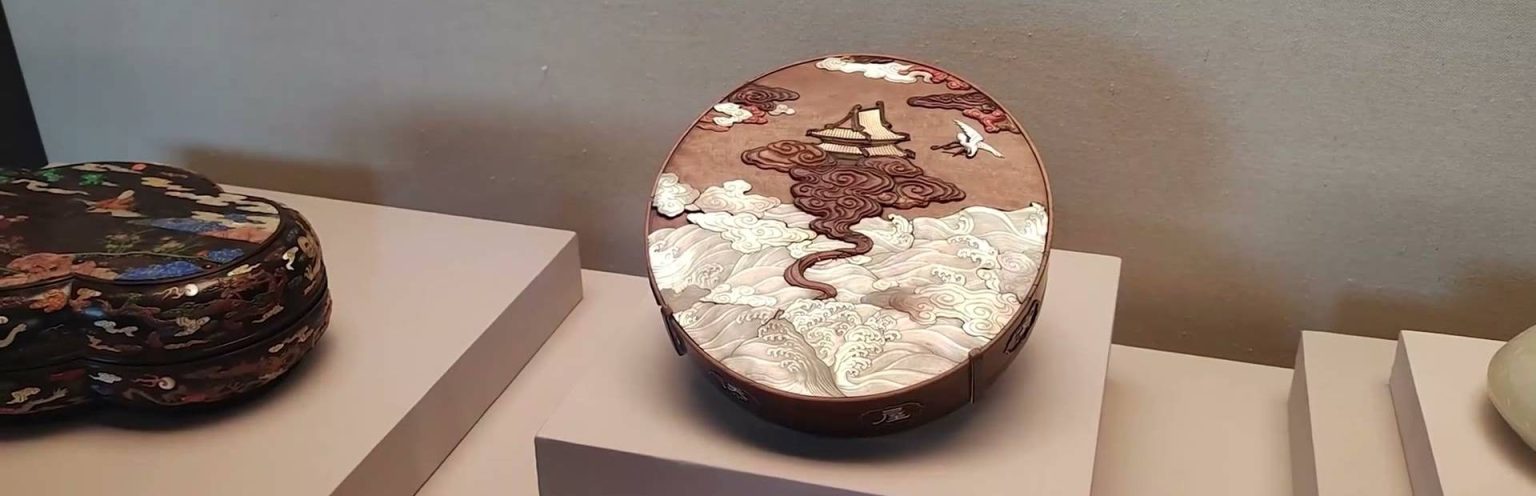
The decorated box below shows that change in scale. Waves, clouds and a pavilion cover its oval surface. Those details can hold your attention even when the object’s full history isn’t apparent from the display view.
Choosing between palace spaces and an exhibition
The distinction between palace and museum helps you choose a focus for a visit. If the architecture interests you, leave room to notice the relationships between gates, courtyards and halls. If a collection draws you there, allow time for objects and labels rather than treating every gallery as a quick detour.
You can combine those interests, but a long gallery stop takes time away from exploring the palace grounds. The Forbidden City ticket guide covers the separate task of arranging admission.
For a particular object or exhibition, check the museum’s current exhibition listings and visitor map before fixing your plans. An object belonging to a collection isn’t proof that it’s on display. Check the listed dates, accessible spaces and any separate admission conditions for the exhibition you want to see.
Explore the Beijing city guide →