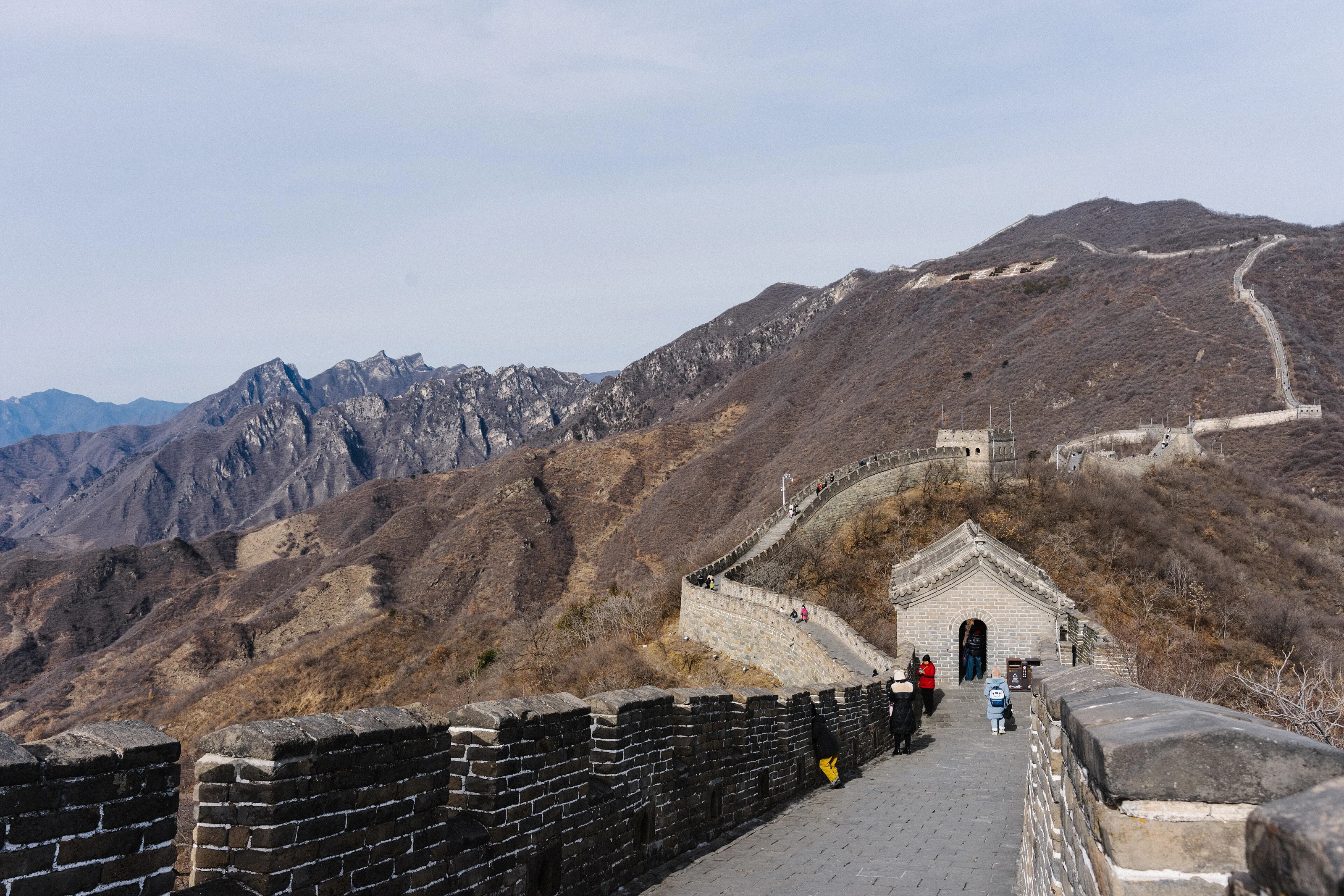
To get to Mutianyu Great Wall from Beijing, take 916 Express from Dongzhimen and change in Huairou, book a direct tourist coach, or arrange a car. The bus connection is the part to resolve for a public-transport trip; with a coach or car, settle the return pickup before paying.
I’d give the transport choice its own attention before choosing towers to walk between. Below are the Huairou bus route, direct coaches, car arrangements and the remaining journey from the visitor area onto the wall. A bus to Mutianyu and a shuttle within the scenic area solve different parts of the day.
Public bus to Mutianyu: 916 Express and the Huairou transfer
The route published by Beijing’s municipal government starts at Dongzhimen Public Transport Hub. Take 916 Express to Huairou Beidajie, then change to a local service for Mutianyu Jingqu, the scenic-area stop. The city bus gets you to Huairou; the next bus is a separate connection.
Save these names together before leaving. I find a short list of destinations easier to check than a map filled with similar-looking pins, especially when a place name appears in both English and pinyin.
| Part of the trip | Name to save | Chinese name |
|---|---|---|
| Beijing departure | Dongzhimen Public Transport Hub | 东直门交通枢纽 |
| First bus | 916 Express | 916快 |
| Transfer stop | Huairou Beidajie | 怀柔北大街 |
| Scenic-area destination | Mutianyu Jingqu | 慕田峪景区 |
At Dongzhimen, look for the Express service. At Huairou Beidajie, check the boarding location and direction for the onward bus before crossing to another stop. Keep the scenic-area name visible on your phone when asking which service goes there; it gives a driver a specific destination to confirm.
There is a snag in the published guidance. Beijing’s March 2026 attraction page names H23, H3 and H71 for the connection. The scenic area’s March 2024 guide instead lists H7, H23, H24, H35 and H36. H23 appears in both, but those lists don’t establish its departures for your travel date.
I would check the local bus’s destination, boarding point and return departures in a current transport app or with transport staff. The fare, frequency and last useful connection remain unverified here. If the return takes another connection through Huairou, check both parts while planning the outward trip.
That transfer is the trade-off with the public route. A traveler happy to work through local stops may prefer it; someone trying to fit the wall around a tightly timed city reservation may prefer a vehicle with a confirmed return. Treat Mutianyu as the main outing when choosing your other places to visit in Beijing.
Direct coaches from Qianmen or Dongzhimen to Mutianyu
A direct tourist coach removes the Huairou bus change and replaces it with a meeting point and a booked departure. The scenic area’s transport guide lists Beijing Hub for Tour Dispatch services from Qianmen and Dongzhimen, alongside separately named commercial tourist lines. These are distinct from the numbered public-bus journey above.
The meeting point belongs to the service being booked. Dongzhimen Public Transport Hub, a subway exit and a tour operator’s pickup point are different instructions, even though all may be described simply as “Dongzhimen.” Save the provider’s meeting-point image or address with the booking, and allow time to find that exact place.
The Mutianyu official website has a How to Get There section with its transport guides. The detailed guides I checked are dated 2024, including a summer guide with night services. Use them to identify providers, then obtain the departure and return details for your date from the provider’s current booking information.
I’d compare what the coach ticket actually buys before comparing totals. A road transfer, scenic-area admission, the internal shuttle and a cable-car ride are separate items that a package may combine. A photograph of a cable car in a listing tells you less than the included-items section beside the price.
For the return, save the departure time, the meeting point at Mutianyu and the Beijing drop-off. A round trip can end at a different place from where it began. The scenic area’s older guide names parking lot P4 for its Hub for Tour Dispatch return; another operator’s ticket needs its own pickup instructions.
Going to Mutianyu by car: agree on the return
A car allows a departure point that suits the group, such as a hotel, and avoids a shared coach’s meeting time. I’d choose it when the pickup arrangement matters more than following a scheduled group departure. Compare the price for the whole vehicle and check how many passengers and bags the booking covers.
Give the driver the destination 慕田峪长城景区, Mutianyu Great Wall Scenic Area, and agree on the drop-off point. “Great Wall” alone leaves the wall section unspecified. For self-driving, both the city and scenic-area guidance name Exit 13, Beitai Road, from the Jingcheng Expressway, followed by the scenic-area signs.
The return deserves a written agreement of its own. A driver might wait, leave and come back, or provide only the outward ride. For a one-way taxi or ride-hailing booking, arrange the onward plan for getting home before setting out; the outward fare establishes only that booked journey.
| Question for the driver or provider | What to keep with the booking |
|---|---|
| Where will we meet after the visit? | A named parking area, map pin or meeting-point image |
| How is the return timed? | Pickup time and the agreed waiting arrangement |
| Which extra charges apply? | Toll, parking and extra waiting terms |
| Who handles a change? | A contact number or the booking’s message channel |
I would also ask how a delayed return affects the booking, particularly if the driver is leaving and coming back. Keep the answer with the meeting details. A vehicle outside your hotel is easy to identify; finding the same driver after descending from the wall requires a more precise plan.
From the Mutianyu visitor area to the wall
Arrival by road brings you to the scenic area, with the approach to the wall still ahead. The operator describes a visitor journey through the commercial street and by internal shuttle. Admission, movement within the site and the choice of how to ascend need to fit the transport product and the routes open that day.
I separate the journey into the road transfer, movement through the visitor area, ascent and the wall walk. For example, a round-trip coach booking can settle the Beijing journey while leaving the uphill ride to choose separately. Read each ticket’s route and inclusions before assuming that “shuttle” covers both the city transfer and the internal bus.
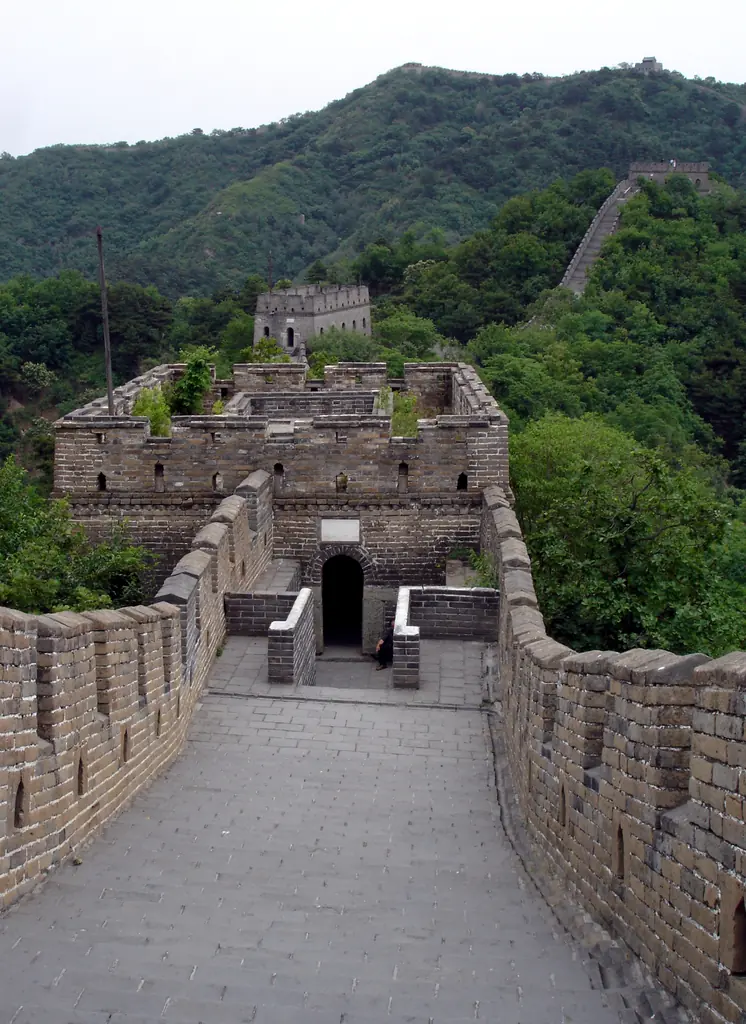
The wall itself follows the ridge, with steps between towers. Choose the walk around the amount of climbing your group wants to do, then connect it to the descent point. Reaching another tower also adds the walking needed to return to the chosen way down.
For my planning allowance, I’d keep most of a day free rather than attach a fixed museum booking in central Beijing to the return. That allows for the road journey, the approach through the site and a walk with pauses. Your starting point, transport connections and pace determine how much of that allowance the trip uses.
Before leaving Beijing, check the operator’s opening notice and weather for the day. Work backward from the coach departure or agreed car pickup to choose when to start descending. Include the journey from the wall back to the meeting point, so the pickup time leaves room to come down and find the vehicle.
Compare that outing with the Beijing palace or hutong day before deciding how to use your only free day.
Photo credits
Explore the Beijing city guide →