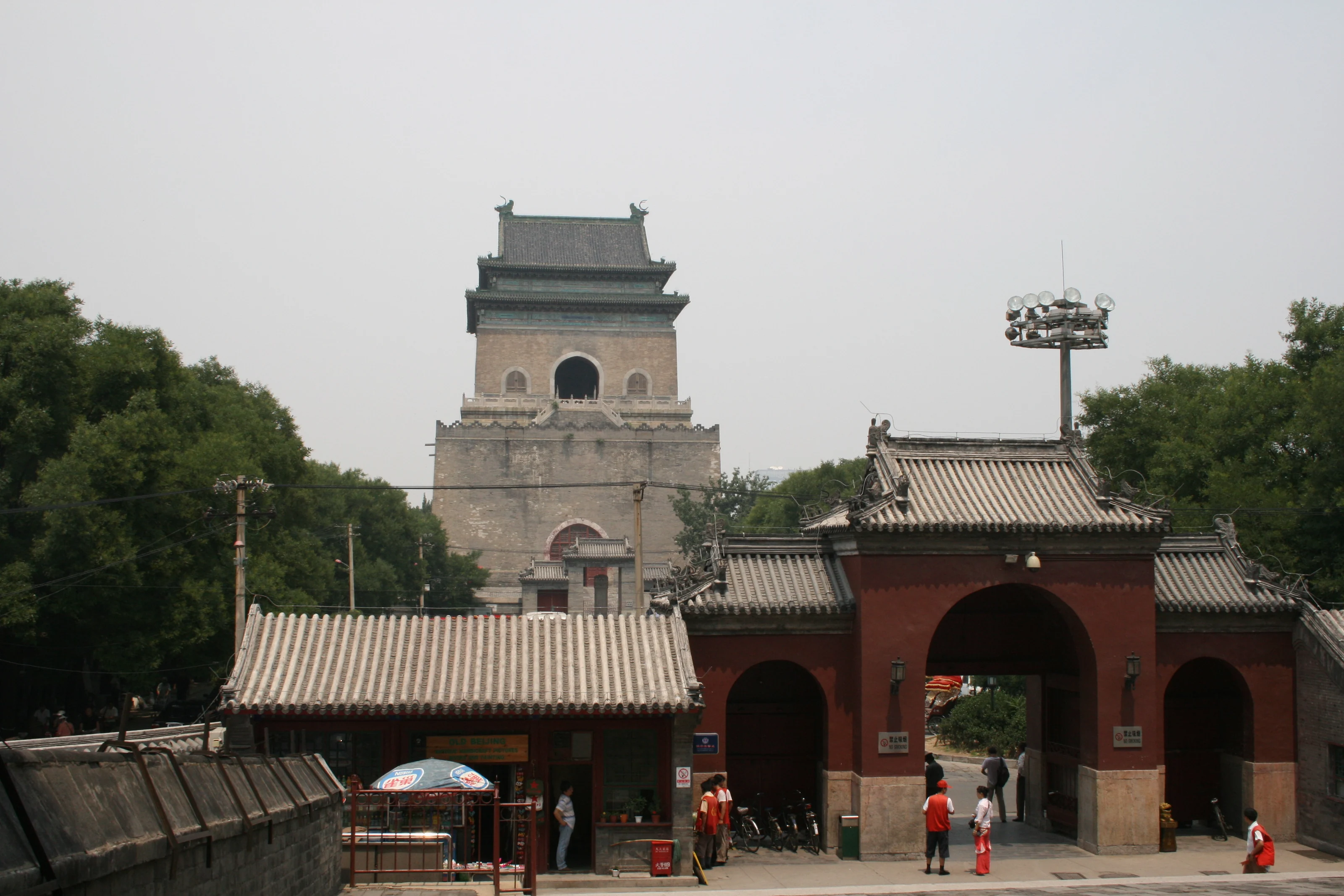
A self-guided Beijing hutong walk can take you north of the Bell Tower toward residential lanes, or west of Qianmen through Dashilan’s shopping streets. Choose the Bell Tower for a walk out to Doufuchi Hutong and back; choose Dashilan for a route through Qingzhu Alley to Yangmeizhu Xiejie. Below are the starting points, street connections and places to turn back.
Choose the Bell Tower lanes or Dashilan
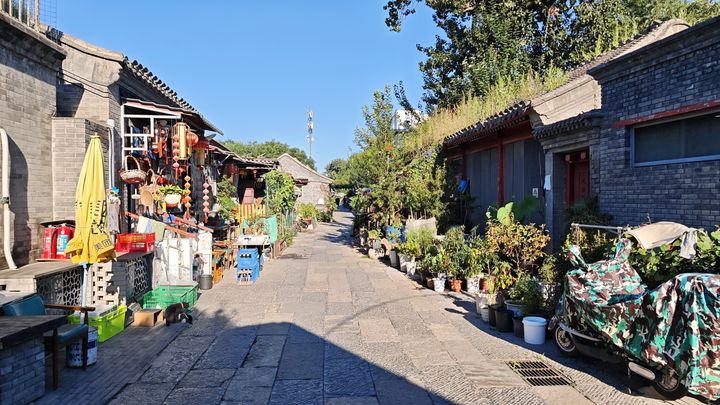
A hutong is a narrow lane associated with Beijing’s older neighborhoods. Some serve homes, while others have become busy shopping streets. That difference matters more here than the word itself: the two walks give quite different views of the city.
| Walk | Start and finish | What to choose it for |
|---|---|---|
| Bell Tower area | Zhonglouwan Hutong’s southern end; return there from Doufuchi Hutong | The tower landmark and a public lane through a residential neighborhood |
| Dashilan area | Dashilan Street’s entrance on Qianmen Street; finish on Meishi Street | Commercial streets followed by the smaller Qingzhu and Yangmeizhu lanes |
I’d choose the northern walk if the lanes themselves are the main attraction. Dashilan makes more sense if browsing shopfronts is part of the outing. The southern route has several changes of street; the northern one retraces the same lane, which makes shortening it straightforward.
Save the Chinese street names below in a map app before setting off. For the northern area, Gulou Dajie station serves Lines 2 and 8; for the southern area, Qianmen station serves the same two lines. Use the named street entrance as the walking start, rather than treating the station exit as step one.
These are separate outings. If you’re still deciding where a hutong walk belongs among other things to do in Beijing, choose the area alongside the rest of that day’s stops before traveling across the city.
Walk north from the Bell Tower to Doufuchi Hutong
For the northern walk, use Zhonglouwan Hutong (钟楼湾胡同) as the route to follow. Its southern end meets Gulou East and West Streets, and its northern end reaches Doufuchi Hutong. The Bell Tower is the area landmark; the named lane and junctions are the navigation points.
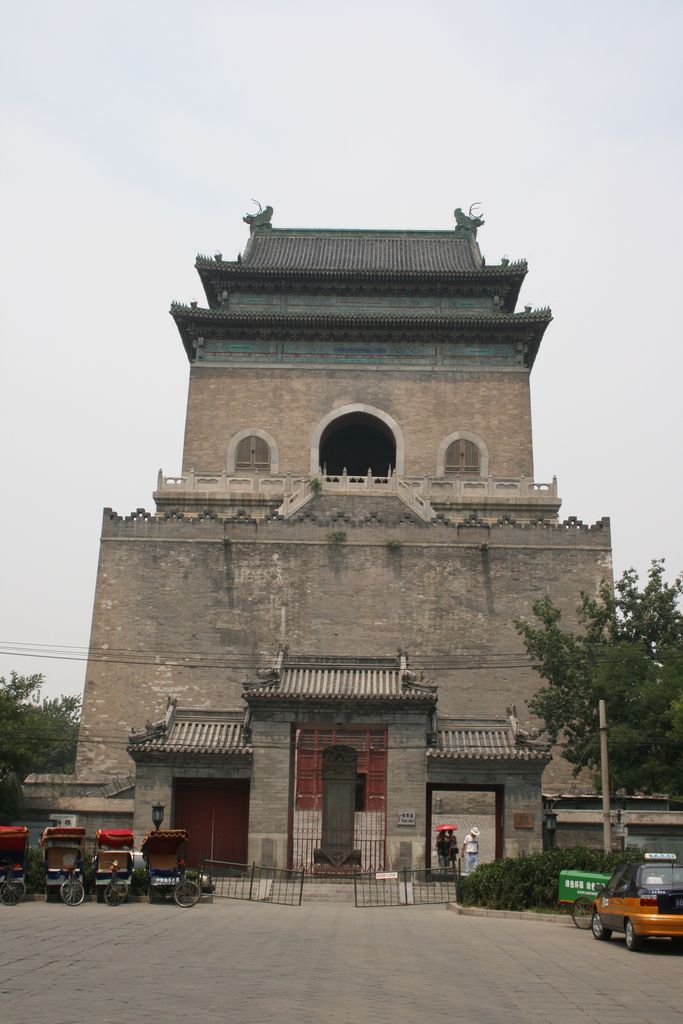
- Find the southern entrance to Zhonglouwan Hutong at Gulou Dongdajie (鼓楼东大街). Check the lane name on the map and street sign before starting north. If arriving from the tower square, find this signed street entrance first.
- Follow Zhonglouwan Hutong north to Doufuchi Hutong (豆腐池胡同). Keep the destination on your map as a junction, so a tempting side lane doesn’t quietly change the route.
- Turn back at the Doufuchi junction and return along Zhonglouwan. The same return works at any earlier point if you’ve walked far enough. Finish at the southern entrance where you started.
Zhonglouwan also connects with lanes including Zhongku and Lingdang to the west and Caochang Beixiang to the east. Those names can help identify where you are, but this walk stays on Zhonglouwan. Adding every nearby hutong would require checking each connection and return separately.
I prefer a clear turnaround here because it leaves room to look without having to solve a new route at every junction. Pause beside a stretch of wall where people can pass, and keep residential doorways clear. A lane can be public while the courtyard opening onto it remains someone’s home.
The route follows streets outside the towers. If entering a tower is part of the plan, check its current admission and opening arrangements separately and leave time for that visit. A walk past the landmark and a visit inside it are different activities.
Follow Dashilan through Qingzhu Alley to Yangmeizhu Xiejie
Dashilan offers a different progression: start on the commercial street, continue west, then use Qingzhu Alley to reach Yangmeizhu Xiejie. Save all four street names, including Dashilan West Street. The distinction between Dashilan Street and its western continuation is important at Meishi Street.
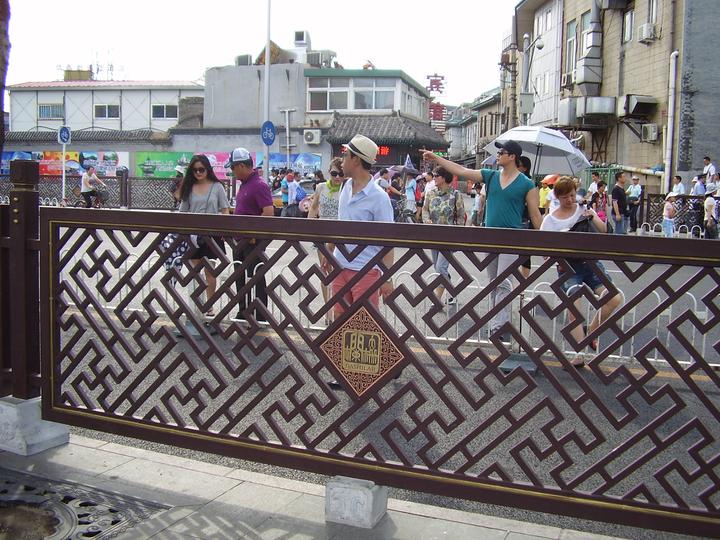
- Start at Dashilan Street (大栅栏街) on Qianmen Street (前门大街). Walk west along Dashilan toward Meishi Street (煤市街). The main street runs between these two roads.
- At Meishi Street, locate Dashilan West Street (大栅栏西街) on the other side. Use an available marked crossing and check the street name before continuing west. This is also the first place to finish a shorter walk, after the main shopping street.
- Continue west on Dashilan West Street to the southern entrance of Qingzhu Alley (青竹巷). Turn into Qingzhu and follow it northward, trending northwest, until it meets Yangmeizhu Xiejie. Qingzhu is the connection between these two streets.
- At Yangmeizhu Xiejie (杨梅竹斜街), take the eastbound direction back toward Meishi Street. The street runs diagonally, so this section trends northeast. Finish when you reach the Meishi Street junction.
The useful connection is Qingzhu: it links Dashilan West Street to Yangmeizhu Xiejie, allowing a return to Meishi Street along a different road. If its entrance is hard to identify, go back to the Meishi junction you already know. Don’t replace that connection with an unmarked passage through a courtyard.
Shopfronts give the opening stretch its character, while the connecting lanes change the scale of the walk. Keep browsing stops flexible, since a particular business may be closed or have changed. For a theatre visit or performance, confirm the venue and session separately before building the walk around it.
The two routes use streets included in Beijing’s 2023 recommended walks, with a shorter out-and-back in the north. Allow time for browsing or visiting a tower in addition to the walk itself.
Stay on public hutong lanes and keep a way back
Both walks depend on recognizing street junctions, especially where the southern route leaves Dashilan West Street. Keep the route names and your return point saved together. A screenshot should show the connecting streets as well as the destination pin, so it remains useful when a live map is slow to load.
If a barrier blocks the public lane, return along the part already walked and check the map from a wider street. The northern return point is Zhonglouwan’s southern entrance; on the southern walk, Meishi Street is the road used at the first crossing and the finish. Use those known points to shorten the outing.
Someone else’s front door is a useful boundary. Stay outside residential courtyards unless invited, ask before a close photograph of a person, and step aside for people moving through the lane. An open gate gives a view of an entrance; it doesn’t establish visitor access beyond it.
For a lakeside outing around Shichahai instead, see a Beijing day with a Shichahai walk. That route has its own place in a day’s itinerary. Here, keep the named public street in view: if a possible shortcut leads through a household gate, stay on the lane.

Explore the Beijing city guide →