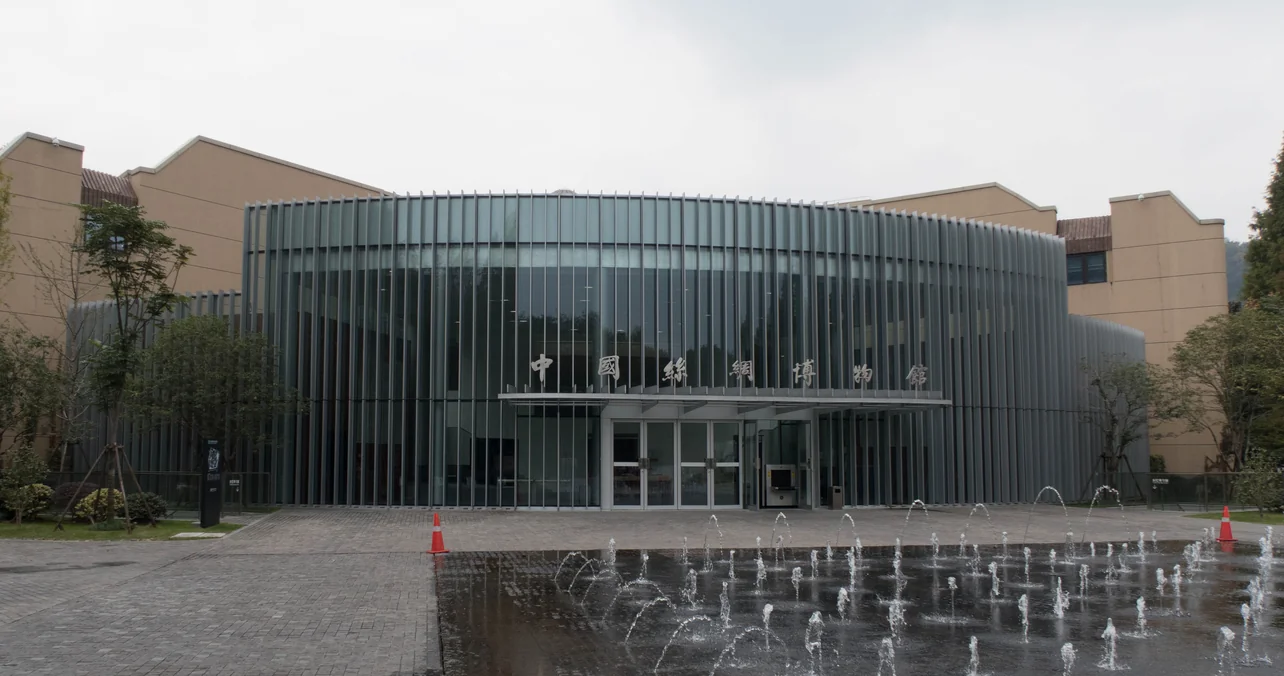
The China National Silk Museum in Hangzhou suits a visit built around silk history, how cloth is made, or the clothes people wore. I’d choose one of those interests as the starting point, then add another if the open galleries and the rest of the day allow. The museum’s published gallery themes help explain those choices, while entry rules and open rooms need a separate check.
Recognizing the Hangzhou museum
Save the destination as China National Silk Museum, Hangzhou, with the Chinese name 中国丝绸博物馆. Check the city too. The Suzhou Silk Museum is in Suzhou, with its own booking rules and opening hours.
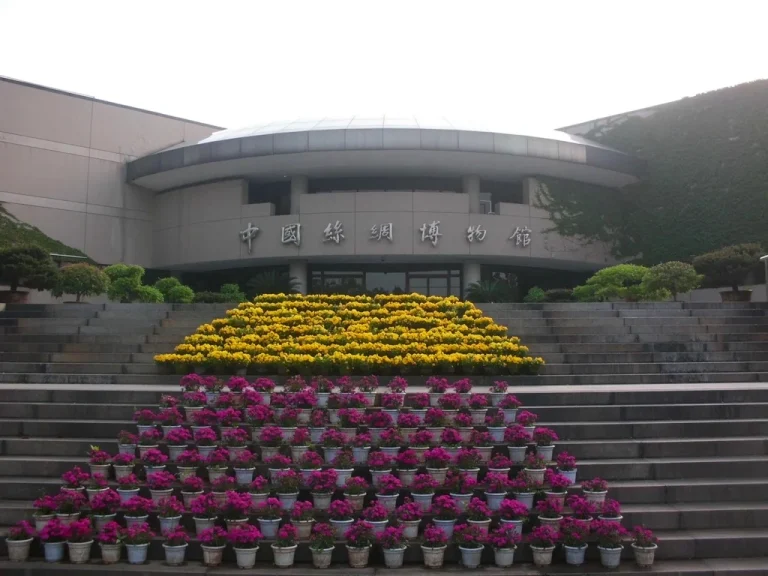
The photograph below shows the Hangzhou museum’s older exterior, with its name above the steps. Use the name to identify the institution, then use a current map for the entrance and journey from your accommodation. The flower arrangement in a historical photograph isn’t a reliable arrival landmark.

For the wider city, the Hangzhou destination collection brings together the site’s Hangzhou guides. Keep this museum as a specific stop within that plan, with its own arrival and departure points.
Silk, clothing and what to look for
Once the destination is clear, choose the question you’d most like the visit to answer. The museum’s own gallery notes separate the movement of silk, the work of making it and its use in clothing.
| Main interest | Museum theme to ask about | A useful question for the displays |
|---|---|---|
| History and exchange | Silk history and the Silk Road | How did cloth, skills and designs move between places? |
| Making the material | Sericulture and silk craftsmanship | What changes between silkworm, thread and woven cloth? |
| Clothing and design | Chinese costume and Western fashion | How does the shape of clothing change across the periods shown? |
These are ways to choose a focus, rather than a prescribed route. The English exhibition pages checked for this guide show end dates in December 2025. They describe established museum themes, but don’t confirm which galleries are open for a later visit.
For history, the museum’s silk-road account connects cloth with the exchange of skills and art. I’d start with the places and objects named in the labels, then trace the links between them. Start small. A named place and a single piece of cloth give the subject a more concrete shape than trying to take in the entire Silk Road at once.
For making, sericulture means raising silkworms for silk. The museum’s description covers mulberry growing, silkworm breeding, reeling, dyeing and weaving. This focus suits someone who wants to understand the material before looking at finished garments. Ask what each displayed tool does; a display of equipment doesn’t establish that a live demonstration will run during your visit.
For clothing, the museum has described a Chinese fashion display spanning the 1920s to the 2010s, alongside a separate Western fashion display. Those subjects broaden the visit beyond ancient robes. A qipao, the fitted Chinese dress, belongs in a discussion of changing clothing styles rather than serving as a name for any long garment.
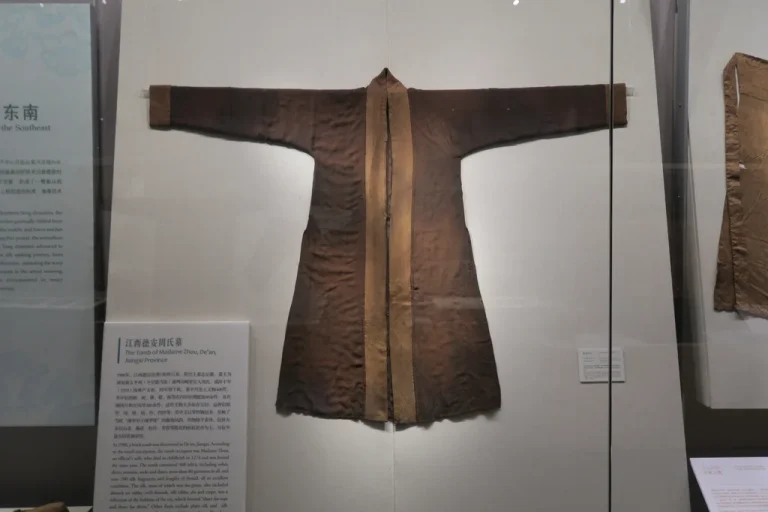
The old garment photograph below offers a simple looking exercise: follow the sleeve line, the front opening and the garment’s length. Its label supplies a find location. The shape alone doesn’t tell you the object’s date or fabric, and this photograph doesn’t show the modern-fashion display.

Check museum entry before leaving for the galleries
Your chosen theme is a reason to visit; entry arrangements decide whether the plan works on the day. The museum’s current Chinese visit and reservation page says individual visitors don’t need an online reservation. It describes entry with valid identification or real-name registration, and gives 0571-87035223 for group visits and guided-tour bookings.
That page doesn’t spell out the current passport procedure. If you’ll use a foreign passport, ask the museum how to register, which document to bring and whether anything else is needed for your visit date. Confirm opening hours and the galleries you care about in the same enquiry. A general entry rule doesn’t settle a particular exhibition’s availability.
Make room for the silk museum in a Hangzhou day
With access confirmed, let the museum replace another substantial stop if the day is already full. The site’s Hangzhou one-day itinerary pairs a lake walk with a temple or tea-village visit. Adding galleries to all of that would leave less room to read the labels and compare objects.
For a museum-focused version, keep a shorter lake walk and leave the rest of the sightseeing flexible, so there’s room to stop at a case that holds your interest instead of hurrying to another place. Work backwards from the museum’s confirmed last-entry time and your return journey, rather than using its closing time as an arrival target. If a particular gallery is the reason for coming, get that answer before making the journey.
Written by Alex Chen, founder and editor of China Culture Way.
Featured image explanation: The glass-fronted Hangzhou museum building was photographed in 2017. 中國絲綢博物館 means China National Silk Museum. This historical view doesn’t establish the current entrance layout.
Photo credits
Photo: Siyuwj / Wikimedia Commons / CC BY-SA 4.0. Cropped from 4893×3262 to box (0,344,4893,2919), resized to 1284×676 and compressed as WebP. Derivative under CC BY-SA 4.0.

Explore the Hangzhou city guide →