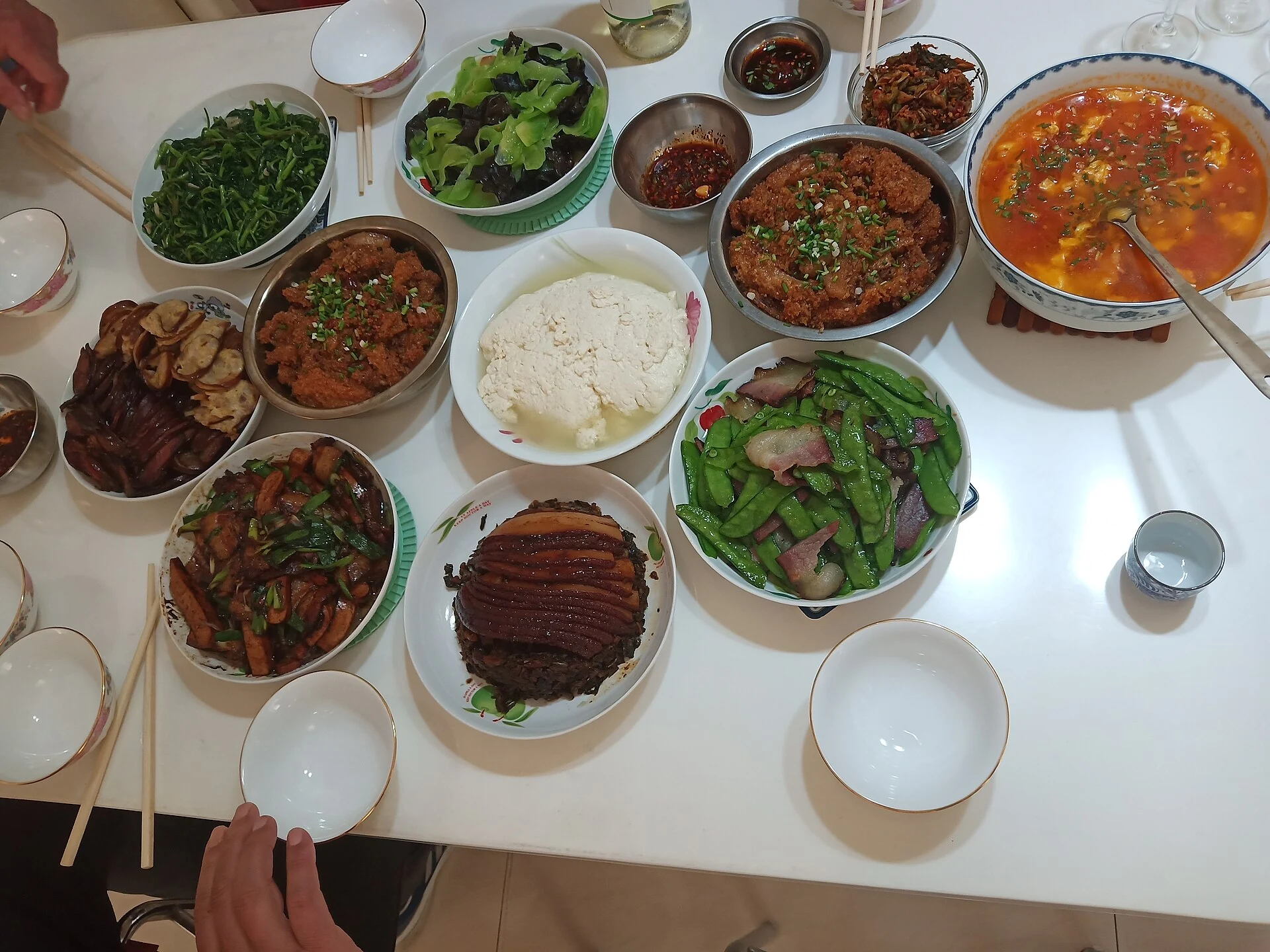
Chinese table manners are easiest to follow when you separate shared serving utensils from your own chopsticks and let the host guide seating and the start of an invited meal. Put resting chopsticks on a holder or across your bowl or plate, rather than upright in rice. The rest depends partly on the occasion: dinner with friends and a formal banquet call for different levels of ceremony.
At an invited meal, ask where to sit
A host can settle seating more easily than a visitor can work out a hierarchy from the doorway. Ask, “Where would you like me to sit?” At a formal dinner, leave the choice with whoever is arranging the table. At a casual meal with traveling companions, there’s little value in imposing a banquet seating plan on people choosing their own places.
For a hosted family or festival meal, wait for an invitation or gesture to begin eating. The Ministry of Culture and Tourism’s Spring Festival guidance recommends watching for that cue. Once the host has invited everyone to start, join the meal rather than continuing to wait for a more elaborate ceremony.
If there are foods you don’t eat, tell the person ordering before the dishes are chosen. A plain explanation gives them something useful to work with. I’d make that conversation early, instead of relying on a polite refusal after someone has served a portion into my bowl.
Move shared food into your own bowl first
Shared plates sit within reach of several diners, while individual bowls and plates give each person somewhere to put a portion. The distinction matters when extra utensils arrive with a dish: use the serving chopsticks or spoon to transfer food to your place, then eat with your own utensils. Beijing’s tourism guidance describes this change between serving and eating chopsticks.
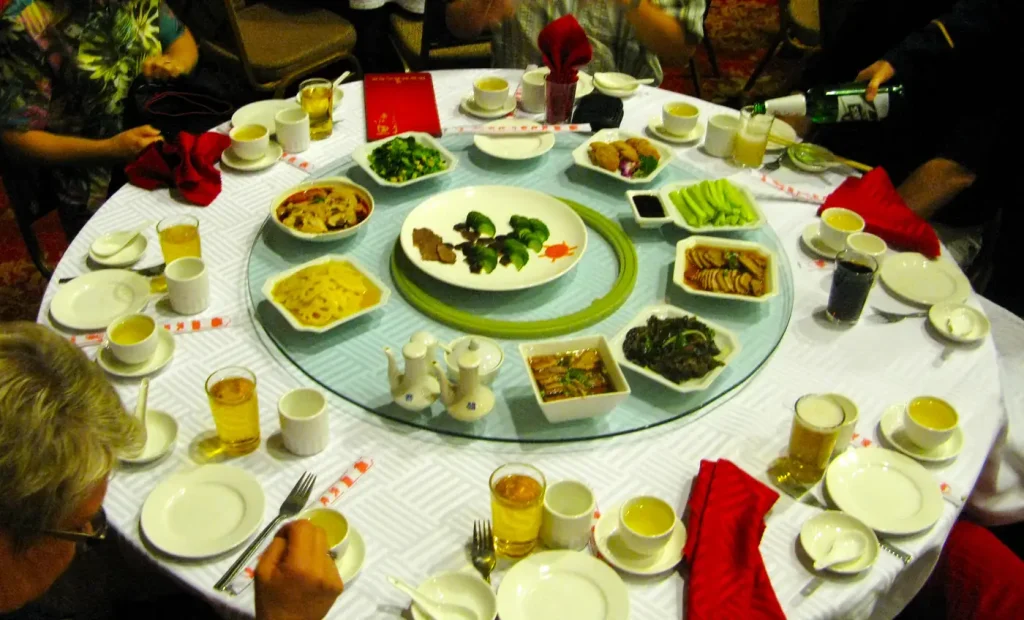
Photo credits

If several pairs of chopsticks are laid out and their purpose isn’t clear, ask, “Which ones are for serving?” If no serving utensil is visible, request one. Guessing from a chopstick’s color isn’t necessary, and a photograph of another restaurant’s table can’t tell you how this restaurant has set yours.
Take a portion without turning over the shared dish to search for a favorite piece. For something beyond comfortable reach, asking someone to pass or serve it is more considerate than leaning across their meal. Keep the food and conversation moving at a pace that leaves room for the other diners.
The broader Chinese food culture introduction places shared meals alongside regional flavors; the advice here concerns the table you’re actually sharing.
Rest chopsticks without planting them in rice
Between bites or while drinking, place chopsticks on a chopstick rest or horizontally across your bowl or plate. Avoid leaving them standing vertically in rice. Beijing’s tourism guide connects that upright arrangement with funeral offerings, which explains why the gesture attracts attention beyond the question of where to put a utensil.
Keep chopsticks for eating rather than waving them around during a story or using them to skewer food. If holding a slippery piece is becoming a struggle, ask for a spoon or fork. Beijing’s guidance explicitly suggests requesting another utensil when chopsticks are unfamiliar; having dinner is more useful than spending the meal trying to demonstrate a skill.
Join a toast at a level you’re comfortable with
A toast is a moment to acknowledge the person speaking and respond to the occasion. For a family celebration, the national tourism website suggests kind words and a slightly lower cup when clinking with elders. Its Spring Festival guide also says a small sip is enough if you prefer to drink less. Finishing the glass isn’t a requirement to apply to every meal.
If you don’t want alcohol, say so before drinks are poured: “Tea for me, please. I don’t drink alcohol.” I’d keep the explanation short and friendly, then join the conversation. For a business banquet with a planned sequence of speeches or toasts, ask your contact what is expected instead of trying to infer the whole program from the first raised glass.
When tea is served, the guide to accepting tea and handling refills covers thanking the person pouring and saying when you have had enough.
Settle portions and the bill with words
When you’re ordering, start with an amount the group expects to eat and add more if needed. When you’re full, tell the host, “That was lovely, thank you. I’ve had enough.” I wouldn’t leave food deliberately to send a message that can be said more clearly. If dishes remain, ask whether leftovers can be packed rather than treating a full plate as a required sign of generosity.
For payment, distinguish an invitation from a shared outing. A useful question before ordering is, “Are we splitting this?” If someone is treating you, thank them; if you’ve agreed to host, make your intention clear. A slogan about who “always” pays gives less help than an arrangement everyone understands.
Before leaving, thank the person who invited or organized the meal and mention a dish or conversation you enjoyed. For customs beyond the dinner table, the Chinese culture collection gives the wider travel context.
Photo credits
Photo: Jason M. C., Han / Wikimedia Commons / CC BY-SA 4.0. Cropped, resized and compressed. Derivative under CC BY-SA 4.0.
