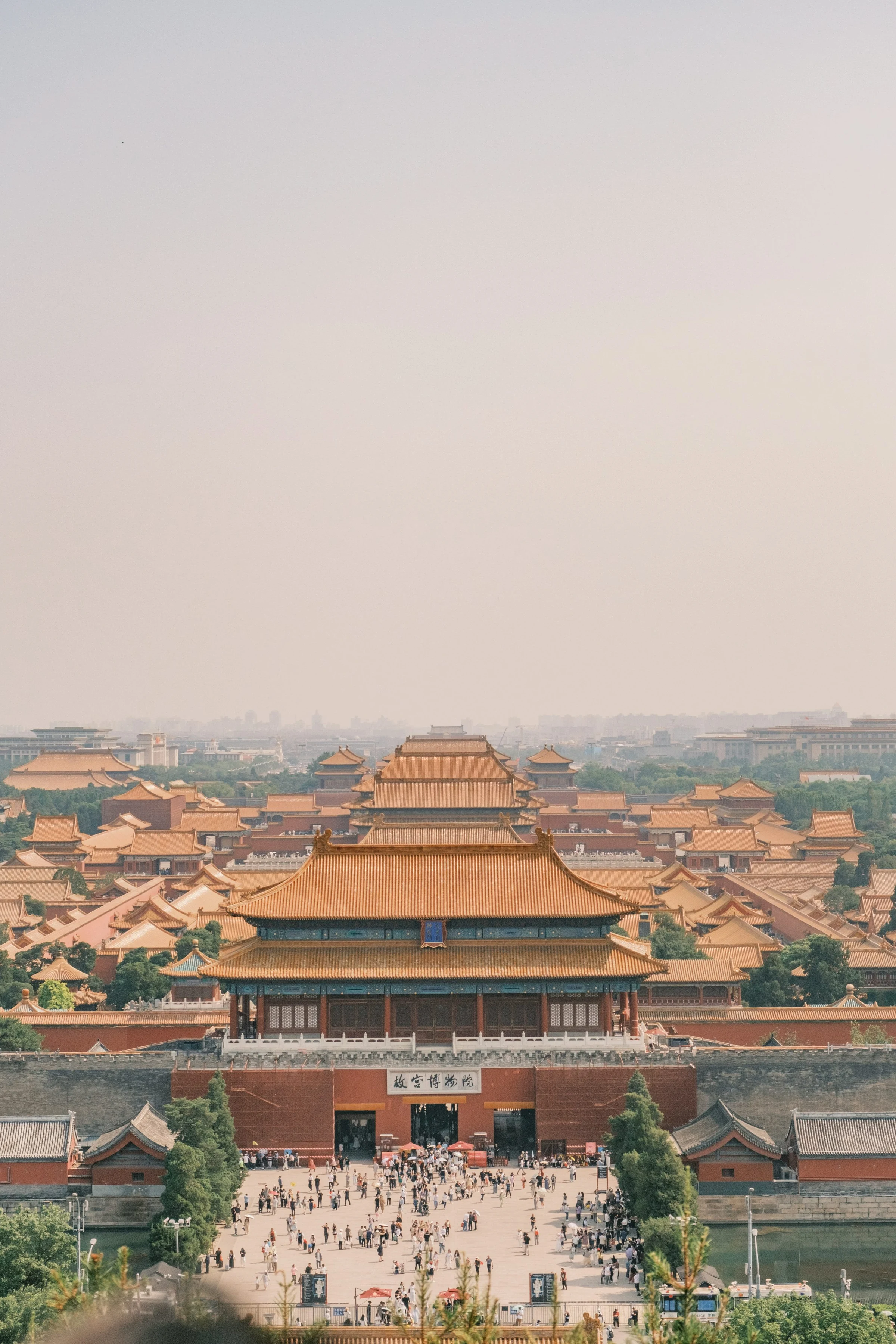
For a Jingshan Park sunset visit, head for Wanchun Pavilion for the view over the Forbidden City. Use the South Gate after leaving the palace’s north side, or the West Gate after Beihai’s east exit. I’d reach the park gate roughly an hour before sunset as a planning cushion, then adjust for admission, the climb and your pace. Check that day’s last entry and closing time before committing to the evening.
How early to reach Jingshan before sunset
The useful arrival time is the time at the gate, with the hill still ahead. My suggested hour gives you room to enter, walk uphill and choose a place to look across the roofs. It’s an editorial allowance, not a park rule or a measured walking time. If your group needs frequent rests, leave more room instead of trying to fit the climb into that allowance.
Start with the sunset time for Beijing on your actual visit date, using Beijing local time. Work backward to your gate arrival, then add the journey from your previous stop. Don’t use the sunset time as your arrival alarm: by then, the part of the evening you wanted to watch has already begun.
Keep the light and the park schedule as separate checks. Last admission determines whether you can enter; closing determines when the visit must end. A late closing time doesn’t mean there’s still daylight, and a late sunset doesn’t extend park hours. Check the current park notice for your date and follow any temporary instructions at the entrance.
I haven’t confirmed a current winter-hours notice for this guide, so I wouldn’t plan around an opening-hours screenshot from an older year. The same caution applies to ticket and reservation details. Settle the current admission requirements before leaving for the park, especially if sunset is the only reason for the trip.
For a longer stay, compare the museums, neighborhoods and excursions in the Beijing city guide. Keep the time before sunset available for getting here rather than filling it with another distant attraction.
Jingshan South Gate or West Gate?
Once you have a gate-arrival target, choose the entrance from the place you’re coming from. The Beijing Municipal Park Administration describes the South Gate as across the road from the Forbidden City’s north gate, and the West Gate as the approach from Beihai’s east exit. Those relationships make a more useful map search than a generic pin in the middle of Jingshan Park.
| Your previous stop | Gate to plan around | What to check before walking |
|---|---|---|
| Forbidden City, leaving on the north side | Jingshan South Gate (南门) | The signed pedestrian crossing and current gate access |
| Beihai Park, leaving through its east exit | Jingshan West Gate (西门) | That the east exit fits your Beihai route and the gate is operating |
| Accommodation or another part of Beijing | Choose from your actual approach | Route to an operating entrance, rather than to Wanchun Pavilion itself |
Save the entrance name in both English and Chinese. South Gate and West Gate are approaches to the park, while Wanchun Pavilion is the destination on the hill. Keeping those pins separate helps avoid treating the street arrival as the end of the walk.
A palace afternoon can lead naturally to the South Gate, but the sunset deadline shouldn’t dictate every room you rush past. The palace version of this Beijing one-day itinerary keeps Jingshan as an optional finish. If the palace takes longer than expected, choose between a shorter hill visit and leaving the panorama for another day.
Where to get the Forbidden City panorama
From either entrance, make Wanchun Pavilion (万春亭) your viewpoint destination. The pavilion stands on Jingshan’s central summit, and Beijing’s municipal parks description identifies it as a place to overlook the Forbidden City. Follow the current park signs uphill, allowing your own pace to decide how long the approach takes.
The reward is the arrangement of the palace roofs: halls line up beyond the northern wall, with trees around the complex and the city farther away. Look across the whole roofline before deciding how tightly to frame a photograph. A wider picture explains where the palace sits; a closer crop draws attention to the repeated roof shapes.
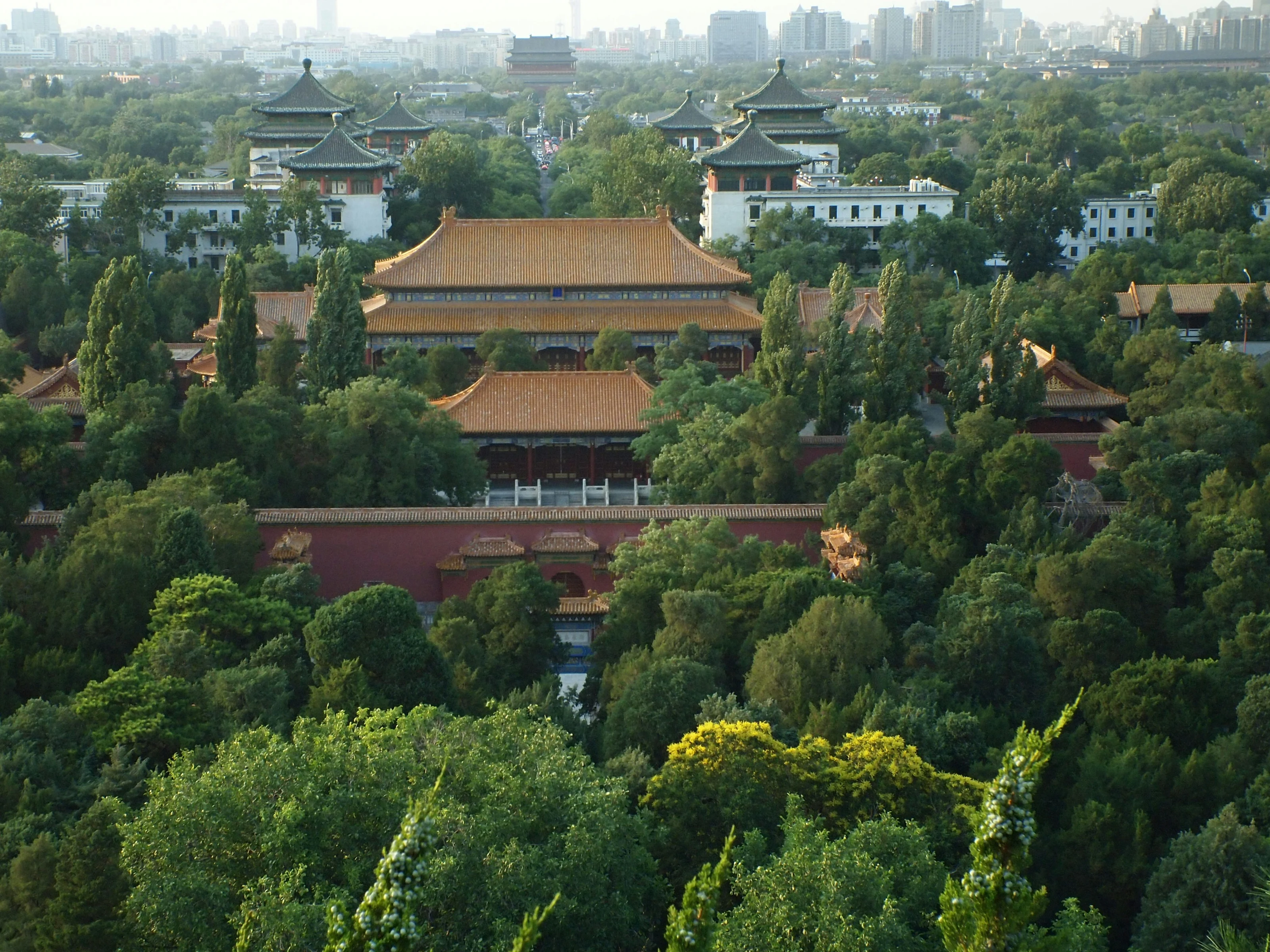
Photo credits
The photograph above shows the viewpoint in daylight, so use it to understand the position of the roofs and trees rather than to predict sunset colors that depend on the weather and visibility on your evening. Haze may soften distant buildings even when the roof shapes remain readable. If the sky is flat, I’d still frame the roofs and trees instead of waiting for a color change that may never arrive.
Think about which picture matters most: the palace panorama, changing light across the roofs, or a wider evening sky. You don’t need all of them for the visit to work. Make the roofline picture while you can see its details, then give the light time to change if the remaining park hours allow.
Leaving Jingshan after the viewpoint
Once you’ve finished looking, allow time to come down and reach an operating exit before closing. Choose your onward destination before the climb, and check the park’s current exit signs when descending. I wouldn’t assume that returning to your entrance is always the most convenient option for the next journey.
If someone in your group is unsure about the uphill walk, ask park staff about the currently available route before starting. This guide doesn’t establish a step-free route to Wanchun Pavilion. Make that decision at the entrance rather than promising everyone the same hilltop view.
Before putting your phone away, keep the gate pin, your next destination and the park’s closing time together. Those are the details you’ll need after the photograph, when the remaining task is getting back down and continuing your evening.
Featured image explanation: The plaque at the lower edge reads “故宫博物院” (“Palace Museum”); the feature photograph is a daytime view from Jingshan Park.
Photo credits
Photo: Yue WU / Unsplash / Unsplash License. Cropped to a wide feature image, resized to 1,200 by 632 pixels, and JPEG recompressed for the site; the image content was not retouched.
Explore the Beijing city guide →