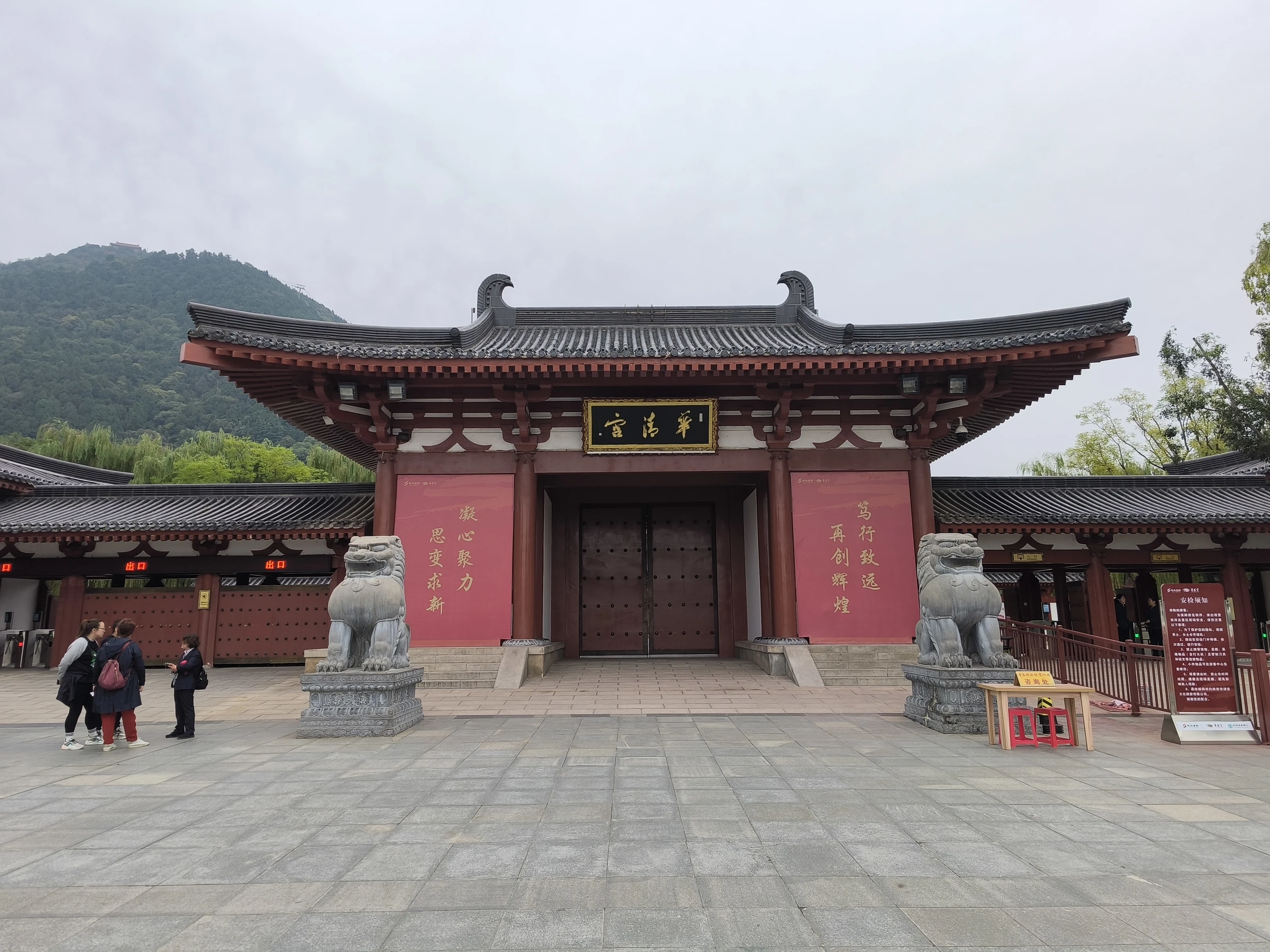
Huaqing Palace is worth a daytime visit if you’re interested in royal hot-spring history and a palace garden at the foot of Mount Li. Make the bath remains the reason to go, then decide how much garden and hillside time you want. The evening performance is a separate booking choice, so a plan built around the show can look quite different from a daylight visit.
What to look for at Huaqing Palace’s royal bath remains
The Tang Royal Bath Ruins Museum gives the visit a clear focus: the remains of baths used in the imperial palace setting. Huaqing Palace’s official introduction places this museum among the site’s main cultural areas. I’d begin with that question of use, rather than judging the whole place by how many halls can fit into a photograph.
The basin in the photograph below has a defined stone edge, with a viewing space around it. Looking at that outline helps turn “royal hot springs” from an abstract phrase into a place built for bathing. Read the display labels for the individual bath names and users; a photograph alone can’t establish who used every part of the remains.
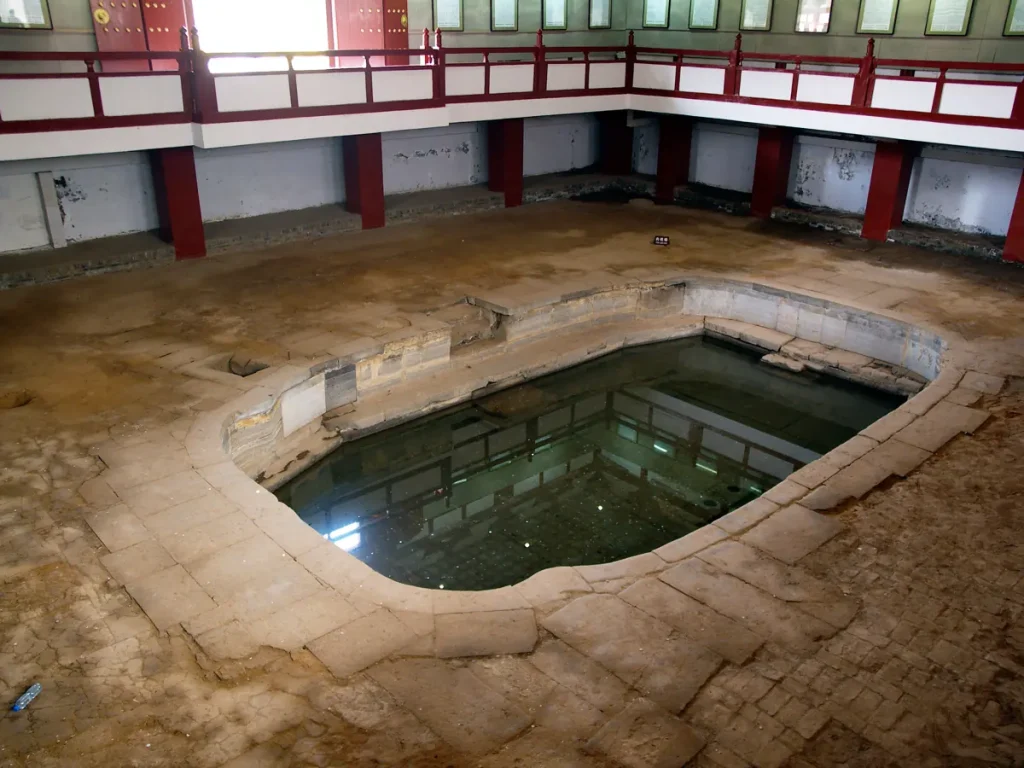
Photo credits

Keep the archaeological remains and the surrounding palace buildings distinct as you look around. The official introduction names both the bath ruins museum and buildings such as Changsheng Hall; that list doesn’t make every visible hall an original Tang building. The stone basin and a roofed hall can tell different parts of the site’s story.
You’ll also encounter the name Huaqingchi (华清池), alongside Huaqing Palace (华清宫). The official site’s own title uses both names. For this visit, the useful question is what a ticket admits you to: historic baths and grounds, an evening show, or a separately described hot-spring service. The word “springs” in a listing isn’t enough to settle that choice.
Huaqing Palace gardens and the choice to climb Mount Li
Beyond the bath remains, the grounds offer a different kind of looking: halls, water and the wooded slope behind them. In the photograph below, garden rocks and water sit in front of Changsheng Hall, with the hill rising behind. That relationship is worth noticing even if climbing isn’t part of your day.
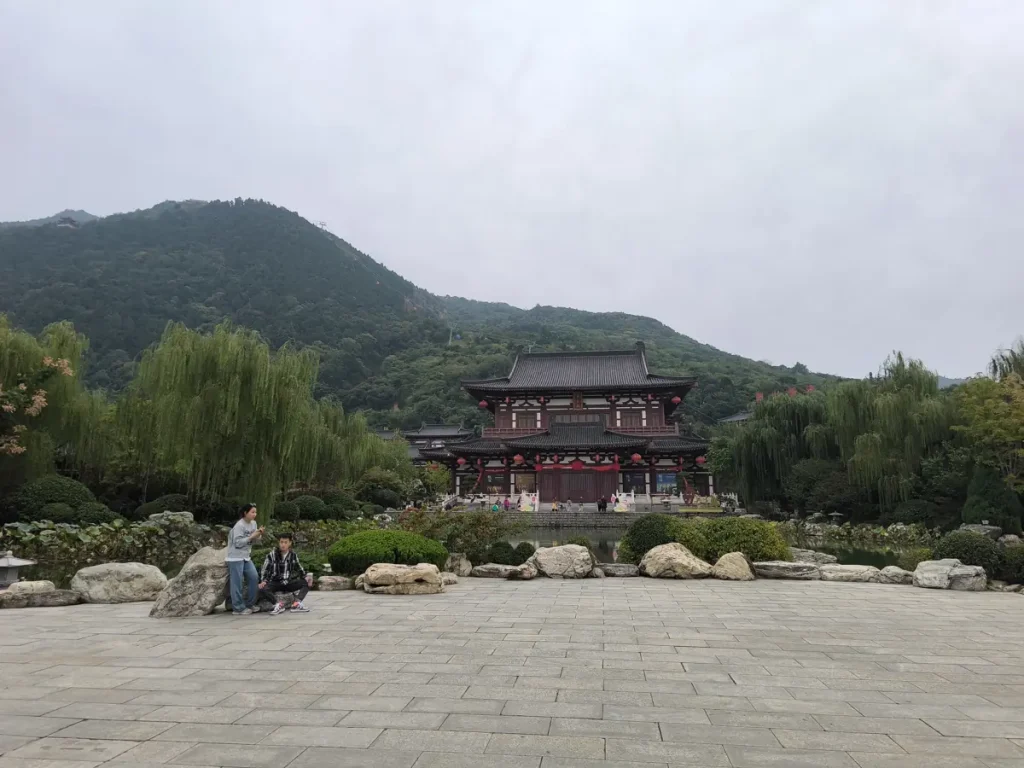
Photo credits

The site’s official introduction also lists the Nine Dragon Lake and Furong Lake areas, the Tang Pear Garden ruins museum and the Five-Room Hall associated with the Xi’an Incident. Those names give you choices beyond the baths. Pick an interest to follow instead of treating every named area as a required stop.
I would keep Mount Li, also called Lishan (骊山), as an optional extension after the cultural areas you most want to see. Going uphill changes the walking commitment and the time left for the grounds. Before paying, ask which mountain areas the ticket includes and whether a cable car or any shuttle is a separate purchase; an old combined-ticket description won’t answer those questions for your date.
For the wider trip, the Xi’an city guide helps separate central-city sights from an excursion outside the center. Use that distinction when deciding whether Huaqing Palace gets its own outing or shares a day with another visit.
A Huaqing Palace day ticket and the evening show serve different plans
Adding an evening performance changes both the booking and the return journey. The operator’s FAQ, published July 26, 2023, distinguishes daytime scenic-area admission from tickets for the evening Song of Everlasting Sorrow (Chang Hen Ge). Its answer says daytime sightseeing needs a scenic-area ticket, while attending the evening show requires a show ticket. Check the current product’s inclusions before buying either.
If the baths are your priority, choose the daylight visit on its own merits. If the performance is the reason for traveling out, settle the performance date, seat category and return transport first. You can then decide whether buying a daytime visit as well adds something you actually want to see.
The operator publishes seasonal performance information and says the day’s announcement takes precedence. A familiar show name doesn’t establish that it runs on your travel date. I wouldn’t plan a late return around a timetable copied from an older summer guide.
If you’re combining the palace with the Terracotta Army, protect the museum reservation before filling the remaining time. The Terracotta Warriors ticket and passport guide explains that museum’s admission arrangements. Those rules belong to the museum; confirm Huaqing Palace’s own requirements separately.
Checks to make before committing to Huaqing Palace
Start with the official Huaqing Palace visitor information, then ask the operator about anything the current notice leaves unclear. Its published guide makes the day’s announcement the final reference. These are the questions that can change your plan:
| Your intended visit | What to confirm |
|---|---|
| Royal bath remains and gardens | Admission price, open areas, opening time and final entry for your date |
| Mount Li as well | Mountain access included in the ticket, and separate cable-car or shuttle charges |
| A visit using a foreign passport | Accepted booking channel, document details and any ticket-collection requirement |
| The evening performance | Whether it runs, start time, seat category, entry arrangements and transport afterward |
I haven’t verified a current passport booking flow or a complete ticket-inclusion list, so I can’t promise direct passport entry or mountain transport within the price. Get those answers before payment. Once they’re clear, the daytime decision is simpler: choose Huaqing Palace for the bath remains and garden setting, and add the mountain or show only when each fits the visit you want.
Featured image explanation: The gate name reads “Huaqing Palace”; side signs read “Exit,” “Entrance” and “Information desk.” The tall banners carry decorative slogans.
Photo credits
Photo: 源義信 / Wikimedia Commons / CC BY-SA 4.0. Cropped, resized and compressed to WebP. Derivative under CC BY-SA 4.0.

Explore the Xi’an city guide →