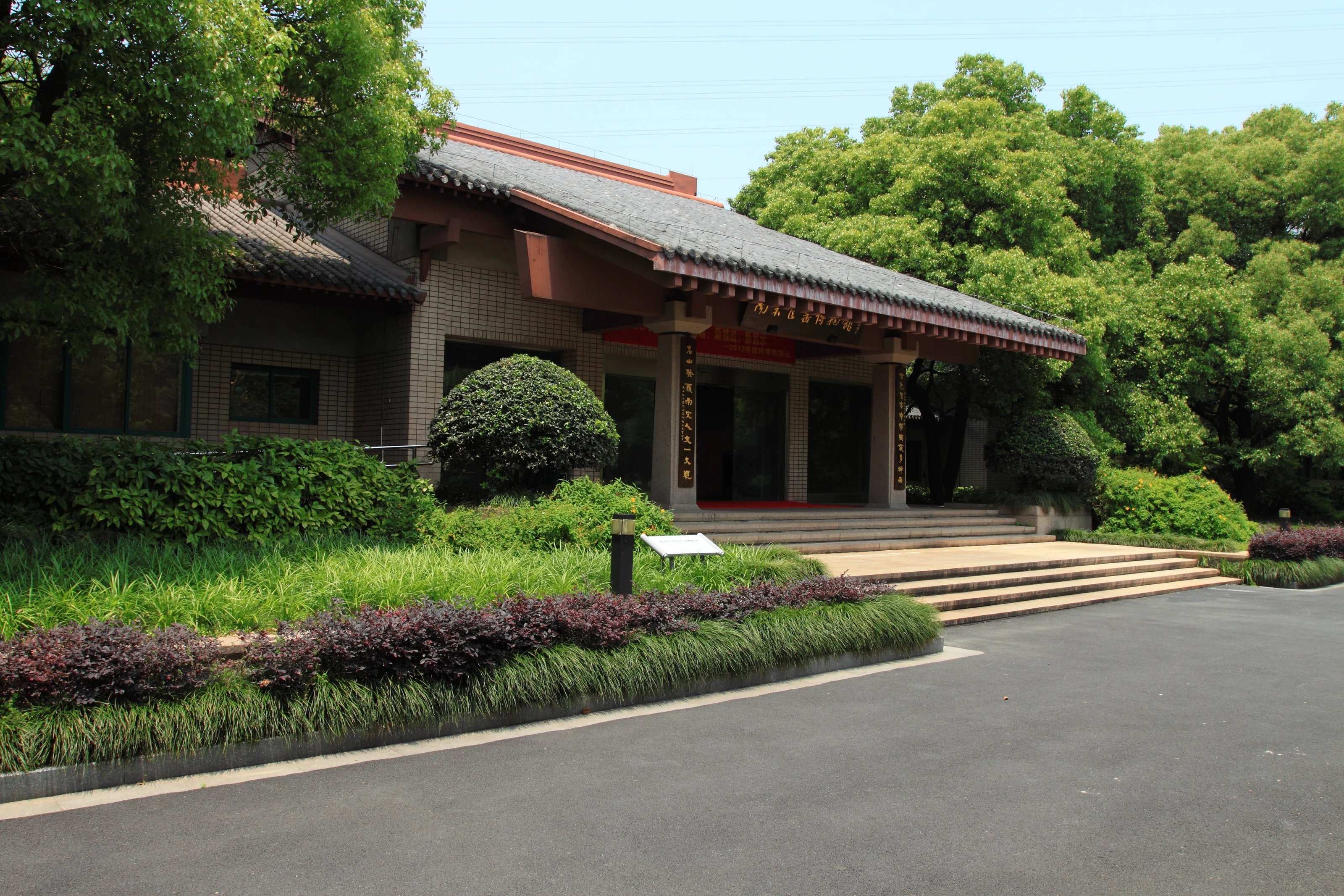
The Southern Song Guan Kiln Museum in Hangzhou brings together ceramic displays and the protected Jiaotanxia kiln site. The galleries explain the pottery and its court ties; the site helps you picture the place where it was made. I’d choose this museum to link a finished vessel with the place that made it, with time to look closely at both.
Separate the celadon galleries from the Jiaotanxia site
The museum’s official overview describes display halls alongside buildings that shelter the Jiaotanxia Guan kiln remains. Start with that split: a pot in a case, a model of a workshop and the conserved site each tell a different part of the story. Read the labels for which kind of evidence you’re looking at.
Guan (官) means official or imperial in this ceramic context. Celadon is the term for the greenish-glazed ceramics central to the museum’s Southern Song display. You don’t need to recognize a kiln’s work on sight before visiting. The link between the court, the vessels and the kiln gives a beginner something concrete to follow.
For the broader choice between lakeside walks, temple architecture and tea country, the Hangzhou destination guide introduces those interests. This museum adds a more focused ceramic subject to that choice.
Look for glaze details in the celadon exhibition
With pots and kiln site in mind, use the galleries to examine what makes the ceramics worth a closer look. The museum lists a Southern Song Guan kiln history display and a Chinese ceramics culture display. The latter broadens the subject beyond this kiln tradition.
The Southern Song display text draws attention to crackled glaze and the dark tones at vessel rims and feet. On a pot that’s on view, compare the glazed surface with the rim and base, using its label to establish its identity. A visible detail is a useful question to take into the next case; color alone won’t tell a novice which kiln made a pot.
I find a small looking task more useful than trying to memorize a list of ceramic names. Choose a labeled vessel, notice its outline, then look at where the glaze meets an edge. The museum’s overview gives context, while the labels in the room establish which objects are on view that day.
Read the protected dragon-kiln remains
The kiln site shifts attention from the finished vessel to the place it was made. In the old photograph below, a long earthen area runs through a roofed building, with railings alongside it. The photo’s creator identifies the subject as the Jiaotanxia dragon kiln.
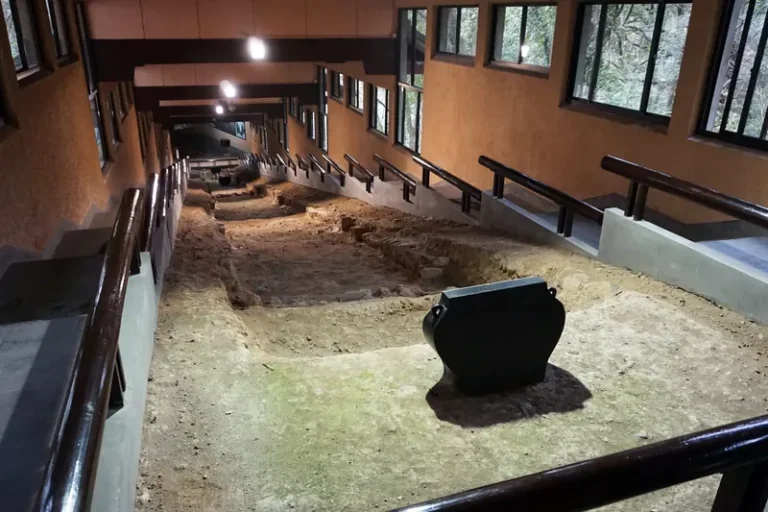
Photo credits

The museum says its site protection combines three-dimensional reconstruction with reburial in place. Read the presented form with that approach in mind: exposed remains, rebuilt parts and buried remains have different roles. The photograph doesn’t establish the age of every visible surface or promise the same layout today.
That makes the site worth more than a quick photo of an old-looking structure. I would look for the on-site account of what survives and what has been rebuilt. If a label doesn’t settle that question, leave it open rather than treating every part of the display as untouched Southern Song fabric.
Check the Guan kiln venue’s hours before setting out
To see both parts, check the Guan kiln venue’s opening hours. Its address is 60 Nanfu Road, Shangcheng District, Hangzhou; save 杭州南宋官窑博物馆,南复路60号 in your map. The museum group’s website covers several venues, so check the venue name as well as the street address.
As checked on November 16, 2026, the official museum homepage lists the Guan kiln venue’s hours as 08:30–16:30, with entry stopping at 16:00, Beijing time. It states Tuesday closure, with normal opening on statutory holidays. Recheck the notice near your visit, especially around a holiday.
I haven’t verified the current entry charge, booking rules, use of passports or overseas phone numbers, or pottery sessions. Ask the museum before booking or planning a visit around a hands-on activity. A pottery teaching space named in an older museum overview doesn’t confirm a session for your date.
The Hangzhou one-day itinerary pairs a lake walk with a separate afternoon interest. If ceramics appeal more than its temple or tea options, give this museum that block of time, then check its access and the journeys before adding more stops.
Featured image explanation: The entrance plaque names Hangzhou Southern Song Guan Kiln Museum. The red banner refers to International Museum Day 2012; this photograph does not show current event arrangements. The smaller vertical inscriptions are indistinct at this size.
Photo credits
Photo: Zhangzhugang / Wikimedia Commons / CC BY-SA 4.0. Cropped from (0,250) to (4752,2753), resized to 1200 × 632 and compressed as WebP. No retouching or added text. Derivative under CC BY-SA 4.0.

Explore the Hangzhou city guide →