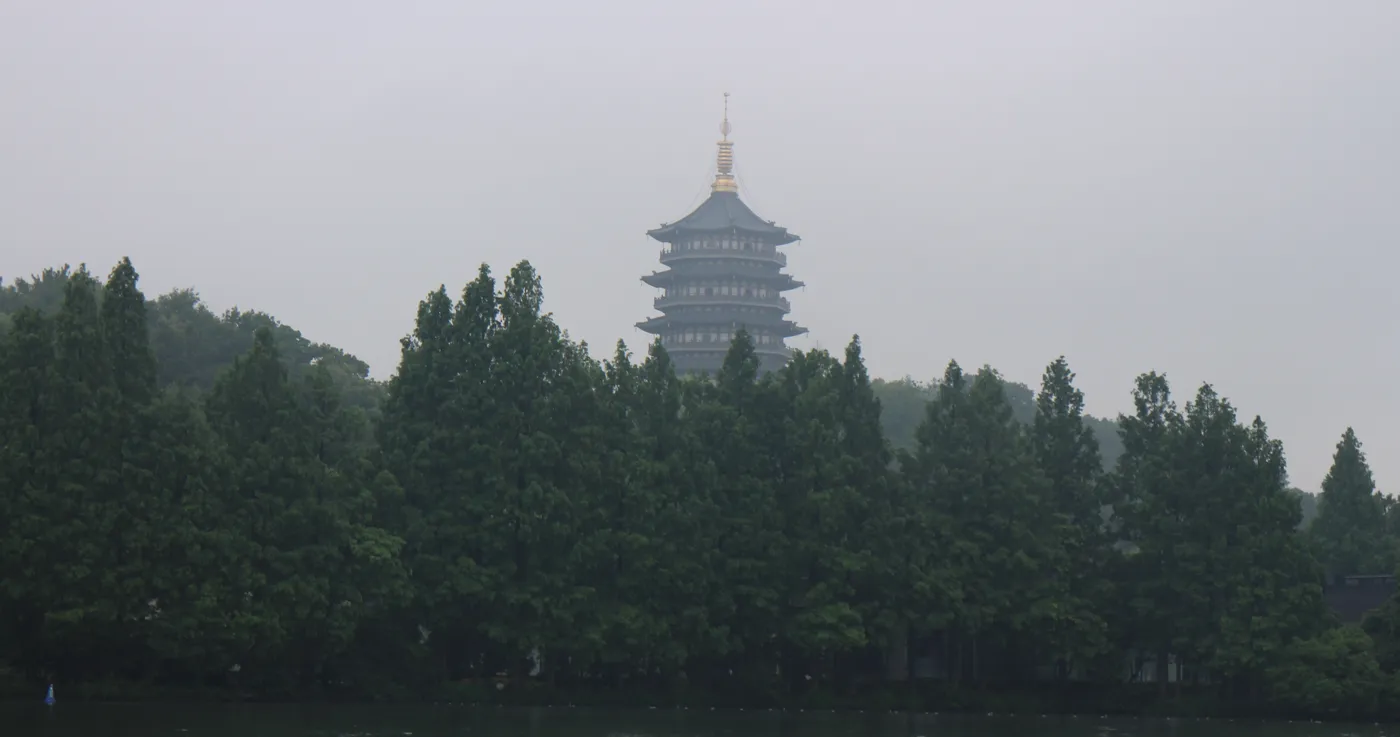
Leifeng Pagoda rewards a visit for the contrast between the old ruins beneath it and the rebuilt tower overlooking West Lake. I’d put the remains first when deciding whether to enter: a lakeside walk already gives you the pagoda as part of the landscape. Going inside adds the story of what stood here, while the appeal of a higher lake view depends on visibility and access that day.
The rebuilt tower and its lakeside setting
The tower standing above the trees is the modern reconstruction. Hangzhou’s city portal dates the original pagoda’s collapse to 1924 and the present tower’s rebuilding to 2002. Its setting on Xizhao Hill, on West Lake’s southern shore, connects the building with the lake even before you consider entering.
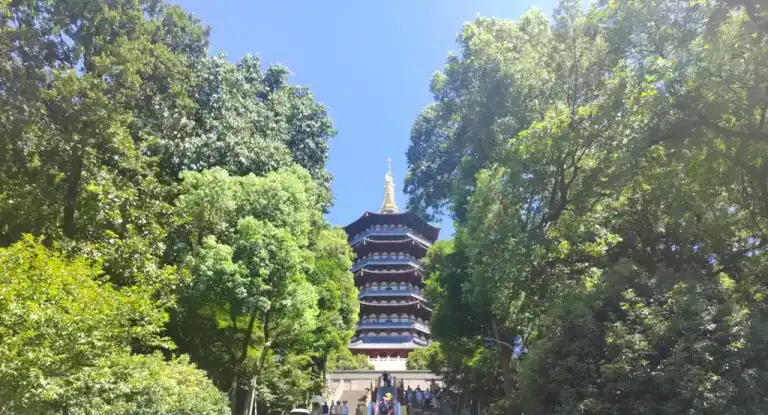
The photograph shows the tower rising beyond a tree-lined approach and upper steps. Notice the difference between that view toward the building and the view you hope to get from it. A tower photograph can help you recognize the destination, but it doesn’t tell you what will be visible from a viewing level.

For a wider choice of places to visit, the Hangzhou destination collection brings together the city’s guides. Keep Leifeng as a particular stop with a reason to enter, rather than treating every landmark around the lake as a compulsory visit.
Old foundations beneath a new pagoda
The old remains give the reconstruction its historical context. Hangzhou’s account of the site describes a glass floor protecting the underground remains, with the new pagoda built over the original site. The visible tower and the surviving ruins therefore answer different questions: what was rebuilt, and what survives beneath it?
At the remains, I’d use the display labels to distinguish surviving material from the structure enclosing it, giving that distinction more attention than trying to assign an age to everything overhead. The reconstruction date doesn’t make all the material at the site modern, and the ancient location doesn’t make the present tower an intact ancient building.
If the ruins are your main reason for coming, confirm that their display is accessible on the intended date. A notice that the attraction is open may still leave questions about a particular area. There is no interior photograph here to establish the current display layout.
White Snake belongs to the pagoda’s folklore
Alongside the physical remains, Leifeng has a place in storytelling. Hangzhou’s official introduction associates the site with Madame White Snake, the Chinese folk tale often called the Legend of the White Snake. That association is cultural context for the visit; the story doesn’t date the ruins or explain the engineering of the reconstruction.
When reading an interpretation panel, keep the two kinds of account separate. A date attached to the tower concerns its building history. A scene from White Snake belongs to the telling of a legend. You can enjoy the association without reading a legendary event as an archaeological finding.
Enter for the ruins, then weigh the lake view
With that distinction in mind, the entry decision becomes clearer. The remains offer a reason to go inside even when a distant view is uncertain. If a panorama is the only attraction for you, check the weather and the viewing areas available before paying.
| What draws you to Leifeng | How I’d approach the decision |
|---|---|
| The history beneath the tower | Confirm access to the ruins display, then leave room to read its labels. |
| A view across West Lake | Check visibility and which viewing areas are open before committing. |
| The pagoda in the lakeside landscape | A walk with a view toward the tower may satisfy that interest. |
| Several major sights in a short day | Let Leifeng replace part of the sightseeing plan so entry and the onward journey have room. |
The Hangzhou one-day itinerary combines a lake walk with Lingyin or Longjing. Adding a tower visit uses some of that lake time. Shorten the walk or reconsider the afternoon branch if the resulting day feels crowded.
If Lingyin is already booked, use the Lingyin reservation guide to keep that confirmed appointment in view when arranging the rest. Leifeng entry needs its own check; a reservation for another attraction doesn’t settle it.
Check Leifeng admission and the route through the tower
Before fitting entry around another appointment, establish what the pagoda visit requires. Current ticket prices, opening hours, passport booking, elevator operation and step-free access have not been verified for this guide. Ask the attraction about the visit date and your needs together:
- What does the admission ticket include, and when is last entry?
- Is advance booking required, and how does a visitor with a foreign passport book and enter?
- Are the ruins display and viewing areas open?
- Which parts of the route have steps, and which elevators are operating?
- If relevant, is there a continuous step-free route to the areas you want to see?
An elevator somewhere in the complex wouldn’t by itself answer the last question. Ask about the route from the entrance through the desired areas and back out. For photography inside, check the posted rules or ask staff before using the camera.
If a boat trip is also planned, the West Lake boat guide explains why the return pier matters. Settle where the boat finishes before arranging the journey to Leifeng. Leave the tower visit flexible until its entry arrangements and the rest of the day’s connections work together.
Written by Alex Chen, founder and editor of China Culture Way.
Explore the Hangzhou city guide →